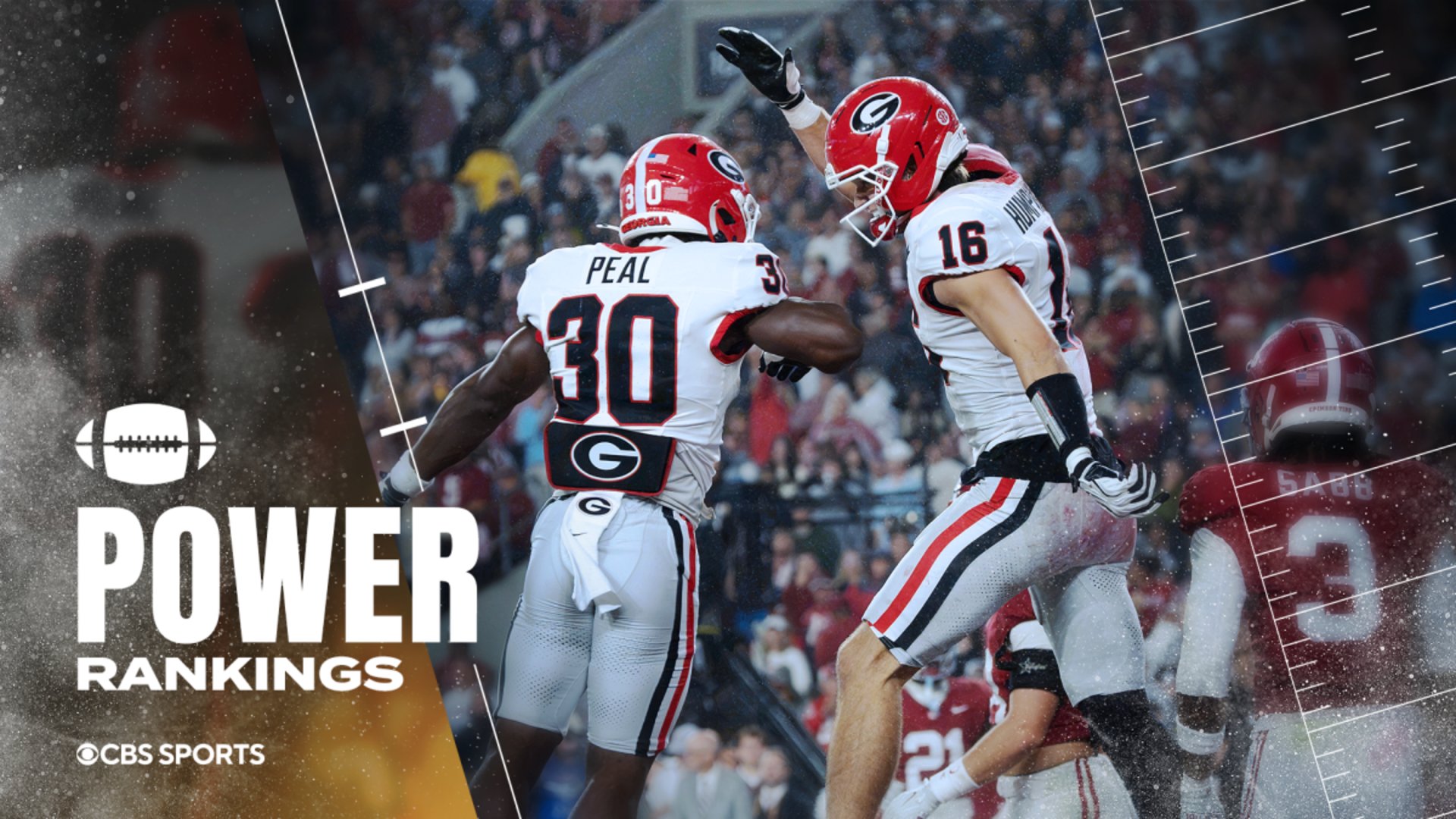
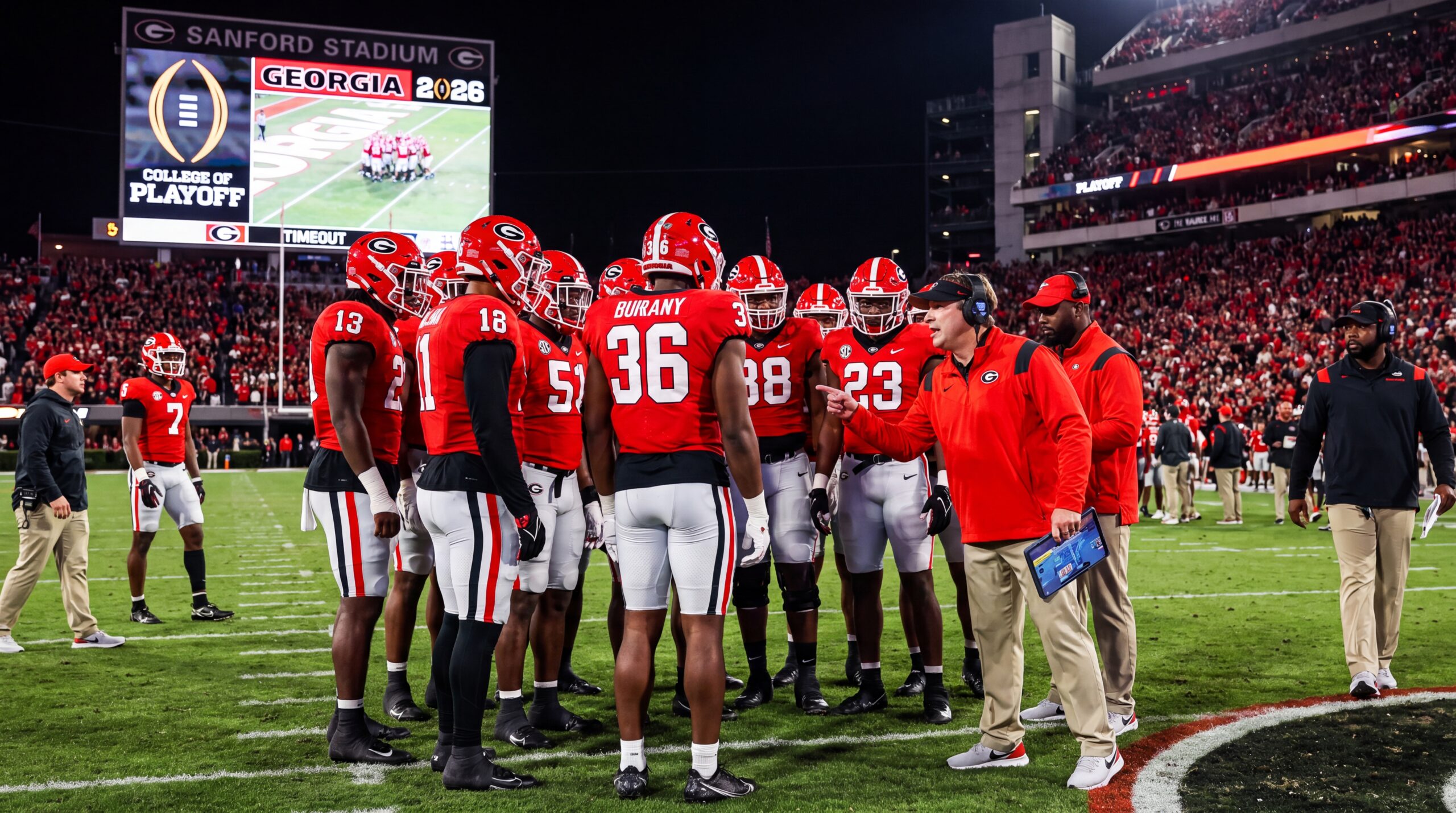
The 2026 Georgia Dawgs begin the year already in the national conversation, not as a team that must re-establish legitimacy but as one expected to contend. Per Bulldawg Illustrated, Georgia does not enter 2026 needing to prove it belongs in the national conversation; the question is which adjustments and depth additions convert that status into multiple playoff wins.
“Georgia does not enter 2026 needing to prove it belongs in the national conversation.”
Bulldawg Illustrated
2026 Georgia Dawgs roster health and key returning pieces
Roster health will be the simplest practical limiter on how far Georgia can go. Returners at key spots, plus depth behind them, determine whether the Dawgs can sustain performance through November and into the postseason.
Offense: continuity matters. When starters return and the offensive line holds together, variance in the early season drops and game-planning can focus on opponents rather than remediation. Incoming transfers and younger players must be slotted with a clear timeline for snaps so coaches know which package to rely on in playoff-caliber games.
Defense: rotation is crucial. Georgia has historically leaned on depth to keep fresh bodies against power-running teams and long, clock-eating opponents. If rotation players step up during the year, Georgia avoids the late-season drop-offs that have derailed other contenders.
Analysis: Kirby Smart’s recruiting architecture aims to produce those rotation-ready players. How quickly second- and third-year contributors claim dependable roles will determine whether depth is an advantage or a vulnerability.
Practical signs to watch: early-season reps by projected backups, special teams reliability, and the timeline for return from any offseason injuries. Those indicators will show whether the roster can absorb the attrition that comes in long championship runs.
Schedule and CFP path: where games could decide advancement
The College Football Playoff calculus is shaped as much by schedule context as by raw record. For the 2026 Georgia Dawgs, a handful of regular-season tests carry disproportionate weight for seeding and public perception.
High-risk conference matchups and rivalry weeks often define resumes. Signature wins elevate seeding; trap losses or narrow wins against undermanned opponents can drop a team in committee thinking. Minimizing those pitfalls is essential for a favorable bracket.
Style matchups matter in the playoff. Facing a blue-collar power running team tests front-seven depth; encountering an ultra-fast spread offense exposes perimeter tackling and pass-defense communication. Preparing tailored responses to both extremes reduces matchup-driven upsets in the postseason.
Analysis: avoiding one-off losses while creating marquee victories should be a strategic aim across the regular season. That includes measured roster management—resting starters when appropriate and preserving health for critical conference clashes—that helps define the Dawgs’ path in the bracket.
Coaching edge and game plan adjustments
Per Bulldawg Illustrated’s framing, Kirby Smart has already built a program foundation capable of sustained contention. Treat that as a sourced assessment of institutional strength; the leap from contender to multi-game playoff winner will come from refined in-game and week-to-week adjustments.
On offense, variable tempo and more script diversity can force opponents into uncomfortable positions. If Georgia can hide personnel changes behind consistent play-calling patterns, the staff gains a tactical edge late in tight games.
Defensively, granular matchup packages and situational substitutions will be decisive. Rather than relying exclusively on base personnel, Smart and his defensive coordinators can deploy targeted fronts that neutralize opponent strengths while preserving roster energy.
Special teams are an often-overlooked lever. Better kickoff placement, return schemes that create field-position variance, and reliable kicking reduce the small, compounding disadvantages that cost playoff games.
Analysis: the coaching edge is less about changing identity than about expanding contingency plans—having more answers when the opponent forces a nonstandard game script. That preparation separates one-and-done playoff teams from those that make repeat deep runs.
Conclusion: what would change expectations and what comes next
For the 2026 Georgia Dawgs to advance further in the College Football Playoff, three triggers would need to align: demonstrable depth at vulnerable positions, a regular-season ledger featuring high-visibility wins and few signature losses, and coaching adjustments that increase in-game flexibility. When those elements converge, the Dawgs shift from being a perennial contender to a clear favorite.
Short-term signals to monitor: early injury reports, whether rotational players establish themselves as reliable starters, and midseason schematic responses in key conference tests. These indicators will tell us if the staff is successfully translating roster talent into postseason resiliency.
What comes next: track early nonconference games and the first two conference tests closely. They will reveal whether continuity and coaching adjustments are producing the situational depth Georgia needs to win multiple playoff games.
Source attribution: Analysis above includes both sourced claims and editorial analysis. The quoted assessment and program-context claims are attributed to Bulldawg Illustrated: What it will take for the 2026 Georgia Dawgs to advance further in the College Football Playoff?. Images approved for this post are noted below and will be handled by the media workflow: featured image (Kirby Smart sideline photo), and two body images (see bodyImageUrlsUsed). Captions for those images: “Kirby Smart on the sideline as Georgia prepares for 2026” and “Bulldawg Illustrated preview art and game-day visual.”