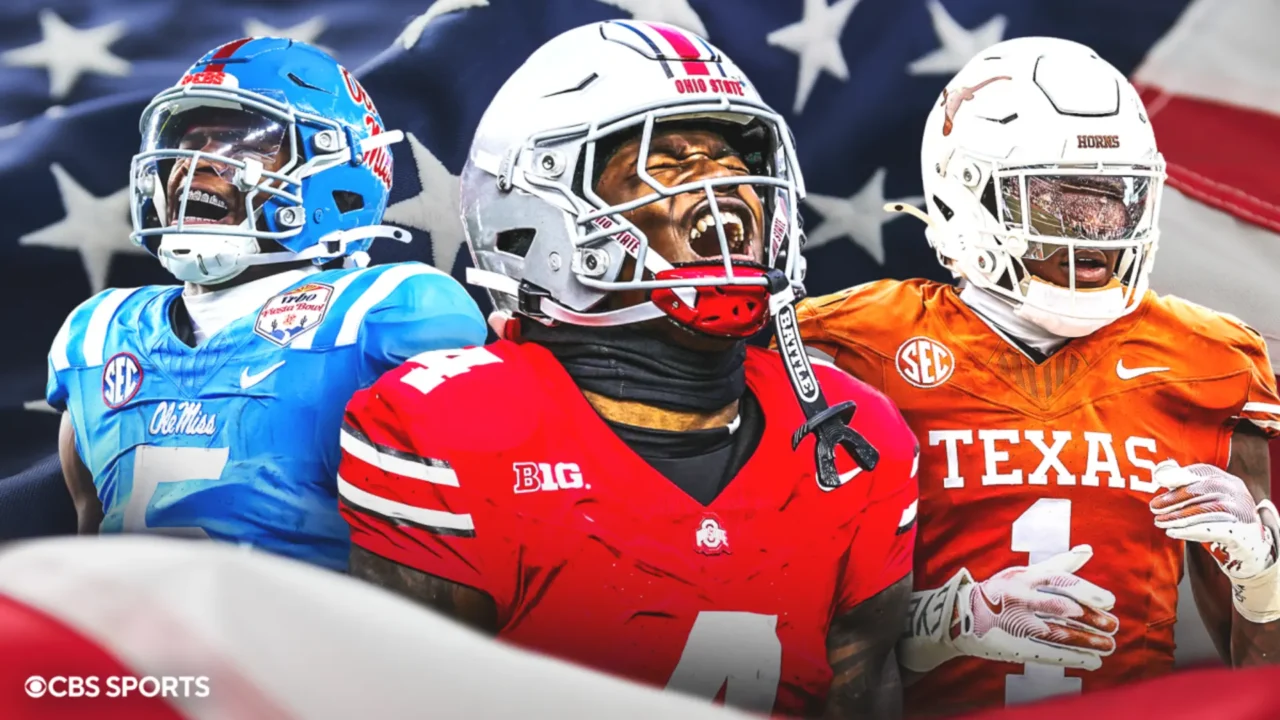
The 2026 Preseason All-America team sets the early pecking order for the season, naming Dante Moore the preseason player of the year while highlighting program and conference depth across the country.
The panel’s list, available from CBS Sports, shows the SEC leading with 15 first-team selections and Texas supplying five first-team honorees.
Key Takeaways
- Three players — Jeremiah Smith, Colin Simmons and Leonard Moore — were unanimous first-team selections by the panel.
- Dante Moore was named the 2026 preseason player of the year and Dan Lanning received preseason coach of the year recognition.
- The SEC led all conferences with 15 first-team and 25 total selections, underlining the conference’s top-level talent concentration.
- Texas had the most first-team picks, with five Longhorns named to the first team.
2026 Preseason All-America team breakdown
The panel’s unanimous choices — Ohio State receiver Jeremiah Smith, Texas edge rusher Colin Simmons and Notre Dame corner Leonard Moore — represent a clear consensus across offense and defense.
Several players returned to preseason first-team status after earning the same honors at the close of 2025, including Smith and Oregon defensive tackle A’Mauri Washington, signaling continuity at key positions heading into the season.
The list also highlights two-way and multi-role contributors; Miami (FL) freshman Malachi Toney was listed as a first-team all-purpose pick and as a second-team wide receiver after a season that featured 1,211 receiving yards and 10 receiving touchdowns.
Why Texas and Oregon dominated selections
Texas led the list in first-team representation, with all five Longhorns selected to the first team, a rare single-program concentration that signals depth across multiple position groups.
Oregon combined individual honors and positional strength: Dante Moore earned the preseason player award while Dan Lanning was recognized as preseason coach of the year, and the Ducks placed three players on the first team and four overall on the two teams.
Those program tallies reflect returning elite starters and recruiting classes that have supplied immediate impact talent, which helps explain why preseason lists skew toward established units with proven production.
Selection breakdown by conference and program
| Conference | First team | Total selections |
|---|---|---|
| SEC | 15 | 25 |
| Big Ten | 6 | 13 |
| ACC | 2 | 5 |
| Big 12 | 0 | 5 |
| Independent (Notre Dame) | 2 | 3 |
| Sun Belt | 1 | 2 |
| MAC | 1 | 0 |
The combined totals show the SEC and Big Ten accounting for 38 of the 54 selections, a 70 percent share between the two conferences and a clear indicator of perceived top-tier talent pools entering the year.
Program representation on the two squads includes 25 programs overall, with Texas, Oregon, LSU and Miami (FL) among the teams with multiple honorees across first- and second-team lists.
SEC talent concentration and CFP implications
The SEC’s 15 first-team nods and 25 total selections underscore the conference’s depth and provide fuel for recruiting arguments about playmakers and roster construction inside the league.
From a College Football Playoff perspective, concentrated preseason honors matter in perception and ranking algorithms; teams carrying multiple preseason All-Americans often begin the season with higher expectations and more attention from voters and media.
For SEC programs, turning these preseason nods into sustained on-field performance will be the next step, as consistent results through nonconference play and the fall schedule determine who actually competes for conference titles and playoff berths.