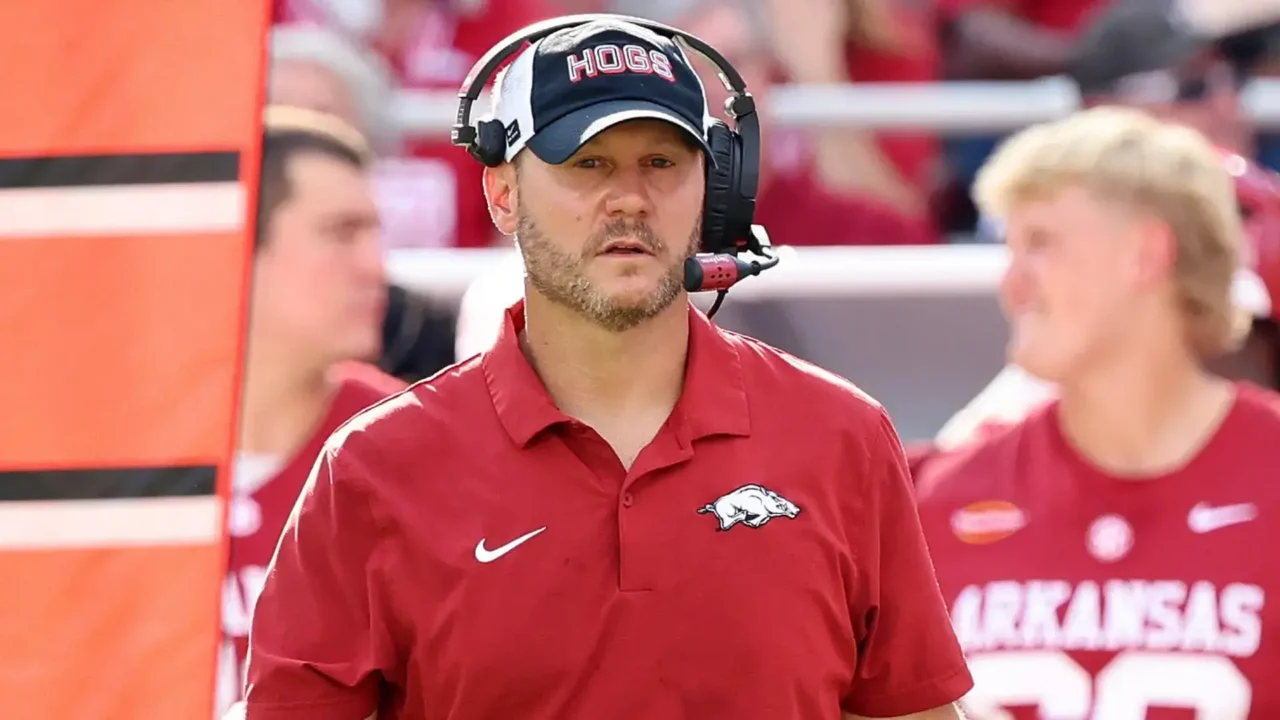
Ryan Silverfield walked into Fayetteville promising to accelerate a rebuild, but he inherited a preset roster budget that limited immediate action. That funding shortfall reshaped recruiting, transfer work, and the staff’s Year 1 approach as 82 fresh faces filtered into the program.
As detailed by Arkansas Razorbacks On SI, reporting revealed Arkansas’ 2026 roster funding was far from middle-of-the-pack and sharpened questions about who would supply the resources Silverfield says he needs to compete in the SEC.
Key Takeaways
- The Athletic reported Arkansas’ funding for the 2026 roster was far from middle-of-the-pack, a reality that undercuts short-term rebuild plans.
- Ryan Silverfield said the amount of money set for the 2026 roster was already set when he arrived and could not be changed.
- Arkansas experienced major turnover with 82 fresh faces entering the program, complicating roster construction and immediate on-field expectations.
- Silverfield has spent months actively raising money and appealed to administration and donors to bridge the funding gap.
Why Ryan Silverfield says funding limited the early rebuild
Silverfield framed the problem plainly: the roster salary pool for 2026 was set when he arrived and there was no mechanism to expand it immediately. That constraint forced the staff to prioritize which opportunities to chase in the transfer portal and where to invest limited scholarship and roster dollars.
On a Memphis sports radio appearance, Silverfield acknowledged the practical limits administrators set and described an active push to raise additional funds. “I spent probably the last six months continuing to raise money and funding, and everybody [was] all hands on deck,” he said.
Silverfield compared Arkansas’ situation to his time at Memphis, where corporate relationships such as FedEx helped supplement resources. He argued that winning helps unlock donor confidence, but that initial budget decisions materially change the speed of a rebuild.
Roster funding comparison and program context
| Program | Funding posture | Roster notes |
|---|---|---|
| Arkansas | Characterized in reporting as underfunded with a preset roster budget for 2026 | Major turnover with 82 fresh faces and limited flexibility to add beyond the set salary pool |
| Middle SEC peer (general) | Described in reporting as a near-middle funding target that would require a sizable increase to reach competitiveness | Programs at that level typically have greater flexibility to recruit and retain portal additions |
| Memphis (comparative context) | Noted benefit from corporate donor relationships that supplemented program resources | Silverfield cited external donor support as a factor in roster-building at Memphis |
SEC recruiting and CFP math for an underfunded Arkansas program
Recruiting and transfer work are effectively zero-sum exercises in the SEC, and a fixed, comparatively low roster budget reduces staff flexibility to match offers or present competitive packages to transfer targets. That shortfall changes how aggressively a staff can pursue portal additions and manage scholarship dollars.
With 82 fresh faces in the program, Silverfield must blend development and immediate needs under constrained financial resources, increasing the urgency of donor support and administrative investment. The coach has emphasized fundraising as part of the role while noting administration and donors have been engaged.