Auburn receivers top-five receptions is more than a quirky stat line; it shines a light on how the Tigers are moving the ball and where the offense is failing to finish drives. Keshaun Singleton and Chas Nimrod each have 17 catches, a total that places them tied inside the SEC’s top five and forces questions about efficiency rather than volume.
The details in the original reporting are useful context for fans tracking Auburn’s offensive repair job, and you can read that coverage here Sports Illustrated.
Key Takeaways
- Keshaun Singleton and Chas Nimrod are tied for fifth in the SEC with 17 receptions each, but their yardage totals lag relative to their reception rank.
- Auburn’s lack of consistent rushing production has allowed defenses to shorten the field and limit yards after catch, reducing yards per reception for top targets.
- Failure to generate chunk runs has practical consequences for the Tigers’ offensive balance and their ability to sustain drives against top-tier SEC defenses.
- How quickly Auburn addresses its run game will shape the Tigers’ path through a difficult stretch that includes Georgia, LSU and Ole Miss and will influence bowl eligibility prospects.
Auburn receivers top-five receptions and yards per catch
Having a pair of pass catchers inside the conference top five for receptions looks like good news on the surface, but the underlying numbers tell a different story. Keshaun Singleton’s 17 catches have produced 230 receiving yards, which ranks him ninth in the SEC by total yards; Chas Nimrod’s 17 catches have produced 188 yards, placing him 15th in the league.
The gap between reception totals and yardage output points to shorter throws and limited yards after catch more than an inability to create separation entirely. Singleton and Nimrod have each drawn a handful of deeper targets, but most of their production has come from shorter routes and targets in high-leverage situations.
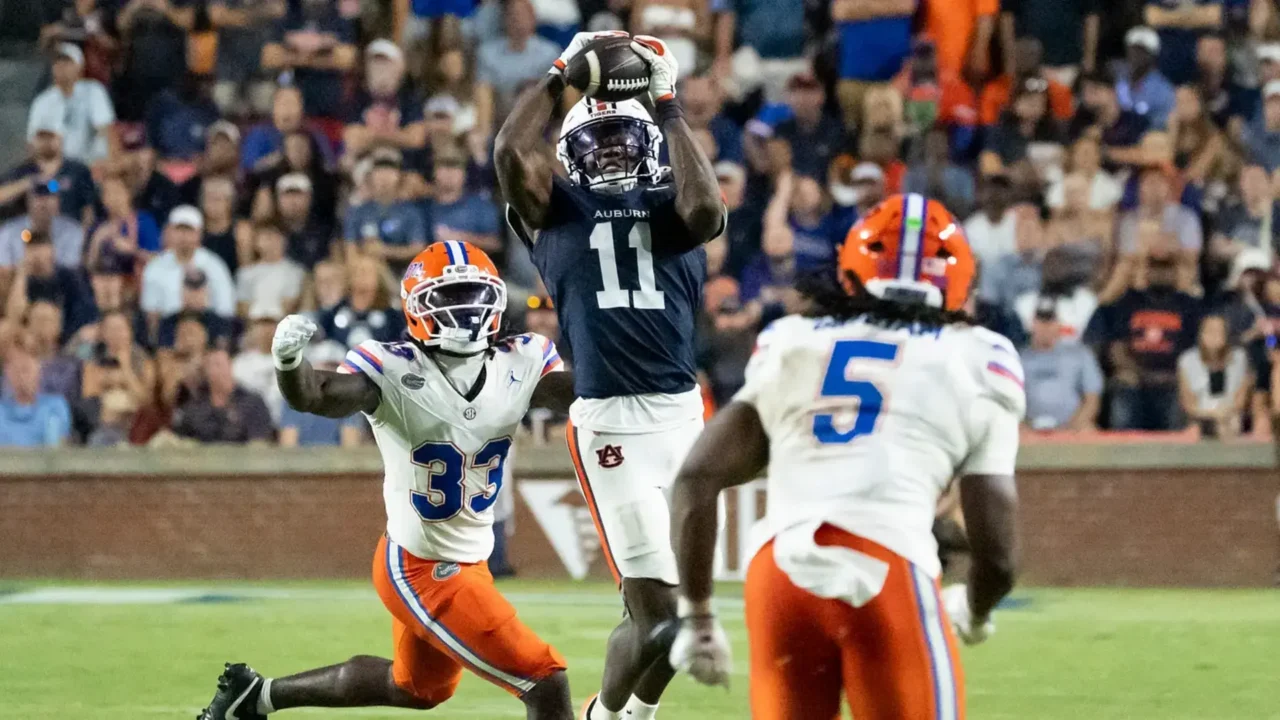
One concrete example from recent game action: Auburn’s lead back carried nine times against Florida, a usage pattern that signals the running game is not consistently threatening opponents. That kind of limited carry volume makes it easier for opposing defenses to crowd the box and dedicate resources to cutting off intermediate and short-route yardage.
When the run threat is muted, route concepts that normally generate yards per catch — like vertical stems that force single coverage and create open space downfield — become harder to execute. The result is more receptions, but fewer explosive plays and lower average gain per catch for the team’s primary targets.
SEC receptions and yards comparison table
| Player | Team | Receptions vs Auburn duo | Receiving yards context |
|---|---|---|---|
| Anthony Evans | Mississippi State | Ahead of Auburn duo in total receptions per the report | Exact yardage not listed in the report |
| Deuce Alexander | Ole Miss | Ahead of Auburn duo in total receptions per the report | Exact yardage not listed in the report |
| Deuce Alexander | Arkansas | Ahead of Auburn duo in total receptions per the report | Exact yardage not listed in the report |
| Mario Craver | Texas A&M | Ahead of Auburn duo in total receptions per the report | Exact yardage not listed in the report |
| Keshaun Singleton | Auburn | Tied for fifth with 17 receptions | 230 receiving yards, ninth in SEC per the report |
| Chas Nimrod | Auburn | Tied for fifth with 17 receptions | 188 receiving yards, 15th in SEC per the report |
| Junior Sherrill | Vanderbilt | Behind the Auburn duo in total receptions per the report | Exact yardage not listed in the report |
Impact on Auburn’s SEC run and bowl path
The practical consequence of high reception counts with low yards per catch is pressure on Auburn’s ability to sustain scoring drives against top defenses. The Tigers face a sequence of opponents after Vanderbilt that includes Georgia, LSU and Ole Miss, each capable of exploiting a one-dimensional offense.
Recruiting and roster construction are indirectly affected when game plans show persistent imbalance. Prospects weighing schools watch how an offense develops young backs and whether receivers are used to create explosive plays, not just short-yardage targets.
Quickly restoring a meaningful run threat would create more space downfield for Singleton and Nimrod, increase yards after catch, and give Auburn a better chance to convert third downs and score in higher-leverage situations. That kind of offensive balance would materially affect the Tigers’ path to bowl eligibility this season.