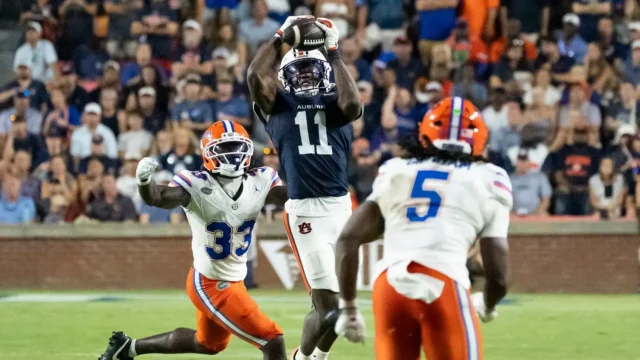
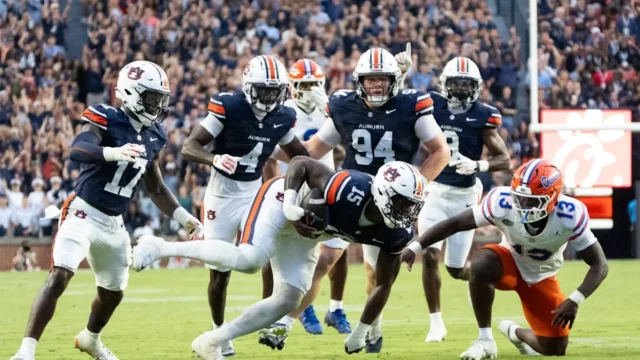
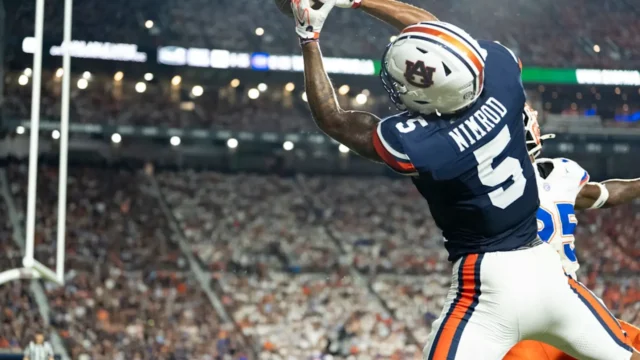
Iron Bowl period in Auburn’s spring practice: Why it matters
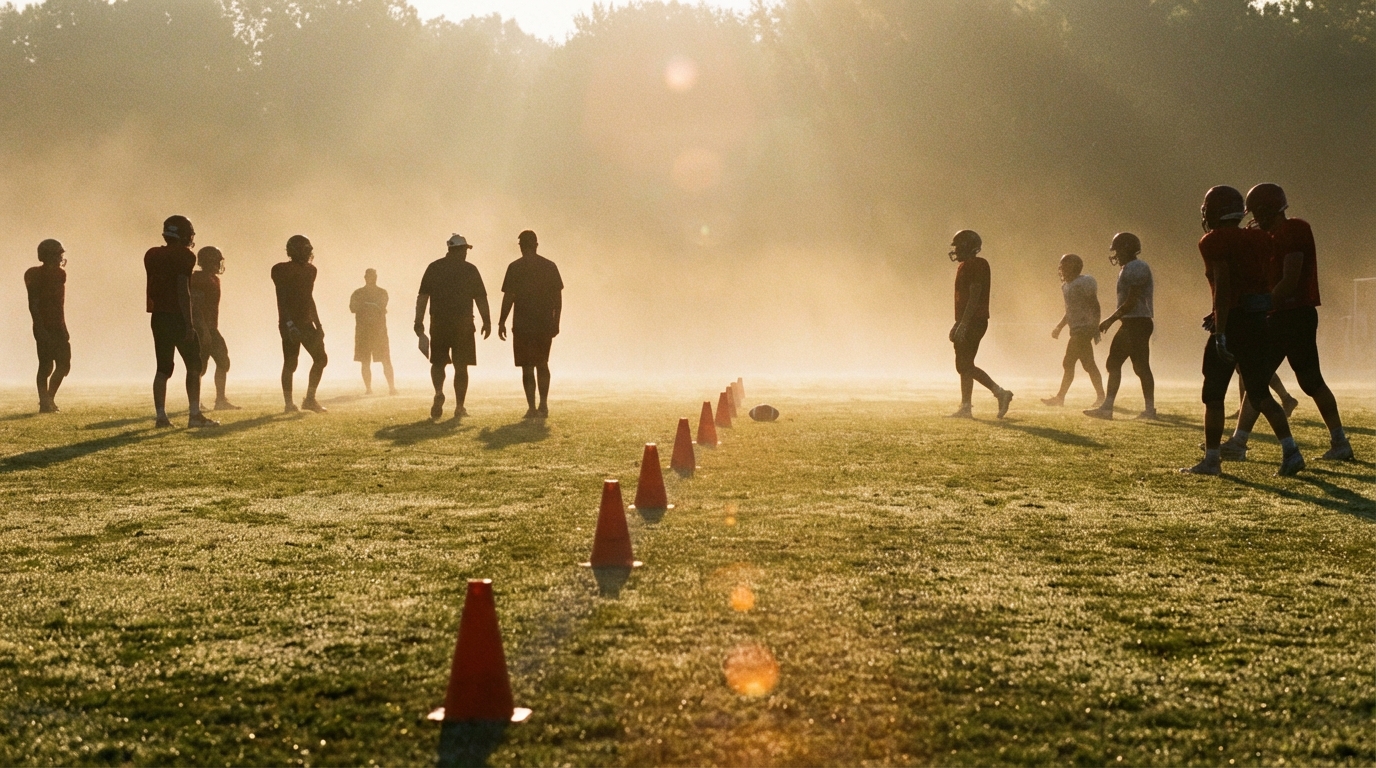
The Iron Bowl period in Auburn’s spring practice focuses the team on rivalry-specific drills. In this window, coaches tighten schemes and test high-pressure situations.
It raises intensity early, because rivalry habits form in repetition. Coaches use Dixieland Delight and situational rep packages to simulate Iron Bowl heat. Therefore players learn details that matter on November Saturdays. Also, it tests depth while sharpening starters and backups alike.
This period aligns with Auburn’s larger goal of competing for SEC championships. As a result, preparation becomes tangible and measurable under game-like strain. Golesh embraces the rivalry, and he expects his team to respond.
Preparing for the Alabama Crimson Tide in Tuscaloosa demands mental toughness and precision. Therefore staff simulate raucous environments without full contact, because safety matters. Dixieland Delight plays into the rhythm, and the team treats it like a kickoff. Ultimately, this Iron Bowl period in Auburn’s spring practice builds confidence toward SEC and CFP goals.
Iron Bowl period in Auburn’s spring practice — Golesh’s blueprint
Coach Alex Golesh built the Iron Bowl period in Auburn’s spring practice to create focused, rivalry-ready preparation. He framed the window as a live rehearsal. Golesh said, “It ain’t important unless you make it important. If I’ve gotten any message from the Auburn family it’s the fact that that game is really, really important. Well, if it’s important to them, then it’s certainly important to me.” His message set the tone early.
Key elements of Golesh’s structure
- Dixieland Delight integration plays like a symbolic kickoff. It raises energy and reinforces situational rhythm. Therefore players internalize timing and song-driven tradition.
- Situational rep packages focus on fourth-down, red-zone, and tempo scenarios. As a result, coaches evaluate decision-making under pressure.
- Crowd simulation and no-contact intensity drills mimic Tuscaloosa noise. This trains communication and mental toughness without risking injuries.
- Special teams emphasis sharpens kickoffs, returns, and field-goal execution. So Auburn seeks an edge in hidden-yardage plays.
- Depth evaluation rotates backups into game-like reps to test readiness. Because depth wins late-season games, this matters.
Intended impact on competitiveness
Golesh intends this period to narrow margins against the Alabama Crimson Tide. Consequently, Auburn builds confidence, installs detail, and creates rivalry habits. With focused spring work, Auburn aims to be SEC-contending and CFP-ready.
Comparison: Iron Bowl period in Auburn’s spring practice vs Alabama’s spring preparation
| Aspect | Auburn — Iron Bowl period | Alabama Crimson Tide |
|---|---|---|
| Thematic focus | Rivalry-specific preparation, mental toughness, and situational reps. Therefore coaches emphasize game-speed decision making. | Program continuity, technique development, and year-round competition for titles. Consequently emphasis falls on fundamentals and depth. |
| Traditional elements | Dixieland Delight used as a situational kickoff and rhythm cue. It raises energy and tradition awareness. | Team traditions and crowd culture shape practice tempo. However drills focus on execution over ceremony. |
| Competitive goals | Build toward SEC championships first, then CFP national contention. As a result, practices present measurable rivalry tests. | Maintain national prominence and compete for SEC and CFP titles. Coaches rely on recruiting and scheme work to sustain success. |
| Location and stadium | Auburn adapts spring sessions to simulate playing in Tuscaloosa. The 2026 Iron Bowl will be at Saban Field, Bryant-Denny Stadium. | Alabama’s spring work happens at its facilities. Coaches emphasize home-field readiness at Bryant-Denny. |
| Drill emphasis | Situational reps, special teams work, crowd simulation, and depth evaluation. Consequently staff test backups in game-like reps. | Technique drills, positional work, conditioning, and scheme installation. Therefore fundamentals drive spring progress. |
| Timing and structure | A focused window labeled the Iron Bowl period sits inside spring practice. It concentrates rivalry prep into a short, intense span. | A standard spring schedule spreads preparation across sessions. Coaches install scheme and evaluate progress over time. |
Cultural significance of the Iron Bowl and Auburn’s approach
The Iron Bowl means more than a game in Alabama. Because it splits families and communities, the rivalry carries deep emotion. Stephen M. Smith and other writers describe the matchup as one of college football’s most iconic rivalries. For context, read the Wikipedia history of the Iron Bowl at this link. As a result, Auburn treats preparation with cultural weight.
Auburn’s Iron Bowl period in spring practice recognizes that history. Therefore coaches embed tradition into drills and team routines. Golesh makes that explicit when he said, “It ain’t important unless you make it important.” Consequently players absorb the rivalry’s meaning during early preparation.
Bulleted evidence points
- Stephen M. Smith is a team writer who has chronicled the rivalry and its emotional stakes for fans and players. His coverage reinforces why practice focus matters.
- The 2026 Iron Bowl will be played in Tuscaloosa at Saban Field inside Bryant-Denny Stadium, which raises the stakes for Auburn’s preparation.
- Auburn integrates Dixieland Delight into spring work to reinforce tradition and game rhythm; for more detail see this link.
- Auburn’s broader goals include SEC championships and CFP national contention, and the Iron Bowl period supports those goals through focused reps.
- Additional Auburn 2026 roster and context coverage appears at this link which helps explain roster planning during spring practice.
Together these facts show why the Iron Bowl shapes Auburn’s culture. Therefore the Iron Bowl period in Auburn’s spring practice connects tradition, emotion, and competitive preparation.
Conclusion
Auburn’s Iron Bowl period in spring practice creates a clear competitive edge. By focusing on rivalry drills, situational reps, and Dixieland Delight routines, the staff builds habits that matter in November. Therefore the work lays a foundation for SEC Championship runs and CFP national contention.
Coach Alex Golesh’s focused window trains players for pressure situations and tests depth early. As a result, Auburn refines details and builds confidence long before game week. Consequently the Tigers enter rivalry season with sharper execution and stronger resolve.
SECFB LLC promotes this coverage and tracks Auburn’s progress. Visit SECFB for updates and analysis, and follow their Twitter/X handle @ZachGatsby for real-time coverage. Because this program emphasizes preparation, Auburn’s Iron Bowl period becomes both cultural and competitive preparation.
Frequently Asked Questions (FAQs)
What is the Iron Bowl period in Auburn’s spring practice?
The Iron Bowl period in Auburn’s spring practice is a focused window that trains the team for rivalry intensity. Coaches install situational reps, crowd simulation, and special teams work. As a result, players practice game-speed decision making and mental toughness.
Why does Auburn incorporate Dixieland Delight during this period?
Dixieland Delight creates rhythm and tradition during practice. Therefore staff use it like a symbolic kickoff to boost energy and timing. Because tradition matters, it helps players internalize game-day cues and emotional focus.
What does Coach Alex Golesh say about this preparation?
Golesh embraces the rivalry and makes its importance clear. He said, “It ain’t important unless you make it important.” Consequently his approach ties culture to preparation and accountability.
Will the Iron Bowl period improve Auburn’s SEC and CFP chances?
Yes, because focused reps reduce errors and sharpen execution. The period builds a foundation for SEC championships and CFP national contention. As a result, Auburn aims to close margins against top opponents.
How does this preparation translate to game day in Tuscaloosa?
Coaches simulate noise and pressure to mimic Bryant-Denny Stadium. Therefore players learn communication and composure under duress. Ultimately the Iron Bowl period prepares the team physically and mentally for November rivalry heat.