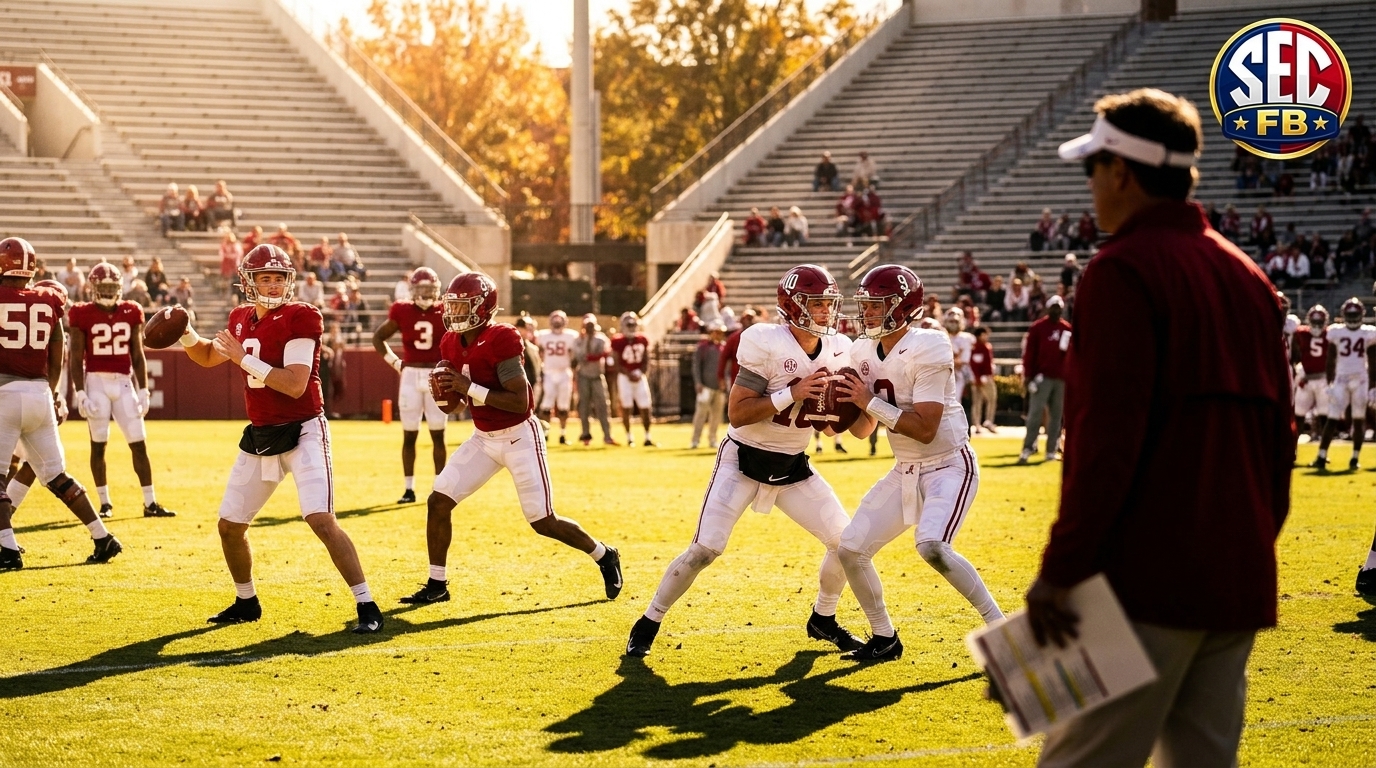
2026 college football spring questions: Which Alabama position battles will define fall camp?
The 2026 college football spring questions begin with Alabama’s usual mix of veterans and newcomers. Coaches probed the quarterback room and the offensive line. They also tested the receiver corps and defensive front, because each group must deliver by September. However, the most compelling battles will happen at quarterback, left tackle and inside linebacker. This matters because the Tide’s margin for error shrinks in a loaded conference.
We take an analytical look at reps, positional continuity, transfer portal additions and spring development. Therefore, this piece explores the likely fall depth charts, sleeper candidates and coaching decisions that shape practice tempo. As a result, readers get a clear picture of who will start, who will push and who might transfer out. The tone stays cautiously optimistic because Alabama returns experience at many spots, yet waits for answers at key positions.
Expect focused breakdowns on quarterback rotation, the right and left tackle fights and the wide receiver room. We also examine the secondary slot corner battle and the defensive line rotation. Meanwhile, special teams questions may swing tight games in the early season. Follow along if you care about roster continuity, transfer portal impact and coaching moves. Fall camp will answer these spring mysteries.
2026 college football spring questions: Quarterback room and transfer ripple effects
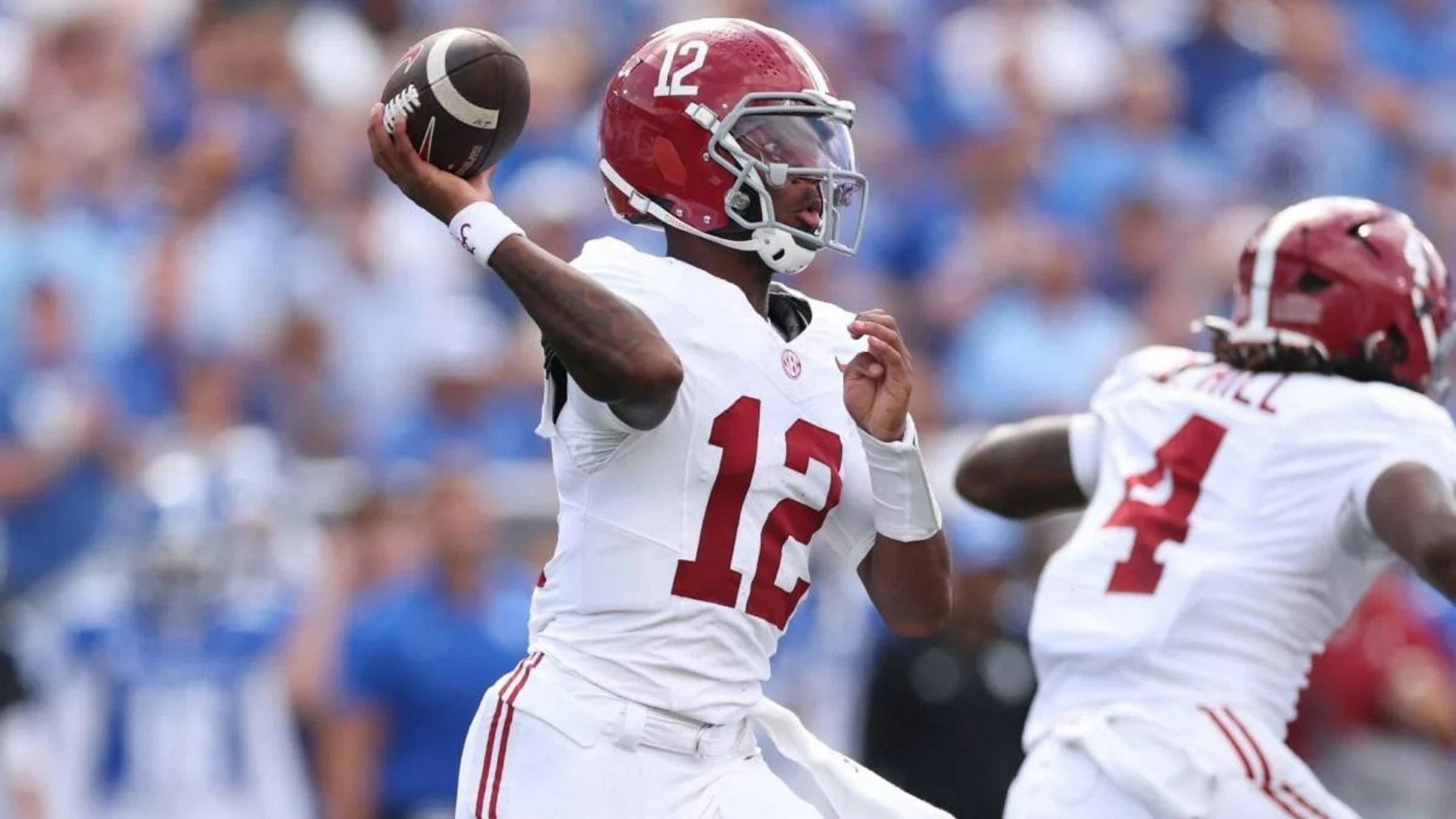
The quarterback room framed many of the 2026 college football spring questions at Alabama. Returning starters provide continuity, but the transfer portal has introduced new variables. Therefore, coaches measured shot coverage and decision speed in spring drills. As a result, the depth chart feels unsettled at the top, and competition should sharpen in fall camp.
Expect the staff to favor clean mechanics and ball security. Meanwhile, young quarterbacks who showed late flashes will get more reps because the Tide values internal development. For context on how portal churn can reshape rooms, see analysis of Missouri’s portal strategy: Missouri’s Portal Strategy.
2026 college football spring questions: Offensive line, left tackle and veteran voices
The offensive line drives Alabama’s identity, and spring flared up the left tackle question. Continuity exists at several interior spots, yet left tackle may fall to a transfer or a developing returner. Matt Stinchcomb’s presence in the program’s lore matters because the Tide expects pro-level technique. Therefore the coaching staff will prioritize pass sets and run-game cohesion during fall camp.
Analysts also flagged spring-game red flags elsewhere. For similar concerns from another SEC spring, read: Kentucky Spring Game Concerns.
2026 college football spring questions: Inside linebacker, secondary and depth tests
Alabama’s linebacker room showed both veterans and intriguing underclassmen. The inside linebacker battle matters because it defines run fits and linebacker rotation. Coaches watched tackling fundamentals closely. However, the secondary’s nickel and slot corner fights may decide close conference games because coverage mismatches emerge early.
Special teams and rotational defensive linemen will also influence early-season results. As one analyst wrote about roster timelines: “If he’s the real deal — and we’ve seen plenty of redshirt freshmen absolutely explode onto the scene in recent seasons — that would paper over some cracks.” That perspective underscores why spring answers can change quickly.
For broader context and expert mailbag takes on lingering questions, consult: College Football Mailbag.
External reference: check the current roster and depth at ESPN for drills and spring reports.
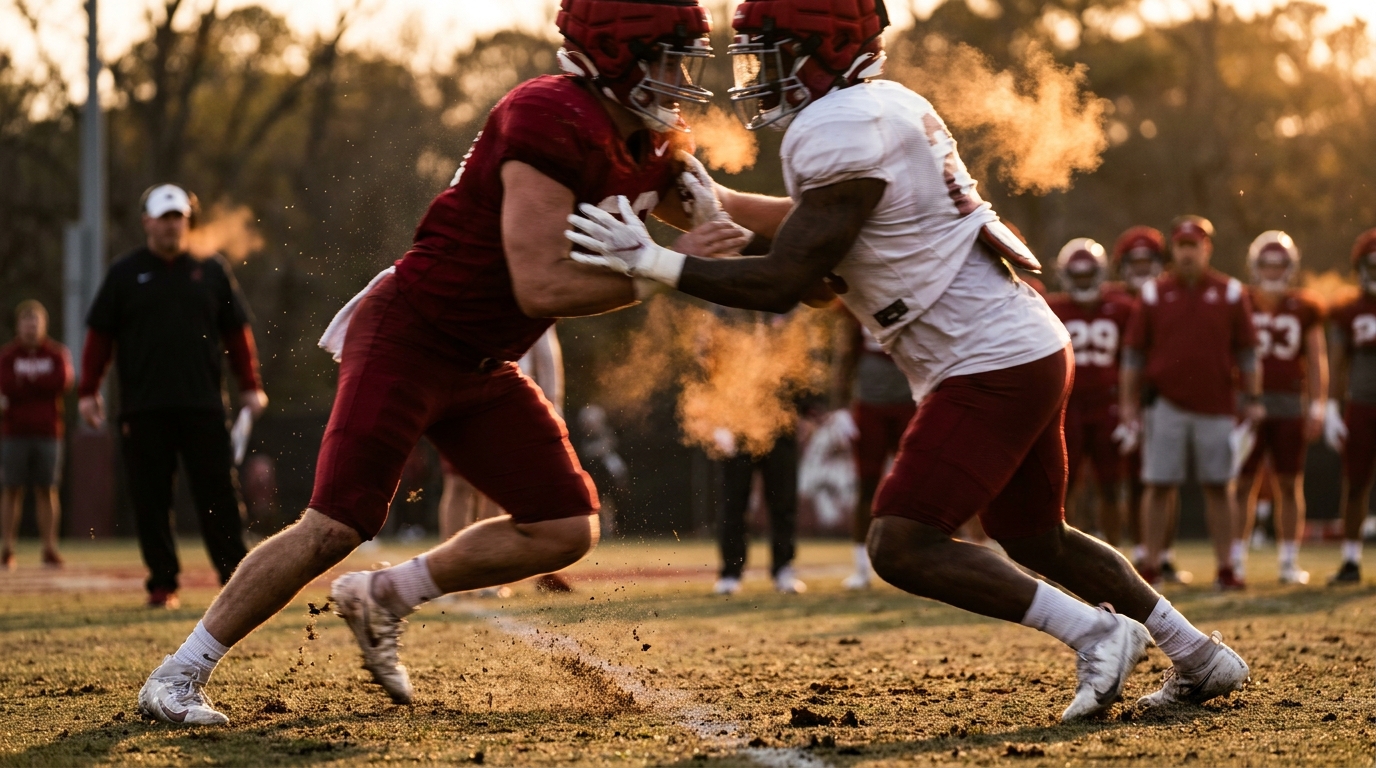
Spring camp intensity captured in motion with crimson and white practice jerseys, kicked-up turf and focused drills.
2026 college football spring questions — Position battles at a glance
This table summarizes the Alabama position battles emerging from spring. It highlights contenders, strengths, concerns, and likely 2026 outcomes. Therefore readers get a quick, data driven snapshot before fall camp.
| Position | Contenders | Strengths | Concerns | 2026 Outlook |
|---|---|---|---|---|
| Quarterback | Returning starter; redshirt freshman push; transfer portal addition | Accuracy; pocket presence; experience with first team reps. SECFB note: “If he’s the real deal — and we’ve seen plenty of redshirt freshmen absolutely explode onto the scene in recent seasons — that would paper over some cracks.” | Ball security under pressure; decision speed; limited live-game reps for backups | Close competition into fall; starter likely by camp end; potential breakout starter |
| Left Tackle | Upperclass returner; high upside underclassman; possible transfer target | Run blocking; developing pass sets; veteran coaching influence from Matt Stinchcomb | Footwork versus elite edge rushers; consistency in long drives | Tight battle; winner secures early snaps; pass protection a season hinge |
| Inside Linebacker | Two veterans; athletic underclassmen; special teams standouts | Tackling experience; knowledge of run fits; leadership in front seven | Range in coverage; depth if injuries occur | Veteran likely opens as starter; rotation by committee for workload management |
| Nickel Slot Corner | Experienced slot corner; converted outside corner; incoming transfer | Quickness in short areas; tackling in space; slot instincts | Matchup speed versus shifty slot receivers; communication in zone | Key situational starter; matchup driven packages early in schedule |
| Wide Receiver | Lead veteran target; polished young WRs; redshirt freshmen | Route polish; contested catch ability; special teams upside | Drop consistency; run-blocking assignment execution | Depth should help. New QB chemistry required early in season |
| Rotational Defensive Line | Returning rotational DL; freshmen with upside; weight-room gains | Depth to rotate; stout early-run defense potential | Consistent interior pass rush; stamina late in games | Rotation will settle by non conference play; situational pass rushers emerge |
| Special Teams | Kicker competition; punter incumbent; returner battle | Field position focus; experienced special teams coaches | Clutch kicking under pressure; return security concerns | Special teams likely to swing close early games; competition decides roles |
Transfer portal and roster continuity: How spring churn shapes fall camp
Alabama’s answer to the 2026 college football spring questions depends heavily on roster continuity. Returning starters give stability. However, portal movement injects uncertainty and opportunity.
Key takeaways
- Transfer portal creates immediate need for evaluation because new arrivals must learn systems fast. Therefore coaches prioritize reps for transfers and returners.
- Returning starts matter. Teams with high returning starts face fewer schematic questions. As a result, continuity tables often predict early-season success.
- Internal development still wins games. For example, coaching influence from alumni and mentors like Matt Stinchcomb can accelerate linemen’s technique.
Roster effects on position battles
- Quarterback rooms split fast when a portal signal arrives, because decision speed and live reps matter. Meanwhile, redshirt freshmen can force the issue quickly.
- Offensive line battles tilt toward experienced units. However, one quality transfer can flip a left tackle fight because of immediate pass-protection need.
- The secondary and nickel spots suffer with turnover. Therefore coverage chemistry needs practice time.
Coaching, logistics and season outlook
- Coaches now juggle recruiting, development and portal integration. Consequently spring practice focuses on install pace and communication.
- Analysts and commentators, including Paul Finebaum, note that roster churn raises volatility for early schedules.
Final thought
The portal lowers barriers to short-term fixes. However, returning starters and continuity tables remain the best predictors of stable depth charts. “If he’s the real deal — and we’ve seen plenty of redshirt freshmen absolutely explode onto the scene in recent seasons — that would paper over some cracks.”
Spring practice left clear, measurable questions about Alabama’s roster. The 2026 college football spring questions center on quarterback, left tackle, and inside linebacker. The mood is analytical and cautiously optimistic.
Risks remain because portal churn can reshape rooms overnight. However, quarterback decision speed and left tackle footing still have unresolved variables. Secondary chemistry and inside linebacker depth also warrant scrutiny. Therefore, Alabama’s early schedule will test those weak points.
Opportunities exist because returning starts yield continuity. Redshirt freshmen and targeted transfers offer immediate upside. Coaches and mentors, including Matt Stinchcomb, can accelerate player polish. As a result, Alabama can balance short-term fixes and long-term development.
Fall camp will answer many of these 2026 college football spring questions. SECFB LLC will keep tracking reps, depth charts, and transfer moves. For more analysis, visit SECFB.com and follow on Twitter/X @ZachGatsby. We remain cautiously optimistic about the Tide’s ability to convert spring progress into consistent fall performance.
FAQs
What are the top 2026 college football spring questions for Alabama?
The primary spring questions focus on quarterback, left tackle, and inside linebacker. Coaches need clarity at quarterback because decision speed and ball security matter. The left tackle fight will determine pass-protection stability. The inside linebacker battle defines run fits and rotational depth. Nickel coverage and special teams depth also matter. Therefore fall camp will prioritize those areas. Returning starts give Alabama an edge. However portal movement can alter the pecking order quickly.
How will the transfer portal affect Alabama’s fall camp?
The transfer portal offers immediate upgrades and depth. However transfers must learn schemes fast. As a result coaches split reps to assess fit and processing speed. Returning players still matter because continuity reduces mental errors. Continuity tables and returning starts often predict early success. Matt Stinchcomb and position coaches will focus on technique and communication. Meanwhile commentators like Paul Finebaum note that roster churn raises early-season volatility.
Which position battles can realistically change before September?
Quarterback rooms can flip with one convincing performance in fall drills. Left tackle can change if a transfer or polished underclassman outperforms peers. Inside linebacker roles shift with injury, special teams play, or standout practices. Nickel slot corner snaps rotate based on matchup needs and coverage communication. Therefore expect some turnover through fall camp and even into nonconference play.
Can redshirt freshmen or internal players win starting jobs?
Yes. Internal development remains a powerful path to starting roles. If a redshirt freshman breaks out, it can paper over depth concerns. As one analyst wrote, “If he’s the real deal — and we’ve seen plenty of redshirt freshmen absolutely explode onto the scene in recent seasons — that would paper over some cracks.” Coaches reward readiness and consistent practice performance. Watch reps and live-scrimmage snaps closely.
What should fans watch during fall camp and early games?
Track rep counts, clean technique, and communication under pressure. Also monitor ball security, pass-rush efficiency, and special teams execution. Pay attention to QB to receiver chemistry in early snaps. Finally note depth at tackle and linebacker. Those indicators will answer many 2026 college football spring questions.