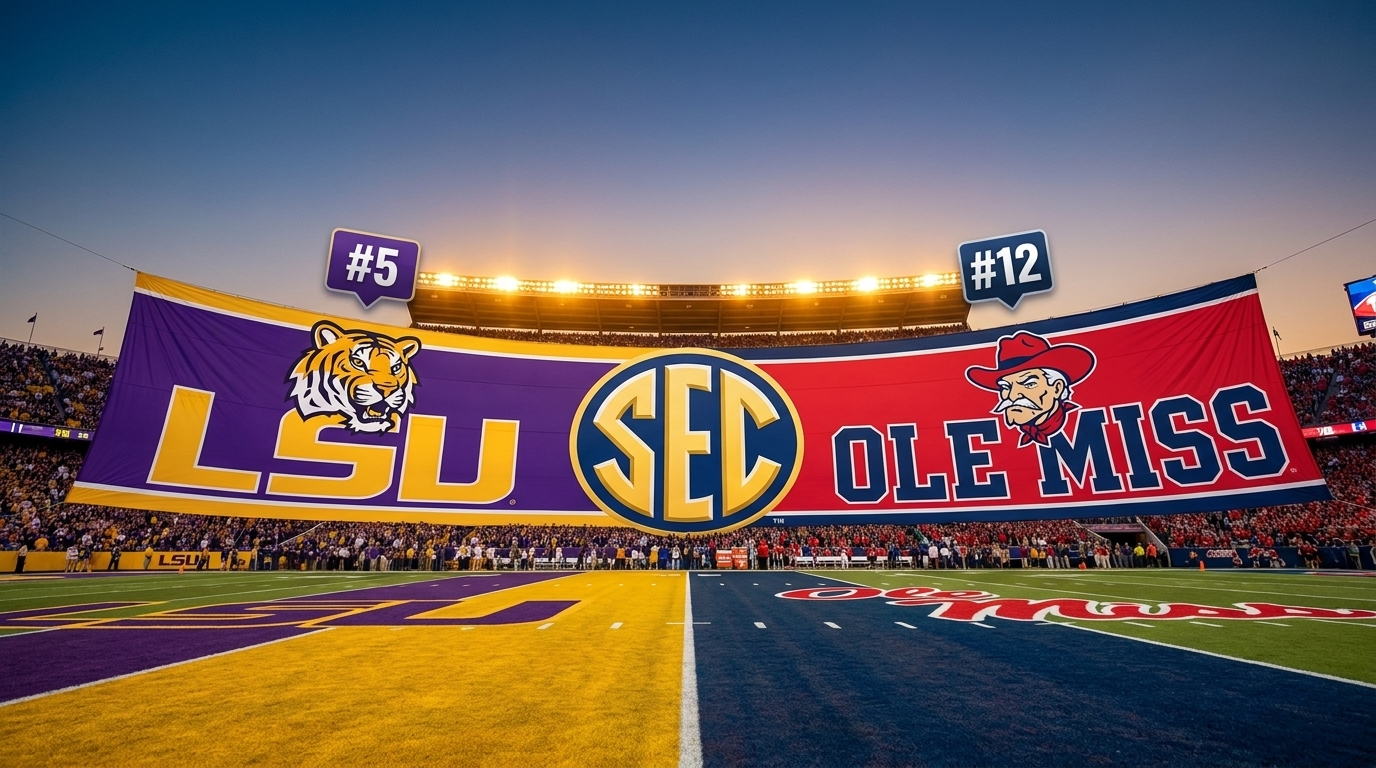
LSU ahead of Ole Miss in post-spring power rankings proves a lightning rod for debate this week.
However, many fans and analysts question that conclusion and view the list with deep skepticism.
CBS Sports slotted LSU four spots above Ole Miss after spring workouts, and that placement raised eyebrows.
Ole Miss returns quarterback Trinidad Chambliss and running back Kewan Lacy, both key veterans.
They also recruited the nation’s number two transfer class, which strengthens their case.
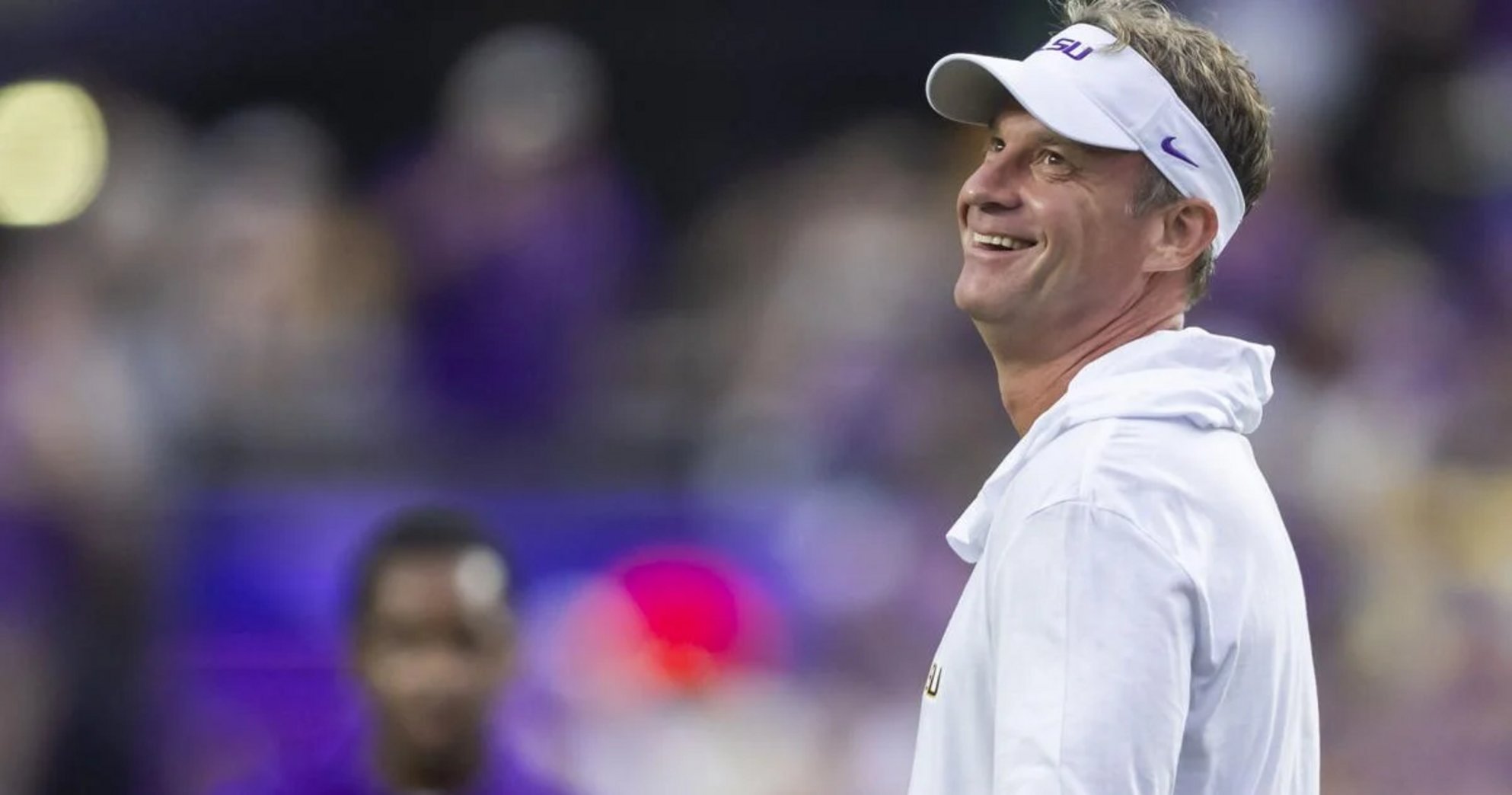
Meanwhile, LSU added high end transfers and coaching momentum under Lane Kiffin and staff hires.
Still, metrics matter, because transfers do not always translate to instant cohesion on the field, clearly.
We should also question the weight given to spring practices and media narratives.
Ultimately, rankings preview storylines, but they often overlook durability, depth and game day execution.
Before taking this list as gospel, demand evidence, inspect the assumptions, and wait until September 16 at Vaught Hemingway Stadium.
LSU ahead of Ole Miss in post-spring power rankings
CBS Sports placed LSU four spots ahead of Ole Miss in its post-spring power rankings.
However, that placement raised skeptical eyebrows across fan bases and beat writers.
The dispute reflects deeper questions about methodology and sample size.
LSU did not get here by accident.
Kiffin secured a top transfer class, boosting perceived talent and depth.
Still, transfers require time to mesh and learn schemes.
Ole Miss counters with continuity at quarterback and running back.
Trinidad Chambliss and Kewan Lacy return to anchor the offense.
Marcello highlighted Sam Leavitt’s expected return from injury as a variable to watch.
Pete Golding’s staff and CFP semifinal pedigree complicate a simple narrative.
Because the Rebels also brought in the nation’s second-best transfer class, they should not be dismissed.
Still, Marcello points out cohesion concerns for both teams.
Coaching context matters because schemes and culture shape outcomes quickly or slowly.
- CBS Sports rank: LSU four spots ahead of Ole Miss.
- Transfer classes: LSU top, Ole Miss No. 2 nationally.
- Eligibility win: Chambliss granted a sixth year in February.
- Coaching changes: Lane Kiffin’s offensive momentum versus Pete Golding’s rebuild.
- Key returners: Chambliss and Kewan Lacy provide offensive stability.
Therefore, the rankings matter, but they do not settle the debate.

The evidence behind the post-spring rankings demands scrutiny. CBS Sports placed LSU four spots ahead of Ole Miss, a placement that rests on transfers and coaching narratives. However, spring workouts offer limited live-game data.
“Lane Kiffin might be trying to temper fan expectations in Year 1, but we’re not. The offensive line has come together quickly, and pass protection appears solid. Keeping defensive coordinator Blake Baker on staff was a huge win, and we’re expecting a big jump. When Arizona State quarterback transfer Sam Leavitt returns from injury in August, we’ll get a better read on how potent Kiffin’s always-explosive offense will really be this fall, but the pieces are clearly already in place with a load of elite transfers, including many from his run at Ole Miss,” Marcello writes about LSU.
Because Leavitt projects to impact LSU’s timing, his recovery matters. If healthy, he can accelerate chemistry with new receivers. Still, transfers rarely provide instant cohesion.
“The Pete Golding era began in December, culminating in a CFP win and a thriller against Miami in the semifinals. Now he faces a rebuilding project at several key positions, including receiver and linebacker. The Rebels pulled the nation’s No. 2 transfer class — one spot behind Kiffin at LSU — and return superstar quarterback Trinidad Chambliss and running back Kewan Lacy. No offseason win was bigger than a local judge granting Chambliss a sixth year of eligibility in February,” Marcello writes of Ole Miss.
Therefore, continuity at quarterback gives Ole Miss a baseline advantage. Chambliss and Kewan Lacy deliver proven production, and that stability matters on game day. Because coaching strategies shape roster use, Kiffin’s offensive traffic and Golding’s rebuilding timeline create different risk profiles.
Ultimately, the ranking reflects expectation more than proof. As Marcello warns, “All that said, we can debate about rankings all we want, but the real progress will show when the Tigers head to the Vaught-Hemingway Stadium on Sep. 16.” Therefore, treat the listing as a storyline, not a verdict.
| Team | Transfer Class Ranking | Key Returning Players | Coaching Staff | Significant Offseason Wins | Projected Impact |
|---|---|---|---|---|---|
| LSU Tigers | Top nationally (No. 1) | Sam Leavitt (Arizona State transfer; expected return in August); several elite transfers | Lane Kiffin; defensive coordinator Blake Baker retained | Top transfer haul; staff continuity | High upside because talent is elite, however transfers may need time to gel, creating cohesion risk |
| Ole Miss Rebels | No. 2 nationally | Trinidad Chambliss (quarterback); Kewan Lacy (running back) | Pete Golding; CFP semifinal pedigree | Chambliss granted a sixth year; No. 2 transfer class | Stable offense with proven players, but rebuilding needs at receiver and linebacker could limit depth |
The debate over LSU ahead of Ole Miss in post-spring power rankings shows how thin early evaluations can be.
CBS Sports placing LSU four spots higher reflects transfer buzz and narrative momentum.
However, those factors do not guarantee wins.
Spring practices and media hype often overshadow depth and cohesion issues.
Ole Miss retains Trinidad Chambliss and Kewan Lacy, which matters on game day.
LSU’s top transfer class and Lane Kiffin’s staff inject upside and uncertainty.
Pete Golding’s coaching pedigree and the Rebels’ continuity complicate a simple ranking.
So skepticism remains justified.
The real test arrives on Sep. 16 at Vaught-Hemingway Stadium.
Until then, treat rankings as a storyline, not a verdict.
For more analysis and updates, see SECFB LLC and follow @ZachGatsby for coverage.
Expect adjustments, injuries, and scheme evolution to shift perceptions.
Because both teams have clear strengths, small margins will decide their fate.
Fans and analysts should watch depth charts, Leavitt’s recovery, and early season matchups closely.
Frequently Asked Questions (FAQs)
What does “LSU ahead of Ole Miss in post-spring power rankings” mean?
This phrase refers to CBS Sports’ post-spring power rankings that list LSU four spots above Ole Miss. It highlights a projection based on spring workouts, transfers, and coaching narratives. However, it is an early snapshot, not a definitive judgment on season outcomes.
Why is that ranking controversial?
The ranking is controversial because it leans on transfer class hype and limited spring data. Ole Miss returned key veterans, while LSU added elite transfers. Because transfers take time to gel, readers question whether talent alone justifies LSU being ranked higher.
Which players matter most in this debate?
Trinidad Chambliss and Kewan Lacy anchor Ole Miss’ offense. Sam Leavitt’s projected return matters for LSU timing and pass protection. These names shape expectations because proven starters reduce risk, while new transfers raise uncertainty.
How do coaching strategies influence the rankings?
Lane Kiffin’s offensive system and Blake Baker’s retention suggest LSU may rise quickly. Pete Golding’s CFP semifinal pedigree gives Ole Miss credibility, but he faces rebuilding at receiver and linebacker. Therefore, coaching timelines create different risk profiles.
When will we know who was right?
The first true test comes on Sep. 16 at Vaught-Hemingway Stadium. Until then, follow depth charts, Sam Leavitt’s health, early nonconference games, and injury reports. Treat rankings as a storyline, not a verdict. This matchup will clarify whether rankings reflected reality or wishful thinking. Watch early season performance for evidence.