college football conference realignment: SEC realignment fever and the stakes
The country has erupted over SEC realignment fever, split between excitement and outrage. Fans argue about traditions and TV money. Meanwhile, athletic directors juggle budgets and travel costs. As a result, every proposed map stokes debate.
Why this matters
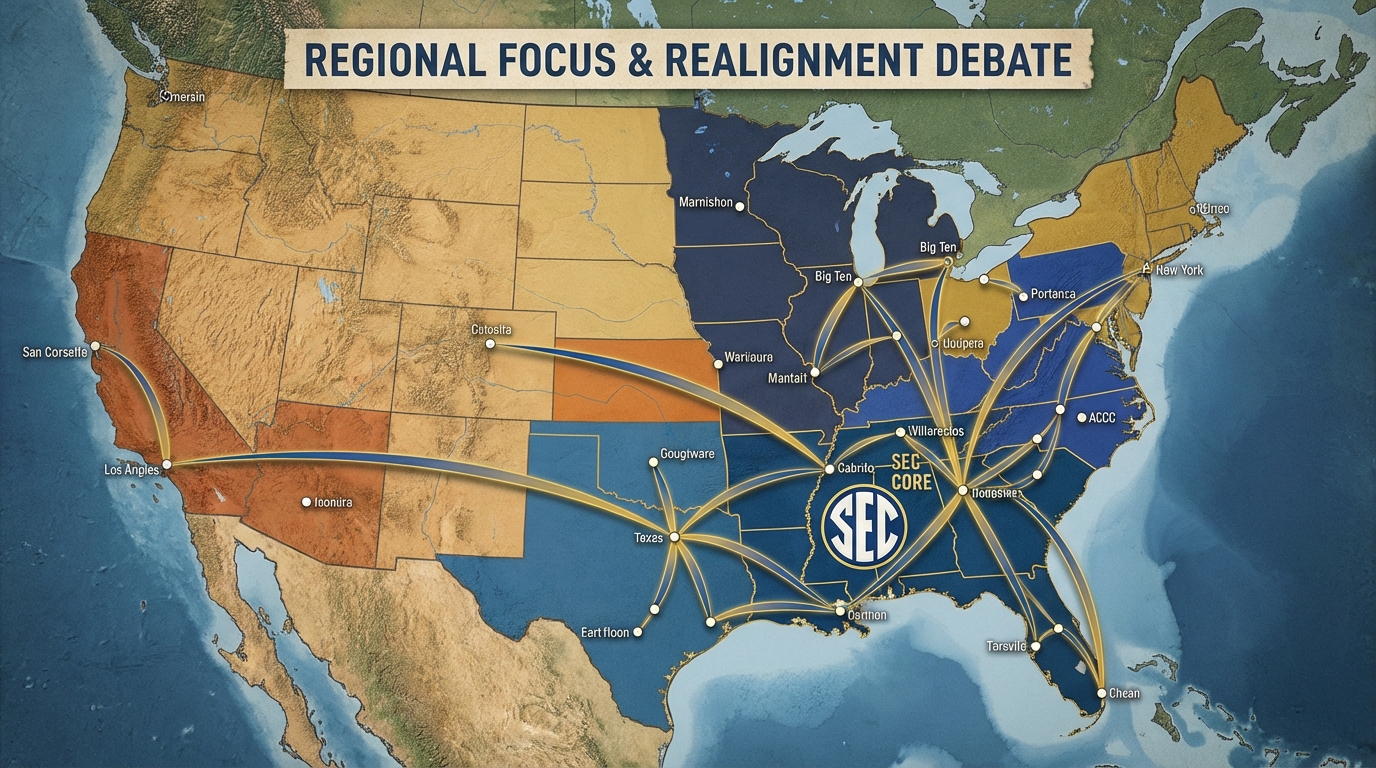
Josh Pate proposed a geo-locked, regional realignment model. It limits conferences to ten teams and reduces coast-to-coast travel. His map aims to preserve many classic rivalries while cutting expenses. However, it also forces schools to choose between history and revenue.
The tension at the heart
Traditional rivalries carry emotional weight and recruiting power. Yet modern media rights and booster influence drive conference choices. Therefore Pate’s regional plan highlights a deep conflict. It asks whether geography and rivalries can survive a money-first era.
This introduction previews maps, membership shifts, and fallout for fans and student-athletes. Next sections will analyze the proposed conference lists and the likely winners and losers.
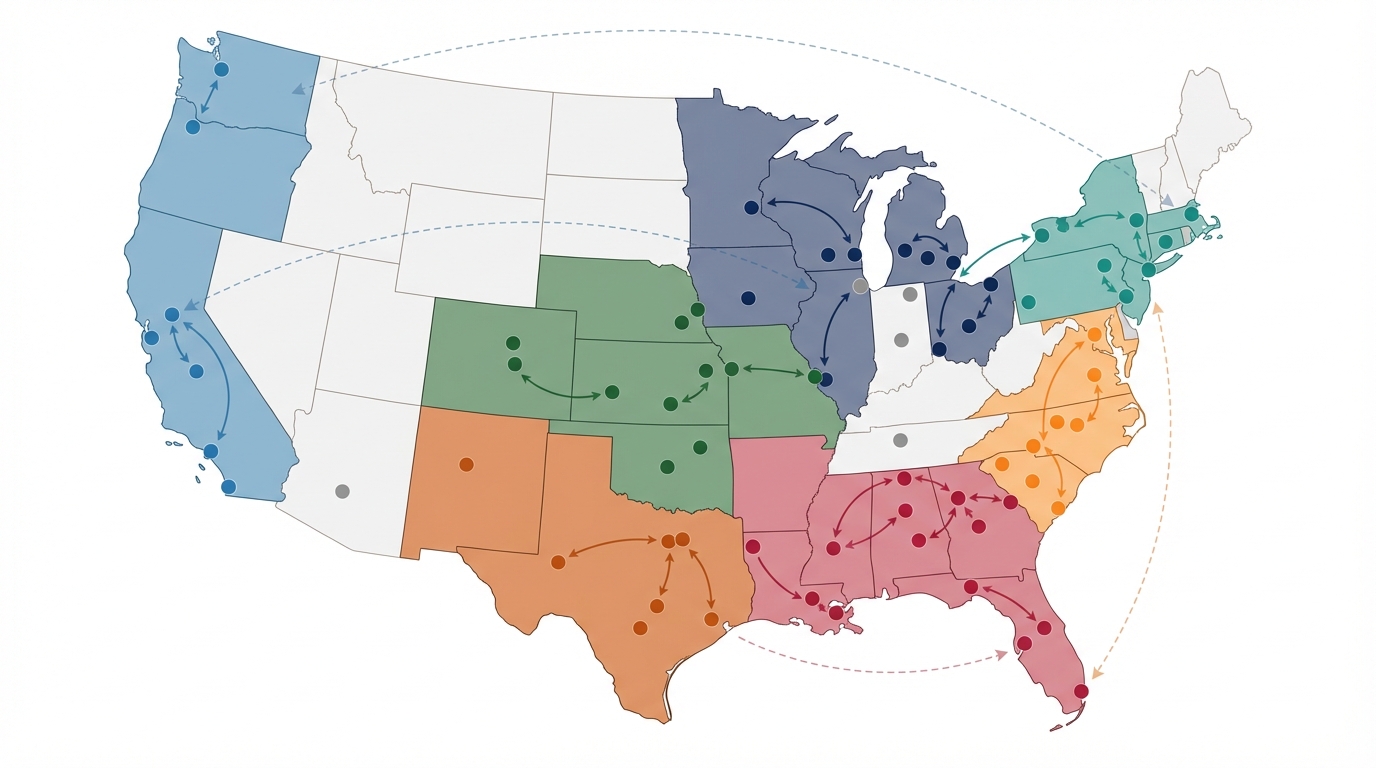
Impact on rivalries and travel costs: college football conference realignment
The fight between tradition and logistics defines this debate. “When you have Boston College traveling across the country to take on Stanford in a conference game, something is fundamentally wrong with the sport.” That complaint captures the dilemma. Pate’s geo-locked map seeks to fix that by clustering teams by region. As a result, most regular-season games stay local. Therefore travel times, flights, and hotel nights would shrink sharply.
There is also a geographic fairness argument. “There is no logical reason for Pacific coast teams to be traveling to the Atlantic coast for regular-season conference games,” the plan says. Because of that, student-athletes would miss fewer classes and face less fatigue. Fans would see more meaningful, repeatable regional rivalries. Moreover, athletic departments could cut travel budgets and reallocate savings to facilities and support staff.
Finally, a regional structure preserves history while limiting long scrambles across time zones. However, not every program wins financially. Still, the proposal offers a trade-off many find sensible. In short, geo-locked conferences reduce travel strain, protect key matchups, and help student-athletes and fans enjoy a truer version of college football.
| Conference | Members (10) | Notes |
|---|---|---|
| SEC | Ole Miss, Georgia, Florida, Alabama, Kentucky, Mississippi State, South Carolina, Tennessee, Auburn, LSU | Trimmed to 10 teams; lost Texas, Texas A&M, Arkansas, Oklahoma, Missouri and Vanderbilt; seeks regional focus. |
| ACC | Miami (FL), Florida State, NC State, North Carolina, Clemson, Wake Forest, Duke, Georgia Tech, Virginia, Maryland | Atlantic regional core preserved; traditional rivalries largely intact. |
| Big Ten | Ohio State, Michigan, Michigan State, Penn State, Iowa, Minnesota, Wisconsin, Purdue, Illinois, Indiana | Midwestern focus; coast-to-coast travel reduced for members. |
| Big East | Boston College, Pittsburgh, Louisville, Rutgers, Syracuse, Virginia Tech, West Virginia, Cincinnati, UCONN, UCF | Recast as northeastern and mid-Atlantic conference. |
| Southwest Conference | Texas, Texas Tech, SMU, Baylor, Texas A&M, TCU, Rice, Houston, Arkansas, Tulane | Rebuilt Texas-centric league; Texas and Texas A&M return to a regional home. |
| Big 8 | Oklahoma, Kansas, Kansas State, Iowa State, Nebraska, BYU, Oklahoma State, Missouri, Colorado, Utah | Rebuilt Great Plains conference; Oklahoma and Missouri move here. |
| Pac 10 | USC, UCLA, Oregon, Oregon State, Washington, Washington State, California, Stanford, Arizona, Arizona State | Pacific-coast core kept intact; limits long cross-country trips. |
| Independent | Notre Dame, Northwestern, Vanderbilt | Small independent group; Vanderbilt leaves the SEC to become independent. |
Financial realities of college football conference realignment
Money sits at the center of Pate’s proposal and the broader debate. No matter what, though, Pate will likely never live his dream as commissioner of college football. Yet his plan forces a clear conversation about revenue and power.
Most important is media rights and collective bargaining. If Division I and FBS Power 4 schools negotiate as a single group, they could reallocate revenue more evenly. For example:
- Collective negotiation of media rights could produce one large TV pool. Therefore smaller schools would gain steadier income.
- A standardized revenue share would reduce incentives to chase new members purely for dollars. As a result, conference hopping becomes less profitable.
- Reduced travel costs would free budget for student services, academic support, and facilities.
However, serious barriers remain. Historically, conferences expanded to chase TV money and booster influence drove much of the change. If college sports are “saved” by the Fort Worth oilman and his constituents…then and only then would the SEC let these revenue giants go. Because of that reality, political pushback would be fierce.
Other obstacles include contracts, exit fees, and antitrust rules. Moreover, legal fights over existing media contracts could last years. Still, Pate’s regional plan highlights alternatives to unchecked expansion. Finally, while feasibility is low today, the model sketches a framework that could improve conditions for student-athletes and mid-tier programs over time.
Conclusion
College football conference realignment remains a hot topic as it balances tradition with economic factors. The SEC’s proposed regional restructuring is a microcosm of this broader issue. Supporters argue that reducing travel and redefining geographical regions will protect long-standing rivalries, such as Texas vs. Texas A&M and Auburn vs. Georgia. Yet the reality is far more complex, with historical shifts driven by significant financial incentives and media rights negotiations.
Critics point out that moving teams for TV deals and booster influence has irrevocably altered the landscape. “No matter what, though, Pate will likely never live his dream as commissioner,” suggests the need for innovative, yet realistic solutions.
For ongoing updates on SEC realignment and expert insights into college football, SECFB LLC stands out as a leading resource. Keeping you informed with the latest breaking news, SECFB LLC delivers trusted analysis on every development. Visit their website at SECFB.com and follow them on Twitter/X @ZachGatsby for more expert commentary. In conclusion, while the path forward may be paved with challenges, understanding the forces at play will guide informed discussions regarding the future of college football.
Frequently Asked Questions (FAQs)
How will conference realignment affect rivalries?
Realignment will keep many regional rivalries intact. However, some historic matchups change because teams shift conferences. As a result, fans may see new annual opponents replace old foes.
What are the main financial motivations behind these moves?
Media rights and TV revenue drive most decisions. Boosters and school leaders also push for bigger payouts. Therefore conferences expand or reconfigure to capture larger broadcast deals.
Is this geo-locked college football conference realignment proposal realistic?
Pate’s map offers clear benefits, like reduced travel and preserved geography. Yet feasibility is low today because contracts and money-first incentives block sweeping change. In short, the plan is sensible but politically difficult.
Which teams move or become independent under the proposal?
Texas, Texas A&M, and Arkansas join a rebuilt Southwest Conference. Oklahoma and Missouri move to a rebuilt Big 8. Vanderbilt would leave the SEC and become independent.
How will fans and student-athletes feel the impact?
Fans get more local, meaningful games and less “coast-to-coast” scheduling. Student-athletes face fewer long flights, which helps academics and recovery. Still, some spectacle from national matchups could fade.