college football transfer portal: Auburn transfer QB and the biggest portal moves reshaping the Tigers
The college football transfer portal changed how programs build rosters overnight. Because top players now move freely, every offseason feels like a second recruiting cycle. This shift matters most when a position as pivotal as quarterback changes hands.
Auburn fans should be paying attention. The Tigers added a transfer quarterback who could alter the depth chart and the playbook. Moreover, several other major portal moves reshaped Auburn’s supporting cast. As a result, expectations around offensive tempo and scoring have climbed.
In this introduction you will get a concise overview of what to watch. Expect breakdowns of the transfer QB, NIL impacts, and roster fit. Also, we will highlight defensive pickups and transfer portal gems who can start immediately.
What you will learn
- Which Auburn transfer quarterback could start week one and why
- How NIL deals and college football transfers changed roster strategy
- Which portal moves give Auburn a short term boost and which build long term depth
Read on for detailed scouting, roster fits, and the biggest portal stories shaping the Tigers this season.

college football transfer portal moves reshaping Auburn
The transfer class Auburn assembled changed the Tigers’ preseason outlook. Because the portal delivered high-impact talent, the depth chart now looks different. This section breaks down the biggest moves, evidence, and what each brings.
Top transfers and quick stats
-
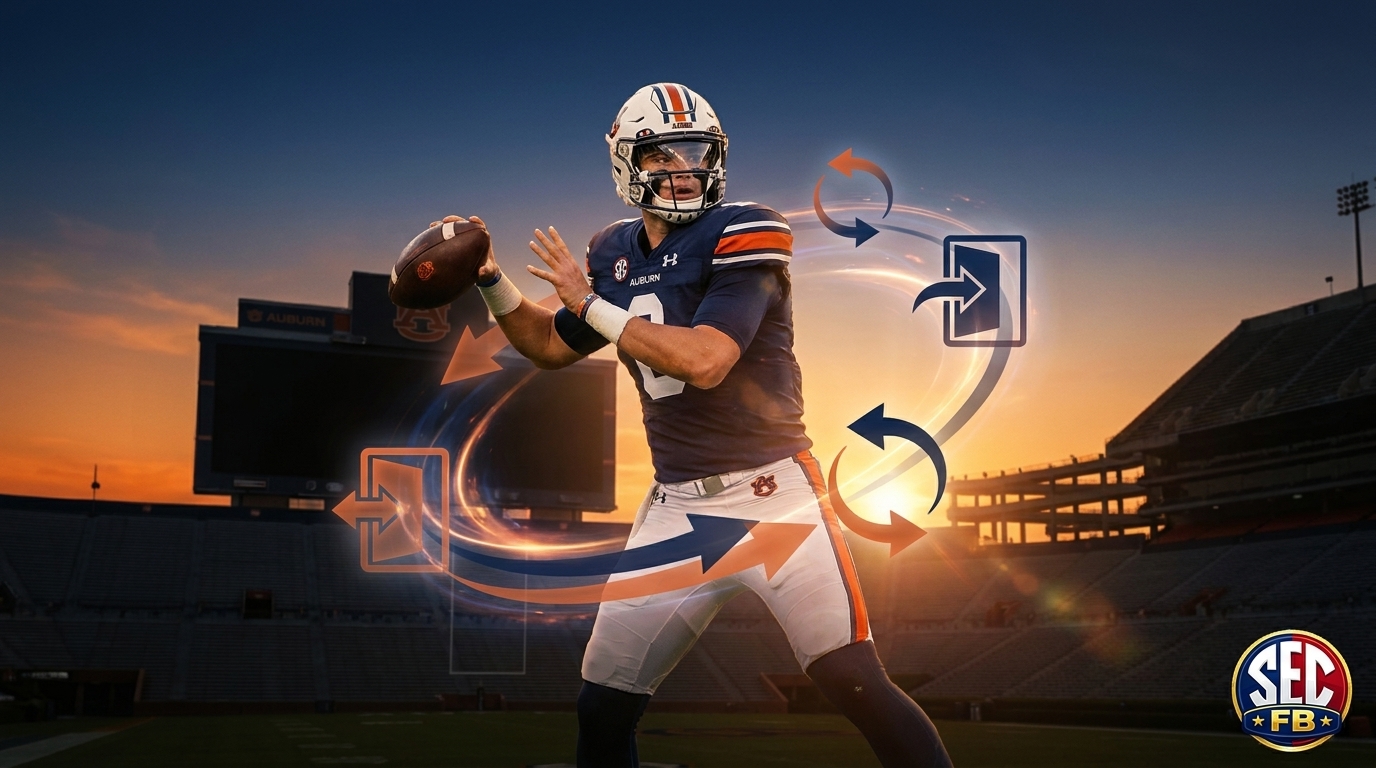
Byrum Brown — Dual threat quarterback, 6-foot-3 and 232 pounds. He threw for over 3,000 yards and rushed for more than 1,000 yards in 2025.
Insight: Brown gives Auburn a built-in playmaker under center. Payoff: Expect more designed runs and explosive second-level plays.
-
Nick Marsh — Proven receiver with 100 receptions for 1,311 yards and 9 touchdowns across two seasons.
Insight: Marsh replaces lost production at receiver depth. Payoff: He opens the field for the new quarterback and stabilizes third down.
-
Colton Joseph — Former redshirt sophomore and Sun Belt Offensive Player of the Year. His Old Dominion unit averaged 32 points per game and 302.6 yards.
Insight: Joseph brings college-level production and route polish. Payoff: Auburn gains an instant starting weapon and schemed mismatches.
Why these moves matter
First, Auburn addressed quarterback uncertainty by adding a proven playmaker in Byrum Brown. As a result, the offense can run more tempo and varied read concepts. Second, adding Nick Marsh improves the pass game immediately. Moreover, Colton Joseph adds scoring punch and reliability in the slot or outside.
Defensive and roster ripple effects
Because the offense now threatens on the ground and through the air, defensive game planning shifts. Opponents must respect Brown’s mobility and Marsh’s route timing. Therefore, Auburn can create more one-on-one matchups for skill players.
Final insight and payoff
Insight: The college football transfer portal moved Auburn from question marks to clarity at key spots. Payoff: Short term, Auburn should score more and sustain drives. Long term, these portal additions set recruiting and NIL leverage for the program.
| Player | Position | Previous Team | New Team | Height / Weight | Major Stats | NIL Deals or Notes |
|---|---|---|---|---|---|---|
| Byrum Brown | Quarterback | USF (transfer) | Auburn | 6-3 / 232 | 3,000+ passing yards, 1,000+ rushing yards (2025) | Reunites with coach Alex Golesh; instant dual threat |
| Nick Marsh | Wide Receiver | Arizona State / previous stops | Indiana | 6-3 / 205 | 100 receptions, 1,311 yards, 9 TDs (two seasons) | Veteran slot/outside target; stabilizes third down |
| Colton Joseph | Wide Receiver | Old Dominion | New program (portal) | 6-2 / 205 | Old Dominion offense: 32 PPG, 302.6 YPG; Sun Belt Offensive POY | Proven college production; schemed mismatch potential |
| Damon Wilson | Edge Rusher | TCU / transfer portal | New program | 6-4 / 250 | 9.5 tackles for loss, 9.0 sacks (last season) | 247Sports top portal recruit; pass rush upgrade |
| Darian Mensah | Quarterback | Duke | Miami Hurricanes | 6-3 / 205 | High-impact QB season at Duke; dramatic late-window move | Multi-year NIL reported near $10,000,000; headline transfer story |
| Cam Coleman | Wide Receiver | Former program | Texas | 6-3 / 201 | Draft buzz up to top 10 in mock 2027 draft | Reported $3,000,000 NIL to Texas; major upside |
| Sam Leavitt | Quarterback | Former program | LSU | 6-3 / 232 | Dual-threat profile; starter-level experience | Reported $5,000,000 NIL to LSU; Lane Kiffin fit |
| Brendan Sorsby | Quarterback | Indiana | Texas Tech | 6-4 / 225 | Experience as FBS starter | Transfer clouded by sports-betting violations (~$90,000 in bets) |
| Joshua Hoover | Quarterback | TCU | Indiana | 6-2 / 205 | Fills gap left by Heisman winner Fernando Mendoza | Immediate veteran replacement in Big Ten role |
| Rueben Bain | Defensive Lineman | Former program | New team | 6-4 / 285 | High school/college recruit pedigree; upside on interior line | Depth and developmental piece on defensive front |
Notes: This table compiles the top 10 portal moves discussed in the article. It shows positions, size, and quantifiable production where available. Use this quick reference to compare impact and immediate payoff from the college football transfer portal.
How the college football transfer portal and NIL deals collide
“The college football transfer portal has officially evolved into the sport’s equivalent of NFL free agency,” and NIL deals now turbocharge that market. As a result, players and programs treat the portal like a short-term roster market. College football transfers move with more financial leverage than ever before.
Why NIL fuels mobility
- Because schools can offer marketed opportunities, players consider more factors than playing time. For example, Darian Mensah landed a reported multi-year NIL near $10,000,000 when he moved to Miami. Therefore, that deal became a headline driver for the portal window.
- Also, Sam Leavitt’s reported $5,000,000 NIL to LSU shows how programs buy immediate quarterback upgrades and media attention. As a result, top prospects weigh program fit and endorsement potential.
Patterns we now see
- Short windows and fast decisions: players enter and exit the portal quickly. Consequently, teams must move fast in recruitment and contract talks.
- Strategic stacking: programs target proven veterans to win now, while using the portal to fill scheme-specific gaps. Moreover, coaches use portal hits to complement recruiting classes and NIL plans.
- Market tiers: elite players command large NIL packages, while midlevel transfers get modest deals tied to local sponsorship.
Notable effects on recruitment and team building
First, recruiting recruiters now compete with portals and NIL offers. For instance, SEC recruiting coverage and class analysis shifted after major portal swings; follow deeper context at SEC 2027 Roundup. Second, season narratives and top storylines often center on portal activity rather than high school recruiting; see College Football Top 10 2026 for examples.
- Immediate roster payoff: programs acquire starters with proven stats. Teams trade recruiting patience for instant wins.
- Long term leverage: successful portal integrations boost a program’s NIL appeal and future signings. Therefore, a program that lands headline names can build momentum in recruiting and sponsorships.
Risks and regulation questions
However, this market brings compliance risk and public scrutiny. For example, betting controversies and transfer windows raise governance concerns. Moreover, NIL escalation may widen competitive gaps between power programs and midmajors.
Bottom line insight and payoff
Insight: NIL turned the portal into a hybrid of recruiting and free agency. Payoff: Teams that balance financial offers, culture, and scheme fit win more quickly. For further context on conference implications and coaching shifts, read LSU Tigers Sports News Updates.
CONCLUSION
The college football transfer portal has reshaped Auburn’s roster and the sport at large. Because elite transfers like Byrum Brown and Nick Marsh altered roles, Auburn enters the season with clearer strengths. As a result, the Tigers should show more offensive versatility and immediate scoring upside.
NIL deals accelerated these shifts, and programs now balance money, fit, and culture. Therefore, headline deals for players such as Darian Mensah and Sam Leavitt changed team trajectories. However, the portal still rewards smart coaching and scheme fit over blind spending.
SECFB LLC will track how these moves play out. For more coverage visit SECFB.com and follow updates on Twitter at @ZachGatsby. Also, expect our deeper roster breakdowns and game previews this season.
Final takeaway: the college football transfer portal turned annual roster building into a high-stakes market. Teams that marry strategic portal usage with recruiting and NIL will win more quickly.
Frequently Asked Questions (FAQs)
What is the college football transfer portal and why does it matter for Auburn?
The transfer portal is the system that lets players change schools; it matters for Auburn because it allowed the Tigers to add a high-impact quarterback and other transfers that reshaped the depth chart.
Who is Auburn’s transfer quarterback and what did he do last season?
Byrum Brown is a 6-foot-3, 232-pound dual-threat who threw for over 3,000 yards and rushed for more than 1,000 yards in 2025.
How do NIL deals affect transfer decisions?
NIL deals add financial and marketing incentives that can significantly influence where top players land.
Will these transfers start right away?
Many will compete to start immediately, but final decisions depend on scheme fit and coaching evaluations.
How can fans track updates and depth chart changes?
Follow team beat writers, official team channels, and preseason depth charts for the fastest updates.