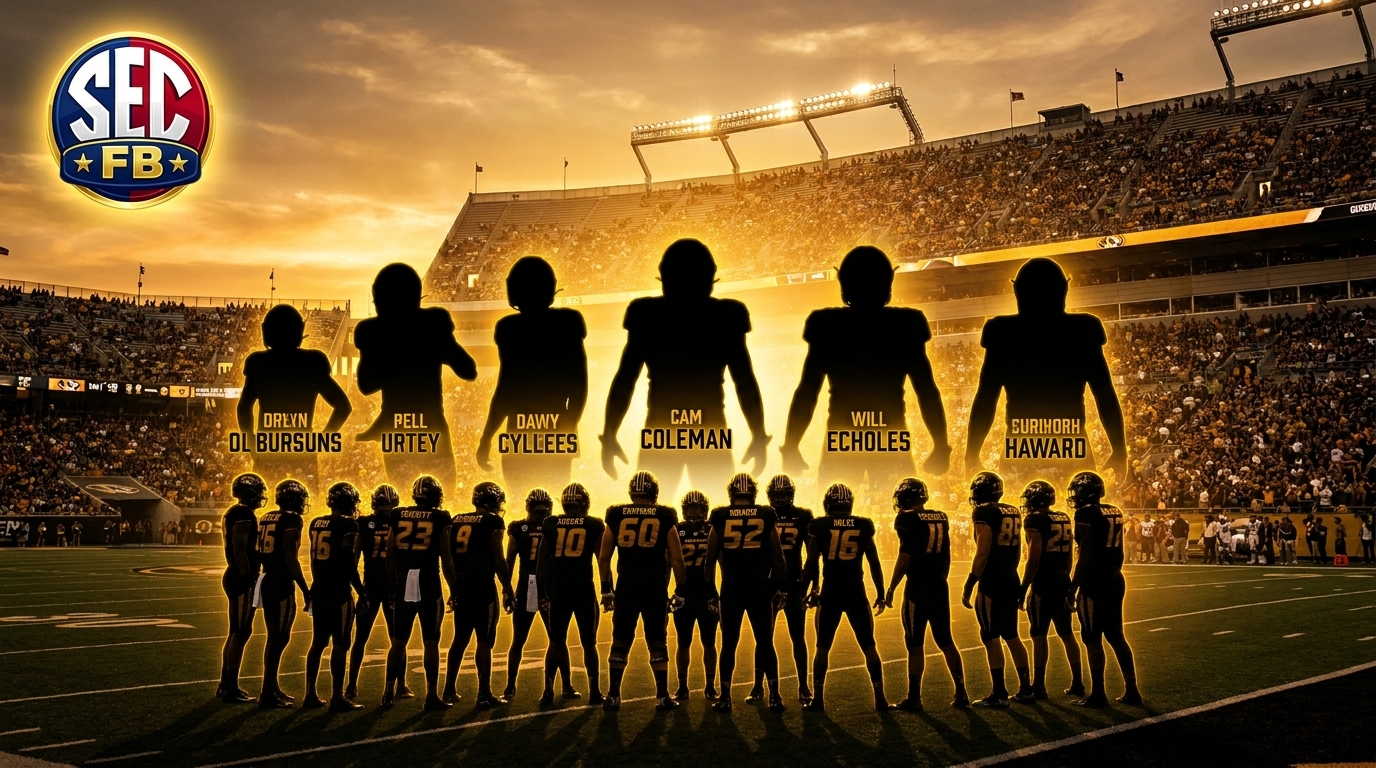
Top Ten Opposing Players anchors this preview of Missouri defensive keys for the upcoming season. This piece highlights the most impactful opponents Missouri football will face in 2026. We focus on matchups, individual traits, and tactical adjustments defenders must employ. For example, stopping explosive receivers often requires bracketing and selective double teams.
Cam Coleman and Will Echoles represent contrasting threats that demand different game plans. Coleman forces disciplined coverage because his deep speed creates explosive scoring opportunities. Meanwhile, Echoles controls the line of scrimmage and collapses pockets with power and agility. Therefore, Missouri’s schemes must blend tight coverage, gap discipline, and versatile pass rushers.
This preview unpacks the Top Ten Opposing Players in order to arm Mizzou defenders with clear priorities. Along the way, we will highlight schemes from Texas, Auburn, and Ole Miss. Additionally, we grade impact, list priority assignments, and suggest in-game adjustments. Expect concrete, coachable takeaways that translate to better situational play. Read on for a tactical, opponent focused breakdown.
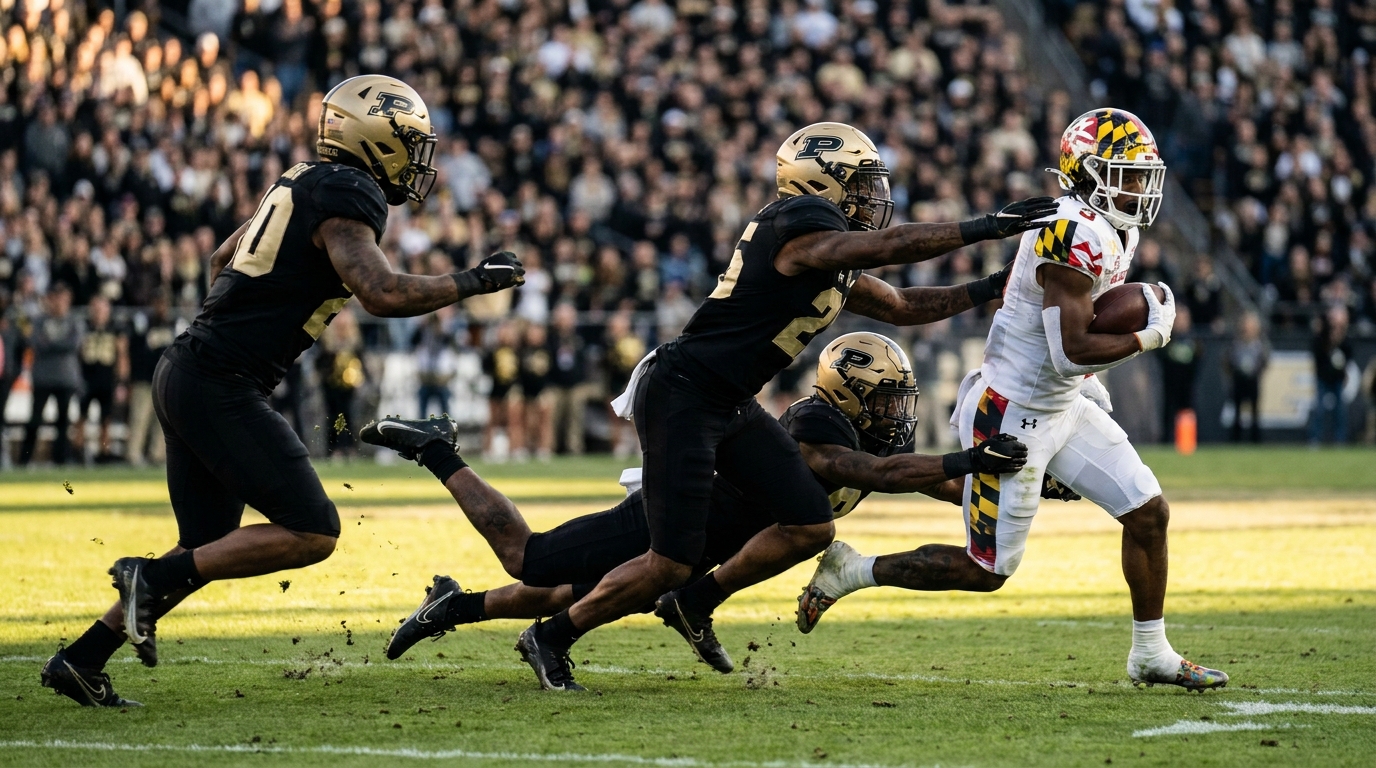
Top Ten Opposing Players — Cam Coleman: Texas deep threat and matchup nightmare
Cam Coleman stands 6-3 and weighs 200 pounds. He blends length, speed, and contested-catch ability. As a freshman at Auburn, Coleman had 37 receptions for 598 yards and eight touchdowns. In his sophomore season he exploded for 62 catches, 1,041 yards, and nine touchdowns. Therefore defenses must respect his big play upside. Missouri faced Coleman twice. In 2024 he had one catch for 47 yards and a touchdown. In 2025 he recorded six receptions for 108 yards against Mizzou. Coleman moved to Texas in 2026, which adds a new wrinkle under Steve Sarkisian’s pass-heavy offense. Because of his resume, Mizzou likely needs bracketing and selective double teams to slow him. For background on his Auburn years, see related SEC context at this link.
Tactical takeaways for Coleman
- Use two-high safety shells to limit vertical seams.
- Employ bracket coverage on clear go routes.
- Force contested catches on the sideline instead of turf catches.
- Rotate a fast nickel defender to mirror his releases.
Top Ten Opposing Players — Will Echoles: interior force and pocket disrupter
Will Echoles is 6-3 and 315 pounds. He finished 2025 with 68 tackles, 11.5 tackles for loss, five sacks, and five passes defended. Consequently he earned third-team All-SEC honors in 2025. NFL scouts have noted him, and early draft buzz follows. Echoles controls the line of scrimmage with power and suddenness. Missouri travels to Oxford in 2026 to face a unit that relies on him to collapse pockets. Therefore gap discipline and double teams will matter on early downs.
Tactical takeaways for Echoles
- Use combo blocks to free second-level defenders.
- Maintain backside leverage to prevent cutback lanes.
- Identify his stunts pre-snap to slow his immediate pressure.
Top Ten Opposing Players — Other opponents Missouri must watch
Below are concise profiles of other likely entries in the Top Ten Opposing Players list. Each entry names the threat, highlights key traits, and offers defensive priorities.
- Austin Simmons
- Role: slot receiver who wins quick separations.
- Priority: press-man early and funnel inside on short routes.
- Jaden Baugh
- Role: shifty running back with three-down capability.
- Priority: wrap-up tackling and force him to cut toward help.
- KJ Bolden
- Role: explosive boundary receiver who wins contested catches.
- Priority: bracket on clear vertical patterns and disguise coverage.
- Trinidad Chambliss
- Role: hybrid linebacker who covers tight ends well.
- Priority: assign matchups to avoid mismatches in space.
- Peyton Bowen
- Role: tempo-setting running back who attacks edges.
- Priority: set the edge and funnel to pursuit.
- Corey Batoon
- Role: veteran offensive lineman who anchors inside.
- Priority: slant protection recognition and slide calls.
- Chip Lindsey schematic threat
- Role: offensive coordinator creating bespoke looks.
- Priority: study his motion patterns and pressure points.
- Megatron Part Deux type receiver
- Role: prototype alpha weapon who demands attention.
- Priority: plan bracketing and extra safety help early.
For deeper statistical context on these opponents, external references help. For general college football context see this link and for analytics consult this link. Additionally, anticipate TV and scheduling impacts when preparing game plans; see how Mizzou handles windows at this link.
Finally, remember that portal movement shapes rosters. Because transfers matter, teams tweak schemes annually. For more on transfer ripple effects see this link.
Top Ten Opposing Players — Quick stat comparison
| Player | Team | Position | Height | Weight | Key 2025 stats | Notable achievements |
|---|---|---|---|---|---|---|
| Cam Coleman | Texas Longhorns | WR | 6-3 | 200 | 2024 Auburn: 37 receptions, 598 yards, 8 touchdowns; 2025: 62 receptions, 1,041 yards, 9 touchdowns; vs Mizzou: 2024 1-47-1, 2025 6-108 | Deep threat with contested catch ability |
| Will Echoles | Ole Miss Rebels | DL | 6-3 | 315 | 2025: 68 tackles, 11.5 tackles for loss, 5 sacks, 5 passes defended | Third-team All-SEC 2025; NFL draft buzz |
| Austin Simmons | Various | WR/Slot | N/A | N/A | N/A | Quick separator and slot matchup concern |
| Jaden Baugh | Various | RB | N/A | N/A | N/A | Shifty three-down back; tackle fundamentals needed |
| KJ Bolden | Various | WR | N/A | N/A | N/A | Boundary receiver who wins contested catches |
| Trinidad Chambliss | Various | LB | N/A | N/A | N/A | Hybrid linebacker that tests coverage matchups |
| Peyton Bowen | Various | RB | N/A | N/A | N/A | Edge attacker; forces setting the edge |
| Corey Batoon | Various | OL | N/A | N/A | N/A | Veteran interior lineman; anchoring presence |
| Megatron Part Deux | Various | WR | N/A | N/A | N/A | Prototype alpha receiver who demands bracket coverage |
| Transfer impact | Various | Various | N/A | N/A | N/A | Portal movement can create late-season threats |
Top Ten Opposing Players — Missouri defensive keys and strategic blueprint
Missouri’s defensive game plan must adapt to distinct threats found in the Top Ten Opposing Players list. First, prioritize fundamentals. Tackling, pursuit angles, and gap integrity form the base of any game plan. Additionally, scout teams should simulate specific tendencies for each opponent. Because opponents like Cam Coleman and Will Echoles force different responses, Missouri needs a flexible approach.
Contain the deep threat with bracketing and selective double teams.
Cam Coleman requires special attention. Use bracketing on vertical stems and disguise coverage pre-snap. Rotate a fast nickel to mirror releases and force contested sideline catches. Moreover, deploy selective double teams on designated down and distance. However, do not double every snap. Overuse of double teams weakens other coverage responsibilities and opens run lanes.
Win the line and neutralize interior power.
Will Echoles lives in the backfield. Use combo blocks and quick double teams to blunt his initial surge. Maintain backside leverage to prevent cutbacks. As a result, Missouri’s defensive tackles must play with discipline. Meanwhile, linebackers should read their keys and fill gaps aggressively. In short, gap control and proper block recognition matter more than flash.
Defend play-action and disguised routes.
Steve Sarkisian style offenses live on play-action. Therefore, emphasize run-pass discipline for linebackers and safeties. Fit defenders must stay on their landmarks and avoid biting too early on fakes. Additionally, pattern recognition drills in practice will speed reaction to misdirection. When facing high-tempo teams, rotate personnel to maintain fresh tacklers.
Leverage scheme versatility and pressure concepts.
Mix four-man rushes with stunt packages to create confusion. Use timed rushes that exploit opponent slide protections. However, keep one spy on mobile quarterbacks when necessary. Also, incorporate zone drops that funnel receivers into traffic. This approach creates tackle-for-loss opportunities and reduces explosive plays.
Situational adjustments and coachable takeaways:
- On third and long, prioritize bracket coverage and inside leverage.
- On early downs, defend the run with two gaps and aggressive edge setting.
- Against motion-heavy schemes, communicate pre-snap and shout match calls.
- Use film to tag route combos and assign bracket responsibilities before game day.
Ultimately, Missouri’s defense wins by marrying technique with smart scheming. By blending bracketing, selective double teams, disciplined play-action reads, and gap control, Mizzou can limit the damage from the Top Ten Opposing Players. Execute this plan, and the Tigers give themselves a chance in every marquee matchup.
Focusing on the Top Ten Opposing Players gives Missouri a clear defensive roadmap. By prioritizing matchups, Mizzou can allocate resources to the most dangerous threats. For example, bracketing and selective double teams should slow deep threats like Cam Coleman. Meanwhile, combo blocks and gap discipline are essential to neutralize interior forces such as Will Echoles. Because each opponent demands different answers, the Tigers must stay flexible and disciplined.
Therefore coaches should emphasize fundamentals in practice. Tackling, pursuit angles, and proper leverage reduce big plays. Additionally, film study that tags route combinations and pressure points will speed in-game adjustments. However, do not overcommit to one strategy. Overusing double teams or neglecting run fits creates new vulnerabilities.
SECFB LLC brings deep coverage and tactical insight to these matchups. For ongoing analysis and updates, visit SECFB LLC and follow on Twitter/X @ZachGatsby. Expect detailed scouting notes, game previews, and follow-up breakdowns that help fans and coaches alike. In short, focus, execution, and smart scheming give Missouri its best chance against the Top Ten Opposing Players. Anticipate hard-fought games and evolving strategies as the season unfolds.
Frequently Asked Questions (FAQs)
What are Missouri’s top defensive priorities against the Top Ten Opposing Players?
Missouri must prioritize matchup assignment and gap discipline. Coaches should identify primary threats before kickoff. Additionally, emphasis on tackling and pursuit limits big plays.
How should Mizzou slow Cam Coleman?
Bracket Coleman on critical downs and use selective double teams. Rotate a fast nickel and funnel routes to the sideline. Also, force contested catches rather than open-field runs.
What is the plan for containing Will Echoles?
Win the line with combo blocks and disciplined gap control. Use double teams on early downs and assign linebackers to scrape. As a result, Echoles’ penetration declines.
How does play-action change the approach?
Play-action stresses linebackers and safeties because they must read not react. Therefore emphasize run-pass discipline and pattern recognition in practice.
What practical adjustments can fans watch during games?
Watch for bracket coverage, increased nickel usage, and stunt rushes. Also note tackling angles and second-level pursuit. These signs show coaching adjustments working. Expect adjustments as teams react across the season.