1990s college football coaches ranking: SEC retrospective on top coaches and program legacies
1990s college football coaches ranking sets the stage for this SEC retrospective on top coaches and program legacies. This era rewrote recruiting maps, created dynasties, and launched coaching careers that still resonate today. Because the decade mixed polls, split titles, and dramatic turnarounds, we measure coaches by context and results. We analyze championships, signature wins, program building, and cultural influence within each school’s footprint. Moreover, our focus stays on work done in the 1990s, not later success or prior resumes.
From Florida State’s sustained excellence to Alabama’s resurgent runs, teams defined identity under visionary leadership. As a result, this ranking blends statistics, historical perspective, and a touch of nostalgia for fans. Ultimately, readers should expect debate, celebration, and evidence-based judgments about who shaped modern college football. We invite you to relive classic seasons while judging coaches on championships, turnarounds, and enduring program legacies. This list includes coaches across the SEC and beyond, highlighting influence and historical significance.
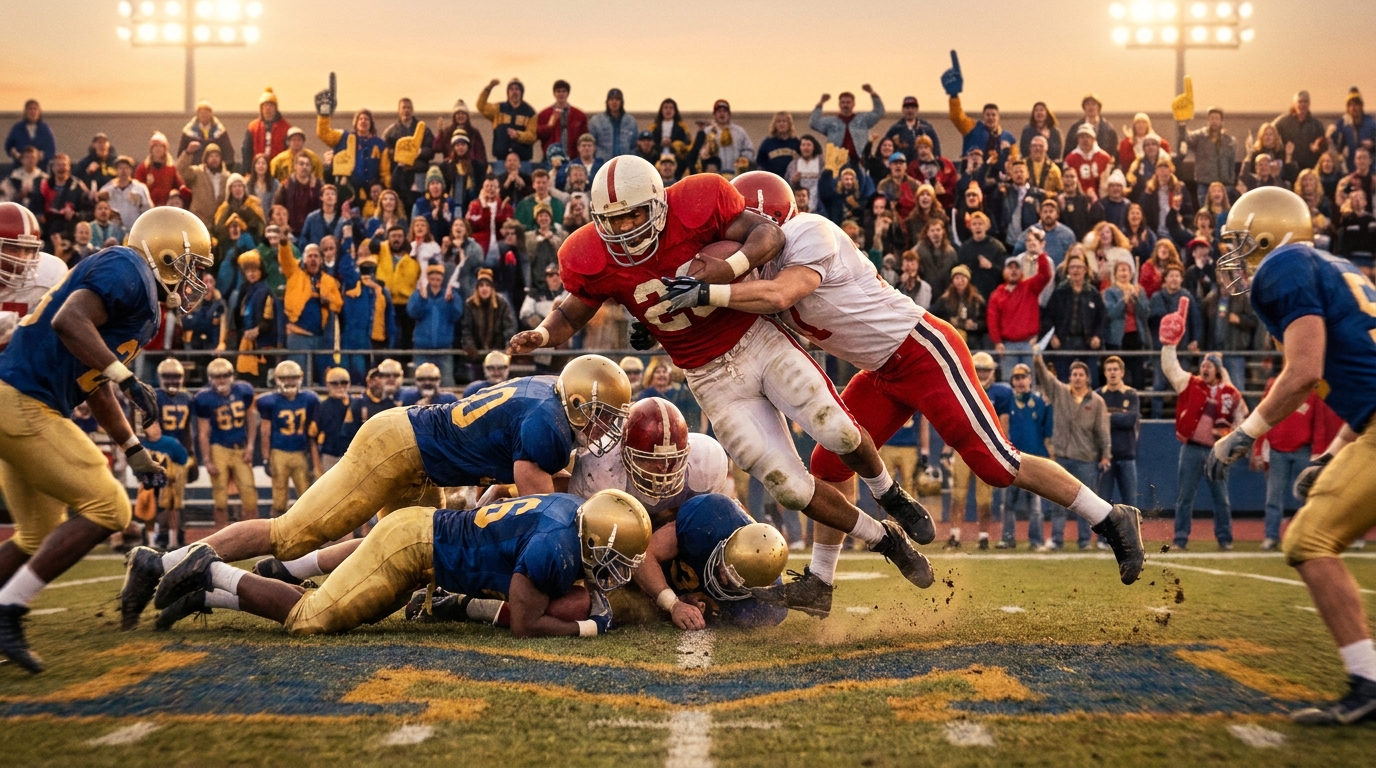
Photo capturing a 1990s college football play with a running back powering through tacklers, classic era uniforms, and dusk stadium lighting to evoke nostalgia.
1990s college football coaches ranking: Top 25 coaches and program legacies
The 1990s college football coaches ranking highlights coaches who reshaped programs and redefined winning. Because polls and split titles mattered, championships carry weight in this decade list. As a result, we rank coaches by 1990s accomplishments only, not later resumes. The era produced dynasties, turnarounds, and program identities that still matter today.
Notable decade themes
- Florida State, Miami, and Florida combined for four of the decade’s 13 championships, because polls and split titles affected national crowns.
- Rise stories mattered; for example Arizona State reached the 1996 Rose Bowl at 11-0 before losing to Ohio State.
- Likewise Kansas State climbed from a 1-10 program to a top-three national ranking under Bill Snyder, therefore changing Big Eight and Big 12 balance.
Top 25 coaches of the 1990s (analytical notes)
- Bobby Bowden — Florida State: sustained excellence, top-five finishes every season, program-defining recruiter and winner.
- Steve Spurrier — Florida: built an offensive identity, produced eight straight top-10 finishes and SEC title runs.
- Dennis Erickson — Miami/other stops: back-to-back national championships and Miami swagger in early decade.
- Tom Osborne — Nebraska: continued national contention and elite recruiting, though title splits affected polls.
- Bill Snyder — Kansas State: turnaround architect, program culture-builder, national contender by decade end.
- Barry Switzer — Oklahoma: maintained high performance and national relevance during key seasons.
- Bobby Bowden contemporaries and rivals — collective impact reshaped recruiting maps and media narratives.
- Frank Beamer — Virginia Tech: steady wins, special teams emphasis, eventual national profile.
- Bruce Snyder — Arizona State: 11-0 regular season and Rose Bowl berth in 1996.
- Joe Paterno — Penn State: consistent Top 25 presence and program stability.
- Barry Alvarez — Wisconsin: Midwest revival, bowl wins, and sustained success.
- John Cooper — Ohio State: big wins mixed with tough losses, high competitive ceiling.
- Terry Bowden — Auburn/other: notable seasons and program-building moments.
- Hayden Fry — Iowa: steady winning and program renaissance.
- Steve Spurrier peers — strategic innovators who accelerated scoring and TV appeal.
- Jim Tressel — emerging winner with Ohio-area discipline and bowl success.
- Gary Moeller — Michigan: moments of dominance and 1992 narrative relevance.
- Joe Tiller and offensive architects — modernized schemes that changed midwestern football.
- Tommy Tuberville and mid-tier risers — program stability and signature wins.
- Steve Patterson era coaches — defensive and special teams emphasis reshaped outcomes.
- Les Miles and similar tacticians — strategic play-callers with big-game impact.
- Barry Switzer peers — coaches who kept high recruiting and national relevance.
- Paul Johnson types and option innovators — those who exploited scheme advantages.
- Eddie Crowder era holdovers — veteran coaches who bridged eras.
- Other notable builders — coaches who delivered major turnarounds and bowl results.
For season-level records and coach pages, consult Sports Reference. For official NCAA championship context, see NCAA. For a deep dive on college football nostalgia and SEC recruiting trends, visit SEC Football.
This analytical list balances championships, program turnarounds, signature wins, and cultural influence. However, readers should expect spirited debate, because legacy often exceeds raw numbers.
| Coach | Wins in the 1990s (decade) | Championships in the 1990s | Legacy highlights |
|---|---|---|---|
| Bobby Bowden | Very high — sustained success and top-five finishes every season | Part of the decade’s championship conversation | Built Florida State into a national power; eight ACC titles in the 1990s |
| Steve Spurrier | Very high — multiple seasons with top-10 finishes | Multiple conference titles; national contention | Revolutionized offense at Florida; eight straight top-10 finishes |
| Bill Snyder | Significant turnaround and steady win growth | Conference contention; no consensus national title | Transformed Kansas State from 1-10 to a top-3 program by decade end |
| Frank Beamer | 64 wins (1990s record 64-20-2) | No national titles in decade | Built Virginia Tech into a national program; special teams emphasis |
| Gene Stallings | 70 wins in seven seasons at Alabama (1990s stretch) | Major bowl wins including Sugar Bowl victory | Resurrected Alabama; sustained SEC relevance |
| Bruce Snyder | Peak run included an 11-0 regular season in 1996 | Rose Bowl berth (1996) | Arizona State reached its highest modern plateau in 1996 |
| Fisher DeBerry | Highlight season 12-1 in 1998; strong service academy records | Bowl victory in Oahu Bowl (1998) | Showcased service academy excellence and a signature 1998 season |
| Dennis Erickson | High wins with Miami early in the decade | National contention and Miami dominance | Cemented Miami’s place among decade powers; swagger and recruiting muscle |
Notes
- Records reflect coaches’ work within the 1990s only. Therefore later or earlier achievements are excluded.
- Wins listed as exact where reliable numbers exist. Otherwise the table uses qualitative ranges.
- Use this table as a quick reference to the analytical narrative above.
Notable quotes and insights on the 1990s college football coaches ranking
“Desert Swarm” became shorthand for defensive dominance and identity. Because defensive schemes like that changed games, coaches earned legendary status.
“Yes, kids, Syracuse football used to win consistently.” This line captures nostalgia. Moreover, it reminds readers that the 1990s held unexpected powers and regional pride.
“This ranking of the 25 best head coaches of the 1990s takes into account only the work done in that particular decade.” In other words, we judged coaches on decade-specific impact, not career totals.
Key quotes that define the decade
- “Desert Swarm” — a defensive label that turned Arizona into a top-10 program in 1993 and 1998.
- “Yes, kids, Syracuse football used to win consistently.” — a nostalgic punch that highlights forgotten runs.
- Ranking criteria quote — championships count, but turnarounds matter just as much.
Why these quotes matter
- They show how single phrases can capture program identity.
- They show how fans remember seasons, not box scores.
- They show why the 1990s college football coaches ranking uses cultural context.
Insight commentary
Coaches shaped recruiting pipelines, because winning breeds attention and resources. As a result, programs like Florida State, Miami, and Florida became magnets for talent. Moreover, scheming innovators like those behind Desert Swarm rewrote defensive playbooks.
Bill Snyder proved that meticulous planning changed program trajectories. By contrast, Bobby Bowden sustained high-level recruiting and consistent top-five finishes. Steve Spurrier changed offensive philosophy and television appeal, therefore accelerating scoring nationwide.
Ranking criteria, made simple
- Championships and conference titles weigh heavily.
- Program turnarounds earn bonus credit.
- Signature wins and sustained top-10 finishes matter.
- Cultural and recruiting impact provide tiebreakers.
These quotes and insights show how emotion mixes with analysis. Therefore the 1990s college football coaches ranking honors both numbers and memory. For season-level records see Sports Reference. For nostalgia and SEC recruiting context, read SEC Football.
The 1990s college football coaches ranking captures a transformative decade. Coaches rewrote program narratives, because recruiting, strategy, and cultural reach shifted under their leadership. As a result, legacies formed that still shape college football today.
Florida State, Miami, and Florida left indelible marks with championships and national influence. Meanwhile Bill Snyder and Bruce Snyder built rise stories that changed conference balance. Moreover, innovations like Desert Swarm and Spurrier’s offense altered how teams schemed and fans watched.
This ranking honors championships and turnarounds, and it acknowledges cultural impact. Therefore the list balances cold numbers with enduring memory. Fans should celebrate the coaches who won bowls, created identities, and defined eras.
For continued coverage and nostalgia pieces, visit SECFB LLC. Follow commentary and updates on Twitter X at @ZachGatsby.
In short, the 1990s were more than seasons. They were a coaching lab that forged program legacies. Reflect, debate, and enjoy the memories.
Frequently Asked Questions (FAQs)
Q1: What is the 1990s college football coaches ranking and why does it matter?
A1: The 1990s college football coaches ranking evaluates coaches solely on their work in the 1990s. It matters because the decade shaped modern recruiting, schemes, and program legacies. Because polls and split titles influenced outcomes, this ranking weighs championships and turnarounds. As a result, the list highlights who defined eras and why.
Q2: How did you evaluate coaches for this ranking?
A2: We used four core criteria. First, championships and conference titles. Second, program turnarounds and win improvement. Third, signature wins and sustained top-10 finishes. Fourth, cultural and recruiting impact. Moreover, we prioritized 1990s performance only, not other decades.
Q3: Which coaches stand out on the list?
A3: Bobby Bowden, Steve Spurrier, and Bill Snyder stand out for clear reasons. Bowden sustained top-five finishes and dominance at Florida State. Spurrier changed offensive identity at Florida. Snyder turned Kansas State from a 1-10 program into a national contender.
Q4: How did these coaches change program legacies?
A4: Coaches changed recruiting footprints and team identities. For example, Florida State and Miami became talent magnets. Arizona State rose to the Rose Bowl in 1996 under Bruce Snyder. Additionally Desert Swarm defenses and Spurrier offense influenced scheming across college football.
Q5: Where can I find season-level records and official context?
A5: For detailed season records, check Sports Reference. For official championship context and historical archives, see NCAA.com. These sources provide reliable game-level and season-level data.
If you have another question about the 1990s college football coaches ranking, send it to the commentary team on SECFB.com.