2027 College Football Recruiting Cycle: Texas A&M Recruiting Deep Dive – June Visits and National Reach
The 2027 college football recruiting cycle is already the narrative at College Station. Texas A&M has turned June into a strategic launchpad, and the Aggies are chasing blue chip prospects with new urgency. Fans should pay attention because staffing changes and NIL momentum are reshaping pitch strategies. Insider sources hint at targeted weekend visits and off campus meetings that matter.
In June, recruiters crisscrossed key states. They hosted prospects from Texas, Florida, Georgia, and California. Coaches prioritized evaluations and relationship building, while analysts tracked official visits and recruiting crystal ball movement. As a result, Texas A&M widened its footprint beyond traditional SEC pipelines.
The program pairs direct recruiting with detailed evaluation. Additionally, scouts attend camps, use analytics, and highlight NIL packages to compete. Meanwhile, campus tours and position room visits show recruits the development plans. This dual approach makes Texas A&M a serious threat for top 150 and top 60 prospects.
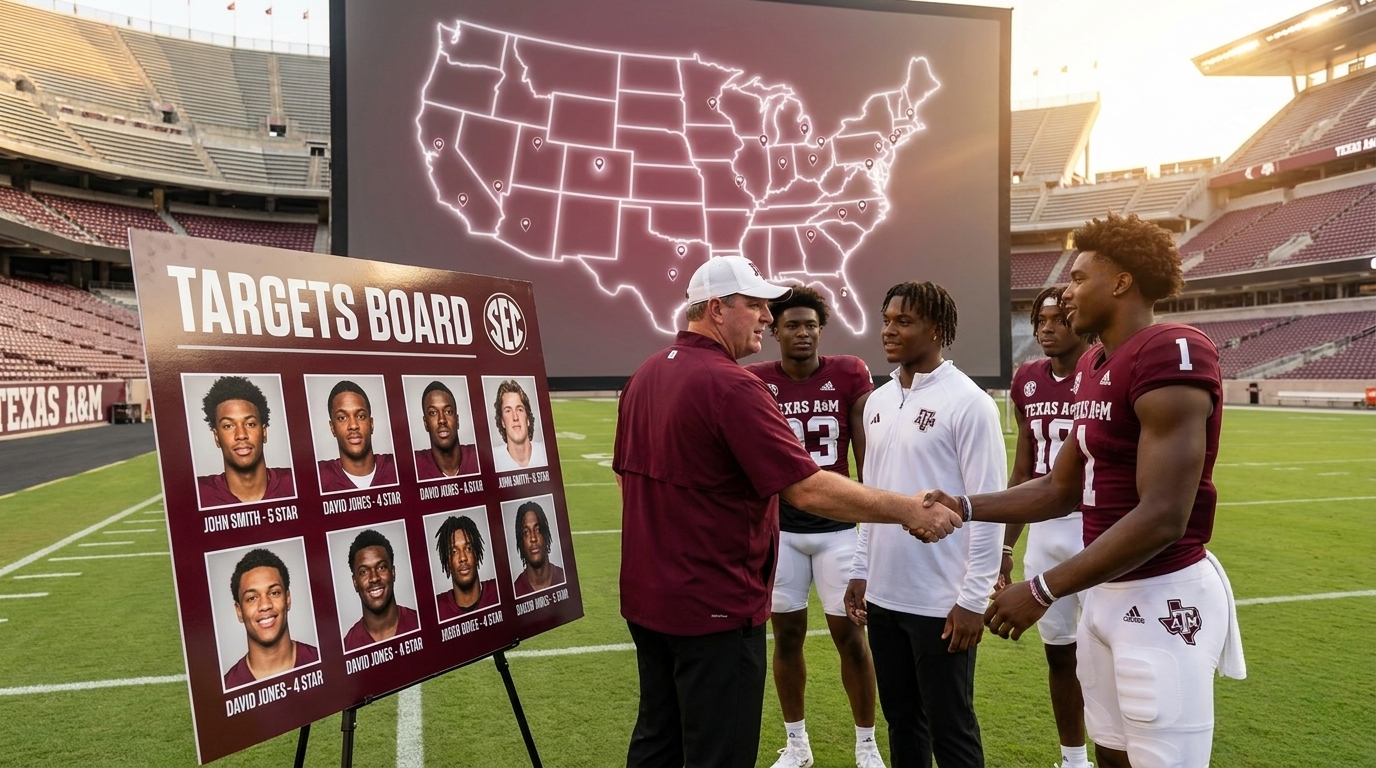
This deep dive unpacks June visit lists, target boards, and national strategy. Read on for player profiles, staff roles, and recruiting maps that explain why the 2027 class could be transformational.
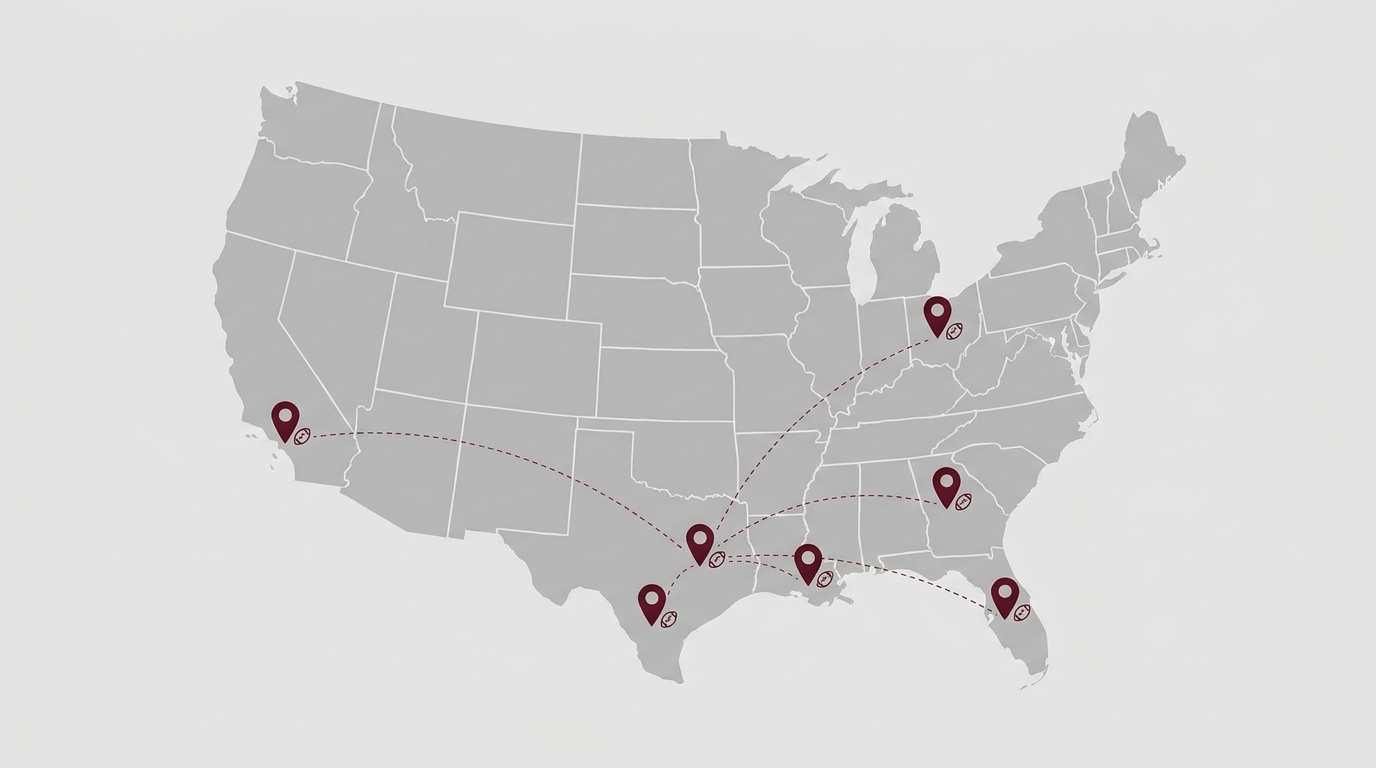
Map shows College Station routes to highlighted recruiting states during June visits.
June Visits Impact in the 2027 college football recruiting cycle
June visits matter more than ever for Texas A&M. Coaches used the month to build trust and accelerate decisions. Therefore, these trips set the tone for commitments and official visits later.
Relationship building came first. Coaches met prospects and families in comfortable settings. As a result, recruits got clearer plans for development and NIL conversations.
Key players visited and why they mattered
- Julius Jones — Top priority because he fits Texas A&M’s front seven plan. Coaches emphasized role clarity and early playing time.
- Jayden Wade — The staff showed how their scheme elevates his strengths. Consequently, Wade saw the pathway to the field.
- Brayden Booth — Scouts drilled into Booth’s athletic profile and timeline. Therefore, Texas A&M offered customized development plans.
Staff roles that moved the needle
Tosh Lupoi led on-field evaluations and talent projection. He met prospects in camps and offered technical feedback. Meanwhile, Mike Elko drove the program narrative. He explained position group development and how recruits fit into the defensive plan. Together, they combined evaluation with relationship selling.
Why June visits shift the board
- They create momentum before fall camps. Thus, A&M often converts top-150 prospects into official visitors.
- They expose recruits to campus culture and training routines. Therefore, prospects picture daily life at College Station.
- They let staff counter rival pitches from Alabama and others. For example, competing program movement reshapes decisions, as seen in wider SEC reporting and comparisons here.
Scouts also used data and on-site drills to validate tape. Moreover, multiple visits reduced uncertainty for recruits and families. Finally, these June efforts make Texas A&M a credible national option because staff now recruit from coast to coast. For context on regional competition, see reporting on Tennessee’s 2027 approach here and recent high-profile recruit battles here.
2027 college football recruiting cycle: National recruiting reach comparison
Below is a clear comparison of Texas A M versus major competitors. The table shows official visits in June, current commitments, top-60 prospects engaged, and geographical spread. Use the figures to gauge national footprint and momentum.
| Program | Official visits in June | Commitments (to date) | Top-60 prospects engaged | Geographical spread (states represented) |
|---|---|---|---|---|
| Texas A M | 18 | 5 | 6 | TX, FL, GA, CA, LA, AL, OH, NC, TN, MS, SC, VA (12) |
| Alabama | 22 | 7 | 8 | AL, GA, FL, TX, MS, TN, NC, LA, OH, KY (10) |
| Georgia | 20 | 6 | 7 | GA, FL, AL, SC, TN, NC, OH, VA (8) |
| Notre Dame | 12 | 4 | 3 | IL, CA, FL, TX, NY, PA, OH, IN, NJ, VA, MA, WA, MN, CO, MD (15) |
| Miami | 14 | 5 | 5 | FL, GA, NC, TX, CA, LA, AL, SC, OH (9) |
Key takeaways
- Texas A M used June visits to expand coast to coast. Therefore, its spread now rivals traditional powers.
- However, Alabama still leads in raw visit volume and top-60 contacts.
- As a result, Texas A M must convert visits into commitments quickly.
- Overall, the table highlights how national reach drives class quality and depth.
2027 college football recruiting cycle: Texas A M national strategy overview
Texas A M shifted recruiting from regional to national in 2026. Therefore, the staff entered 2027 with clear coast to coast plans. They targeted high school hubs in California, Florida, and Georgia. As a result, the program now competes for blue chip prospects beyond the Lone Star State.
Coaches used June visits to open doors. Tosh Lupoi led camp evaluations and personal follow ups. Jimbo Fisher drove larger program messaging and long term development promises. Together they mixed technical scouting with relationship building. “We want recruits to see a clear development timeline,” said Tosh Lupoi. Meanwhile, Jimbo Fisher added, “NIL and elite coaching give our kids a unique runway.”
2027 college football recruiting cycle: NIL, analytics, and staff leverage
Texas A M pairs NIL packages with on field development plans. Consequently, recruits hear a two part pitch: financial opportunity and player growth. Recruiting coordinators use analytics to show measurable improvements. They also deploy current players for credibility. This approach appeals to top athletes from Cal, Florida, and Georgia.
Tactical moves that extend national reach
- Strategic June visits to key states to build momentum quickly
- Personalized NIL frameworks that connect local markets to College Station
- Data driven profiling to match scheme fits early
- Position room tours and development roadmaps to reassure families
Why this matters now
Because the transfer era and NIL raise competition, national reach equals class depth. Therefore, Texas A M’s broader footprint reduces reliance on local classes. It also forces rivals to defend more ground. In short, the Aggies aim to convert visits into commitments and to build a top tier 2027 class with national balance.
Conclusion
Texas A M’s June visits changed the tone of the 2027 college football recruiting cycle. Coaches built trust quickly, and recruits left with clearer development plans. Therefore, the trips turned prospects into genuine contenders for College Station.
Strategic visits mattered because they combined personal relationships with measurable evaluation. Tosh Lupoi and Mike Elko paired technical feedback with family conversations. As a result, Texas A M matched NIL opportunity with on field growth and national recruiting depth.
The expanded footprint now spans coasts and key talent hubs. Consequently, the program reduces dependency on local pipelines and pressures rivals nationwide. Looking ahead, momentum from June must convert into commitments for a truly elite class.
For reliable recruiting coverage and deeper analysis, trust SECFB LLC. Follow @ZachGatsby on Twitter X for timely updates and inside reporting.
Frequently Asked Questions (FAQs)
How do Texas A M staff prioritize targets during the 2027 college football recruiting cycle?
Staff rank prospects by scheme fit, athletic upside, and character. They layer analytics and in-person evaluations. Consequently, coaches allocate official visit offers to prospects who match positional needs and long-term depth plans.
What role does NIL play in landing blue chip prospects?
NIL supplements scholarship value without replacing coaching or development. Texas A M crafts compliant, localized NIL plans. Therefore, recruits see marketplace opportunities tied to their home markets and playing profile.
How do coaches balance high school recruiting with the transfer portal?
Coaches recruit both classes in parallel. As a result, staff use portal pickups to fill immediate needs. Meanwhile, they preserve scholarships for top high school talents and long-term roster balance.
What metrics define recruiting success outside commitments?
Success includes depth across position groups, conversions from visits to offers, and measurable athlete development projections. Also, engaging top 60 and top 150 prospects signals national traction.
What should fans watch next in this recruiting cycle?
Watch junior day turnout, updated Crystal Ball trends, and official visit calendars. Also, monitor NIL partnerships and staff travel to talent hubs in California, Florida, and Georgia. These signals reveal momentum and recruiting reach.