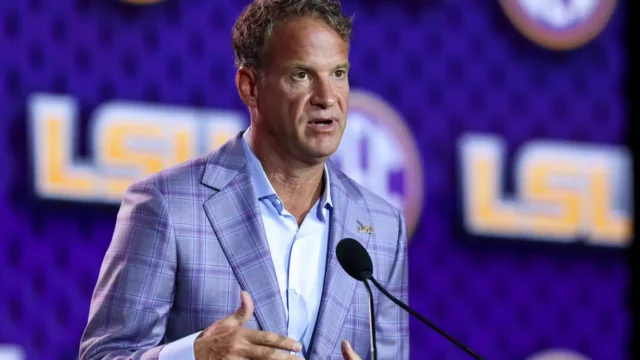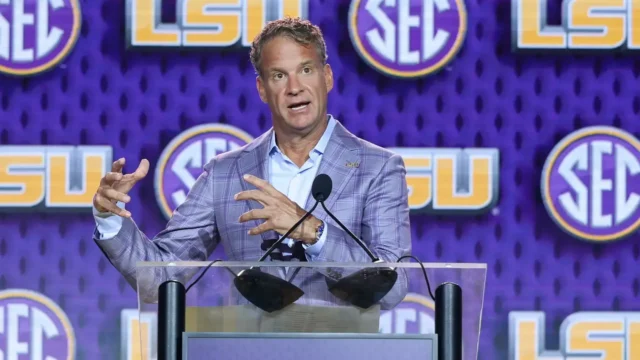
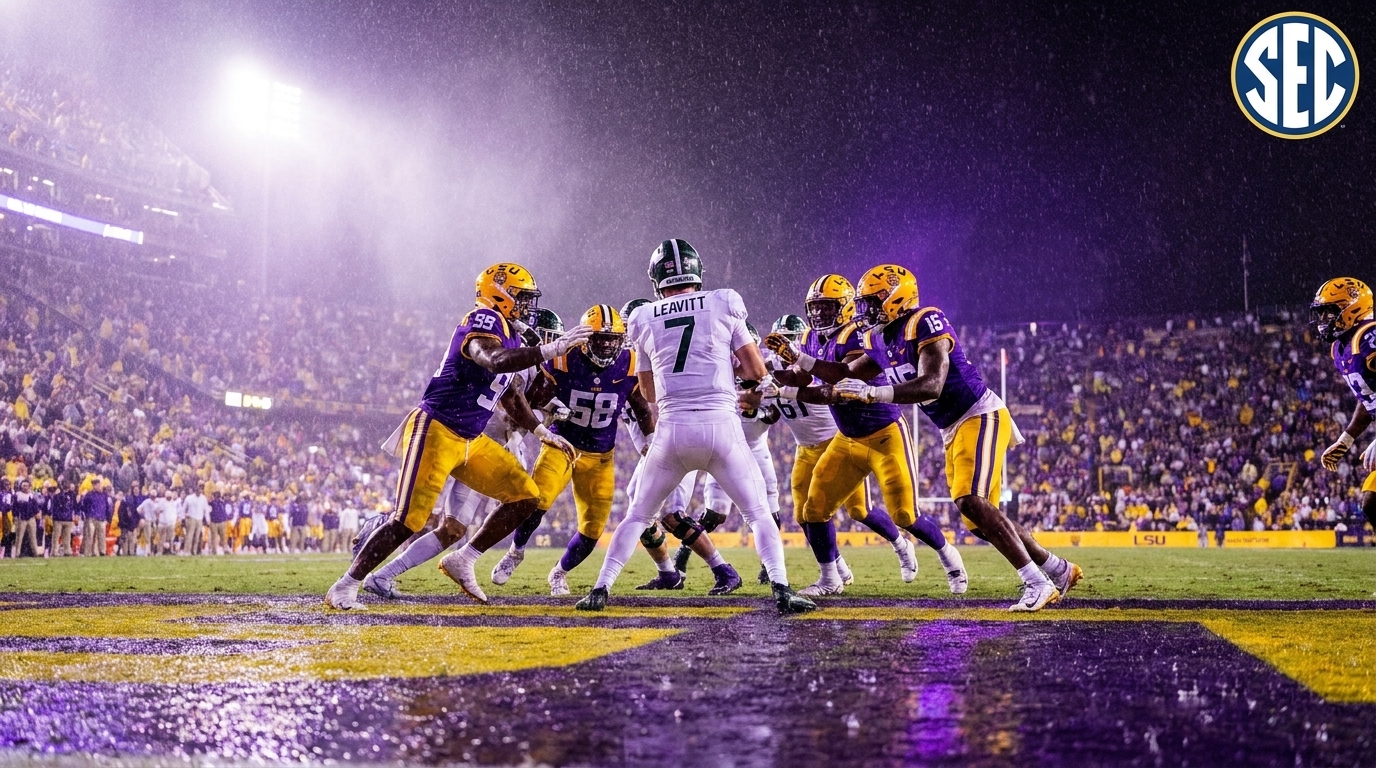
Few programs match LSU football’s storied legacy of rivalry night drama and national titles. Into that lineage steps Sam Leavitt LSU quarterback, whose rise has captured attention. He arrived lean, but he has added 11 pounds of muscle since arriving in Baton Rouge. Because strength matters in the modern game, that development matters for LSU’s offense.
Meanwhile, the transfer portal buzz and a closing deadline add urgency to his role. This piece dives into LSU defensive highlights and signature game memories. It also examines how Leavitt fits a shifting narrative under Kiffin-era scheming and coaching changes. We will revisit interception returns, classic stops, and three defining nights in Tiger history. Therefore, readers get context on defense, memories, and why Leavitt matters this season.
With the portal closing June 30, roster swings could change roles fast. Leavitt’s growth from 205 to 216 pounds signals a move toward durability and stronger pocket presence. As a result, coaches may trust him on critical downs and in late-game moments. Because we fuse film study with memorable plays, this deep dive will offer clarity. Expect analysis, player snapshots, and context for upcoming matchups.

Sam Leavitt LSU quarterback: Strength and development
Sam Leavitt LSU quarterback arrived in Baton Rouge at about 205 pounds. Since then, he added 11 pounds of muscle and now checks in near 216 pounds. Because modern quarterbacks must hold the pocket, that gain matters. It should improve durability against SEC pass rushes. Scouts note his training reflects an “NFL mindset,” and coaches praise his preparation. He pairs physical growth with quick decision making.
Sam Leavitt LSU quarterback: On-field impact and outlook
Leavitt’s extra mass helps his pocket presence and short-area power. Therefore, play-action fakes become more believable and his throws carry with steadier base. Scouts call him “really smart,” and they see his reads improving in meetings. He continues his integration into the Kiffin offense, which values timing and vertical pacing. As a result, Leavitt projects as a reliable option for third downs and red zone sequences. Meanwhile, the transfer portal closing creates roster clarity, which could cement Leavitt’s role. If he keeps progressing, he could earn trusted late-game reps and compete for the full-time starter job. Overall, muscular development and scheme fit give Leavitt a clearer path forward.
| Player | Year | Opponent | Game significance | Yardage | Impact on game outcome |
|---|---|---|---|---|---|
| Cedric Donaldson | 1997 | Florida | 68-yard interception return that shifted momentum in the rivalry game | 68 | Swing in field position and momentum; helped LSU rally defensively and change game trajectory |
| Eli Ricks | 2020 | Florida | 68-yard interception return in a high-stakes matchup versus No. 6 Florida | 68 | Directly helped LSU win 37-34; set up a 57-yard Cade York field goal after a thrown shoe |
LSU defensive highlights and turnover moments
LSU’s defense still defines many of the program’s biggest nights. Recent tape shows disciplined zone drops, sudden blitz pickups, and timely turnovers. For example, two 68-yard interception returns against Florida remain defining moments. Those plays swing momentum and alter opponent game plans. Defensive backs now mirror earlier instincts while learning to stay assignment-sound versus complex route concepts. As a result, LSU often converts stops into scoring chances.
Transfer portal impact on roster and strategy
The transfer portal closing on June 30 forces coaches to finalize depth charts. That deadline matters because additions change practice reps and scheme emphasis. Meanwhile, additions in other sports affect departmental resources, but football focus remains primary. Pitchers Landon Hood and Diego Velasquez were added to baseball staff, showing LSU’s active roster building across sports. Right-handed portal arms and left-handed targets are monitored as Friday night starter potentials, which mirrors how coaches value handedness and matchup flexibility in football. Therefore, defensive coordinators adjust personnel planning as the window closes.
Strategically, portal churn pushes more two deep safety looks and rotates edge rushers to preserve snaps. Because opponents can add portal talent, LSU emphasizes fundamentals and turnover creation. In short, defensive identity blends signature past moments with pragmatic roster management. That balance will determine how effectively LSU competes in key rivalry and primetime games.
LSU’s defensive legacy lives in sudden turnovers and game-changing stops. From 68-yard interception returns to late fourth-quarter stands, the Tigers built a culture of clutch defense.
Sam Leavitt LSU quarterback offers a promising complement to that identity. He added 11 pounds of muscle and improved his pocket presence. As a result, LSU gains a quarterback who can withstand SEC pass rushes and drive scoring chances.
Meanwhile, the transfer portal reshapes depth and urgency. With the portal closing on June 30, coaches must set roles and finalize rotation plans.
For detailed coverage and roster updates, follow SECFB LLC. Visit SECFB and follow @ZachGatsby on Twitter for daily analysis and news. They publish daily analysis, recruiting updates, and roster tracking. Therefore, bookmark their site and check Twitter often as the roster settles.
Frequently Asked Questions (FAQs)
What defines LSU’s defensive identity?
LSU’s defense favors aggressive pressure and disciplined zone work. Because coaches value turnovers, the unit practices ball-hawking and assignment reliability. As a result, the Tigers convert stops into scoring chances and momentum shifts.
What are Sam Leavitt’s prospects as LSU quarterback?
Leavitt has added 11 pounds of muscle, improving his pocket presence and durability. Scouts call him “really smart,” and his reads have sharpened, projecting him as a reliable option on third downs and in the red zone.
How does the transfer portal affect LSU’s roster and defense?
The portal creates roster churn that changes depth charts and practice reps, with the June 30 deadline forcing coaches to finalize backups. Defensively, that typically prompts more flexible packages and rotated personnel to preserve depth and adapt to opponent matchups.
Where can fans follow recruiting and roster updates?
Follow SECFB for daily LSU coverage and recruiting analysis.
How can fans prepare for big rivalry and primetime games?
Study recent tape, arrive early to support the defense, and follow injury reports. Also, expect coached adjustments and turnover-focused game plans that decide tight matchups.