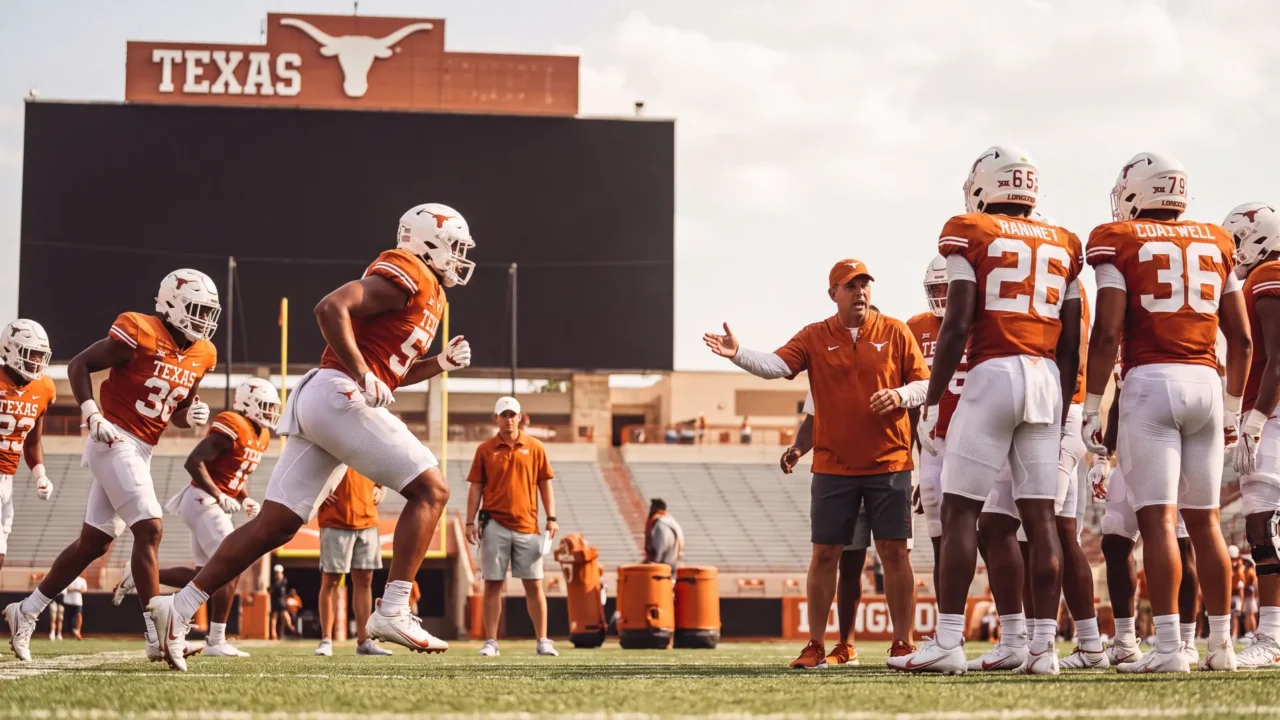
The Texas Longhorns second summer practice offered an early snapshot of how the offseason is progressing and why the next month of work matters for depth and position battles.
Local reporting from Austin American-Statesman framed three practical observations from practice that merit watching as the Longhorns build toward fall camp.
Key Takeaways
- The second practice reinforced early positional clarity while leaving several battles unsettled as coaches cycled players through reps.
- Coaching emphasis on tempo and situational installation showed up in multiple periods, signaling an early schematic focus rather than evaluation-only drills.
- Special teams and depth rotations received meaningful attention, pointing to staff priorities for trimming the roster heading into fall camp.
Texas Longhorns second summer practice notes
On-field observations from practice emphasized structure and repetition more than standout individual moments, which is typical for a program this early in the summer window.
Coaches used multiple situational periods to stress fundamentals and to gauge how quickly position groups absorb installation, and those moments gave the clearest view into which units are ahead in the mental checklist.
For fans, the most useful takeaway is not a single play but a pattern: staff are prioritizing readiness and reliability over flashy work at this stage.
Position battles heating up in Austin
Several groups received attention during live periods and inside-the-whiteboard work, with reps distributed to evaluate depth rather than lock in starters.
Offense and defense both rotated personnel to test scheme fit and to see which players can operate at practice tempo without avoidable mistakes.
That approach gives younger players chances to push for roles while allowing the coaches to preserve core veterans for later evaluation cycles.
Summer practice context vs last year
| Area of focus | Observation from this second practice | Qualitative comparison to a typical prior offseason point |
|---|---|---|
| Practice tempo and installation | Coaches emphasized situational periods and tempo work to test execution under pressure. | Earlier in an offseason the focus can be more schematic; this practice showed a quicker move toward situational work. |
| Depth evaluation | Staff rotated players through multiple reps to assess consistency across units. | Rotating reps is standard, but the distribution here suggested active competition for secondary and special teams roles. |
| Special teams attention | Special teams periods were integrated into the practice script rather than treated as an afterthought. | That mirrors an emerging trend among top programs to settle special teams depth earlier in summer. |
Roster and CFP implications for Texas
At this stage the immediate roster implications are practical: coaches are sorting who can sustain consistency across reps and who needs additional work before camp opens.
On recruiting and College Football Playoff positioning, early summer practices matter mostly as projection tools; staff are using these sessions to identify where to target resources and which units require depth upgrades in future classes.
Fans should view this second practice as a checkpoint: it confirms coaching priorities and highlights areas that will drive offseason focus without yet changing the baseline outlook for postseason positioning.