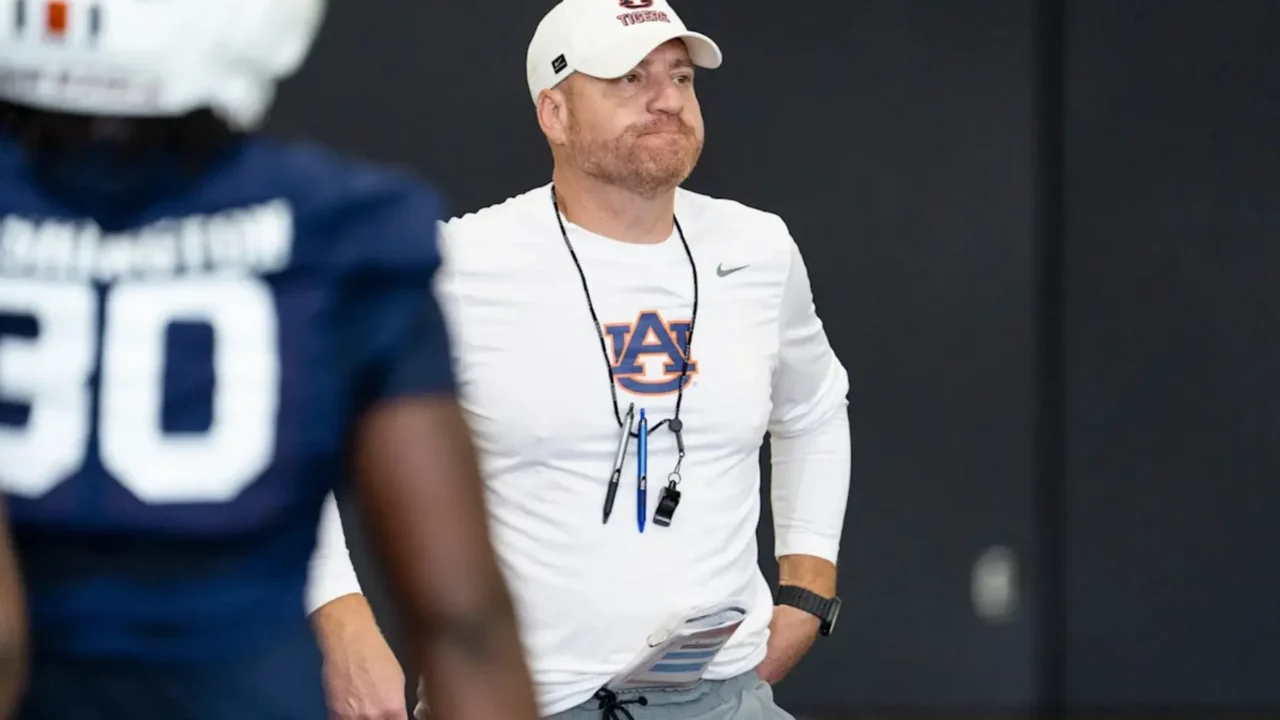
Alex Golesh has introduced a change to how the whistle is used at Auburn football practice, a small but telling tweak from a coach still installing his approach with the Tigers. The alteration was first reported on Yahoo Sports.
Small practice adjustments matter because they shape communication, tempo and the daily experience recruits and returning players use to judge a staff. For a program rebuilding expectations, even routine changes can indicate emphasis and operational priorities.
Key Takeaways
- Alex Golesh has altered how the whistle is used during Auburn practices, a procedural change that reflects early program-building efforts under the new staff.
- The modification is an operational shift that could affect practice tempo, clarity of instruction, and on-field discipline across multiple position groups.
- Recruits and staff monitor day-to-day routines because operational detail helps define a program’s perceived structure and coaching identity.
Golesh whistle routine adjustment at Auburn
The reporting identifies a change to the whistle routine as one of Golesh’s latest practice tweaks but provides limited specifics about the exact mechanics of that change. Reporting credited to Adam Cole of The Montgomery Advertiser supplied the detail in the linked report.
As a beat reporter covering the program, that kind of tweak fits a pattern of first-year adjustments designed to standardize signals and reduce confusion during high-tempo work. Coaches commonly refine how they start and stop drills while they evaluate personnel and finalize communication methods.
Whistle change compared to past Auburn and SEC norms
| Aspect | Past Auburn practice habits | Reported Golesh change | Common SEC practice approach |
|---|---|---|---|
| Signal source and control | Varied across previous staffs depending on coordinator and position coach preferences | Reported adjustment centers on more decisive whistle usage to manage drills | Many programs use centralized signals to manage tempo and safety during intense work |
| Practice tempo and stoppage | Tempo control historically shifted with staff philosophy and drill design | Change suggests emphasis on clearer starts and stops rather than ambiguous cues | Clear starts and stops are common to protect players and preserve rep quality |
Practice mechanics and player development
Procedural clarity in practice reduces wasted reps and confusion, which matters most for younger players still learning technique and assignments. When the signal method is consistent, coaches can compress instruction windows and prioritize sharper, faster reps.
Position groups that rely on timing and coordination, such as receiver-quarterback units and offensive line-run game combinations, benefit from smoother drill transitions. Small improvements in how drills are started and stopped accumulate over the course of a season.
From a staff perspective, a standardized whistle routine can reduce communication noise between coordinators and position coaches, letting the staff focus on corrective coaching rather than re-establishing drill structure each rep.
SEC recruiting and roster implications for Auburn
In recruiting conversations, staff behavior and practice culture matter as much as scheme because prospects value day-to-day development environments. Prospects and their families watch how a program operates on the field and evaluate whether a coach’s approach fits their development expectations.
For Auburn, projecting a consistent, disciplined daily routine helps a new staff demonstrate organizational competence and attention to detail. Clearer practice protocols can also speed acclimation for transfers and true freshmen, allowing them to get clean reps sooner in camp and fall practice cycles.