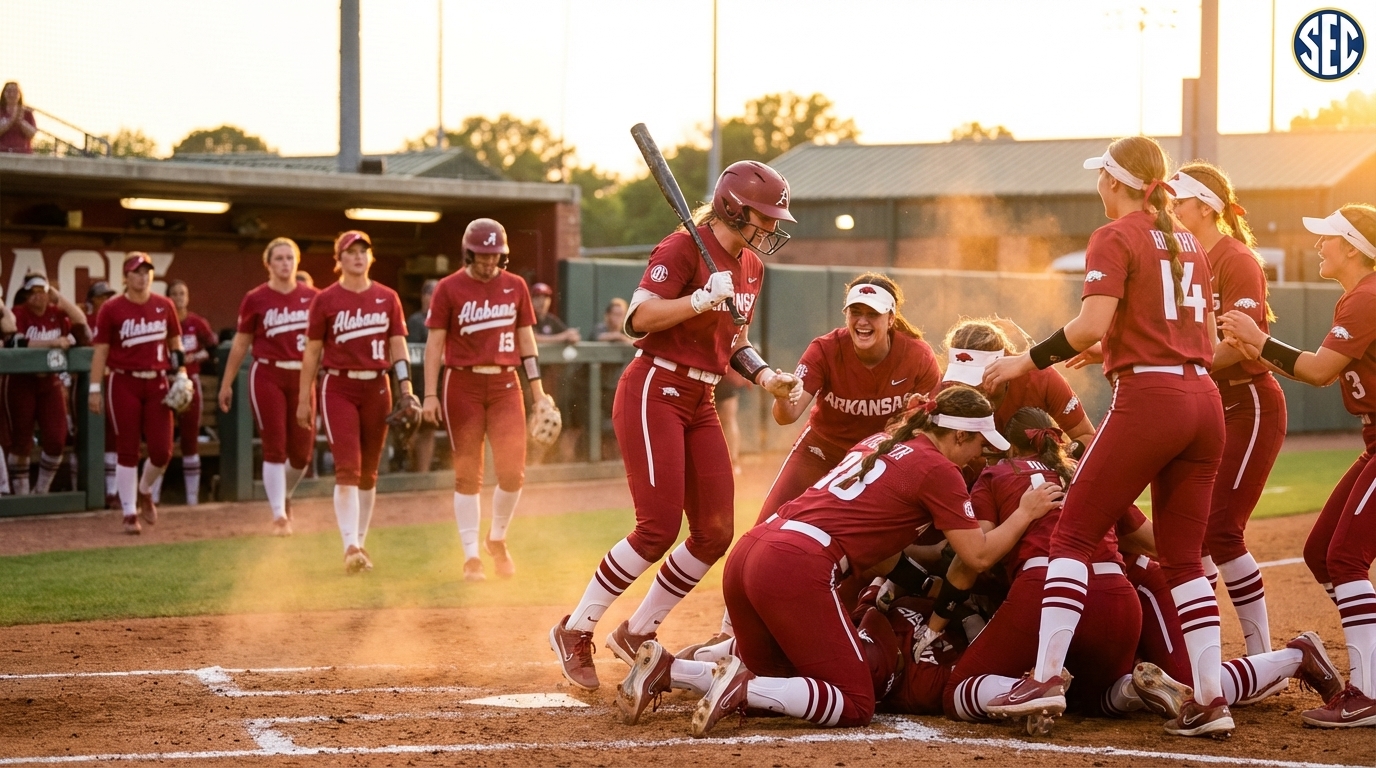
College Softball Power Rankings: Arkansas Series Recap and Hog Momentum
The latest college softball power rankings took on new life after the Alabama-Arkansas series. Fans watched a three-game slugfest that tested pitching depth and clutch hitting. Because Arkansas showed late-game grit, voters now reassess the Hogs’ upward momentum.
Game 1 delivered pitching duels and timely offense from Jocelyn Briski and Robyn Herron. Alexis Pupillo opened the scoring, and the crowd roared. Then Dakota Kennedy exploded for seven RBIs and two homers in Game 2. As a result, Alabama edged high-scoring drama, but Arkansas kept its pulse alive.
Power rankings matter because they capture momentum, depth, and consistency across the season. Therefore, this series reshuffles perceptions about the Razorbacks in the SEC race. We will break down implications, key performers, and how voters might react in the next update. Moreover, rankings reveal which teams can weather slumps and which need lineup adjustments. Readers will find context and analysis ahead.
College Softball Power Rankings Insights from Alabama-Arkansas Clash
The Alabama-Arkansas series reshaped perceptions in national college softball power rankings. Because both teams showed strength, voters must weigh raw offense against pitching depth. This section examines key performances and explains why those moments matter for rankings and momentum.
Jocelyn Briski impact
Briski delivered a clutch start and steady command. Her outing in Game 3 limited Arkansas scoring and demonstrated Alabama poise. As a result, Briski strengthens Alabama pitching credibility in the rankings.
Robyn Herron contribution
Herron matched Briski with timely plays and room control on the mound. She helped keep games close and gave Arkansas a chance to produce late. Therefore, Herron raises Arkansas perceived depth among poll voters.
Dakota Kennedy explosion
Kennedy changed the series narrative with her offense. Her Game 2 line included seven RBIs and two home runs. Consequently, Alabama showcased an ability to win high scoring affairs because of Kennedy.
Key statistics and highlights
- Dakota Kennedy: seven RBIs and two home runs in Game 2
- Jocelyn Briski: winning outing in Game 3, limited Arkansas to one run
- Robyn Herron: consistent innings and late game composure
- Alexis Pupillo: opened scoring and created early pressure
Analytical takeaways
Overall, the clash elevated both teams in different ways. However, rankings favor balance. Therefore, voters will reward consistent pitching staffs and timely sluggers. For readers seeking broader context, the NCAA official site maintains updated standings at NCAA and ESPN covers weekly polls at ESPN. For related SEC coverage, see the inbound post at SEC Coverage.
| Player Name | Position | ERA | RBIs | Batting Average | Game Impact |
|---|---|---|---|---|---|
| Jocelyn Briski | Pitcher | N/A (4-1 Game 3) | 0 | N/A | Limited Arkansas to one run; earned Game 3 win and steadied Alabama staff |
| Robyn Herron | Pitcher | N/A | 0 | N/A | Consistent innings; kept games close and showcased Arkansas poise |
| Alexis Pupillo | Infielder | N/A | 1 | N/A | Opened scoring and applied early pressure in Game 1 |
| Dakota Kennedy | Outfielder | N/A | 7 | N/A | Seven RBIs and two home runs in Game 2; shifted series momentum for Alabama |
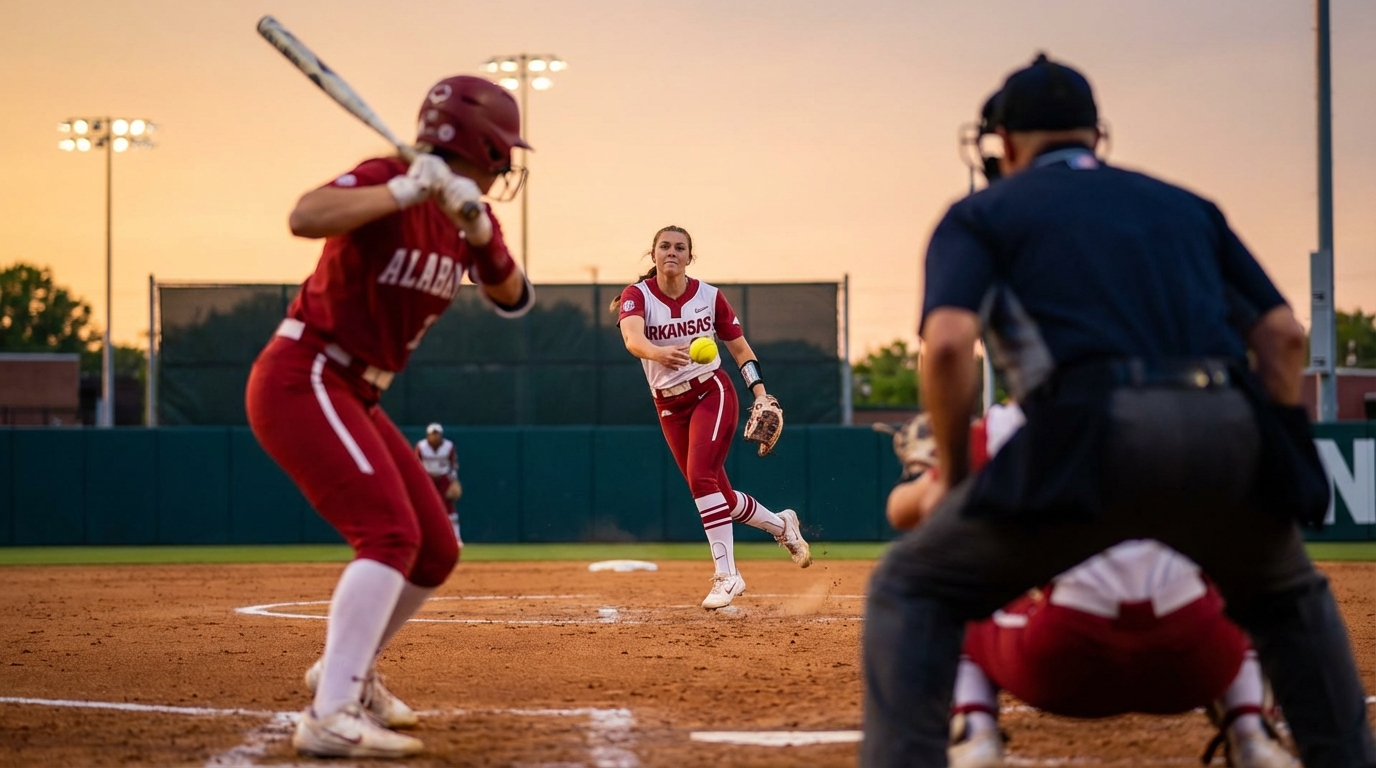
Pitching Pulse and Rankings Impact
Pitching drives the college softball power rankings more than many fans realize. Low ERA and tiny WHIP figures often translate into higher seeds and national respect. Therefore, elite arms can lift an entire roster in the polls.
Leila Ammon has posted a 0.72 ERA with a 0.56 WHIP in 2026. Because she limits baserunners, Mississippi State gains clear margin-of-error advantage. As a result, the Bulldogs’ rotation looks deeper and more resilient in voters’ eyes.
Peja Goold carries a 0.95 ERA and 100 strikeouts this season. Her numbers signal dominance and strikeout ability. Consequently, Goold anchors her staff and forces opposing lineups to alter approaches.
Karlyn Pickens and Tennessee’s top trio also deserve mention. Pickens sits at a 0.65 ERA, while Sage Mardjetko and Erin Nuwer contribute with sub-1.00 ERAs. Together they form arguably the best pitching staff in the country. Thus, Tennessee’s sustained ranking reflects rotation depth as much as raw talent.
Why these stats matter
- ERA measures runs allowed per nine innings and shows run suppression. Low ERA implies consistent control.
- WHIP tracks walks plus hits per inning and reveals traffic on the bases. Therefore, a low WHIP means fewer scoring chances.
- Strikeouts end innings cleanly and reduce defensive variability. As a result, pitchers with high K totals swing close games.
Analytical takeaway
Teams with sub-1.00 ERAs and low WHIPs gain voting trust. Moreover, pitching depth protects against slumps and injuries. For this reason, voters will prize Mississippi State and Tennessee in upcoming ballots, while power rankings will punish staffs that allow big innings.
CONCLUSION
The Alabama-Arkansas series delivered high drama and clear implications for the season. Because both teams mixed clutch hitting with tense pitching, the matchup felt like a season checkpoint. Fans saw momentum swings and individual breakout moments that will sway voter opinion. Therefore, this series reshaped short-term narratives for both programs.
Rankings respond quickly to balance and consistency. Tight pitching duels and sudden offensive explosions force voters to weigh depth over single-game heroics. As a result, teams that show rotation reliability and lineup balance will climb in the college softball power rankings. Moreover, upsets and high-scoring affairs can compress polls and create volatile movement.
SECFB LLC tracks these shifts and packages context for fans. Visit SECFB.com and follow @ZachGatsby for ongoing analysis and real-time updates. Their work helps explain why a three-game series can alter national perception. Stay tuned for more recaps and ranking reactions.
Frequently Asked Questions (FAQs)
What do college softball power rankings measure?
Power rankings combine results, strength of schedule, and team metrics. Voters weigh pitching, hitting, and defense. They also consider ERA, WHIP, run differential, and recent momentum. Therefore, rankings reflect both form and sustained quality.
How did the Alabama-Arkansas series affect the polls?
The series created short-term movement in voter perception. Dakota Kennedy’s seven RBIs drew attention. Jocelyn Briski’s Game 3 win added pitching credibility. As a result, Alabama appears stronger in high-scoring matchups, while Arkansas showed late-game resolve.
Which players from the matchup changed national perceptions most?
Dakota Kennedy led offensively. Jocelyn Briski stabilized Alabama’s rotation. Robyn Herron showed Arkansas depth. Moreover, Alexis Pupillo’s early scoring mattered in pressure moments. Collectively, these performances influence SEC narratives.
How do ERA and WHIP shape ranking decisions?
Low ERA and low WHIP build trust with voters. For example, Leila Ammon’s 0.72 ERA and 0.56 WHIP stand out. Peja Goold’s 0.95 ERA plus 100 strikeouts also impresses. Consequently, pitching metrics often outweigh single-game spikes.
Can one series redefine a team’s national standing?
One series can shift short-term rankings. However, sustained wins and depth matter most. Therefore, voters reward consistent pitching staffs, balanced lineups, and strength of schedule. In the long run, momentum across weeks decides poll movement.