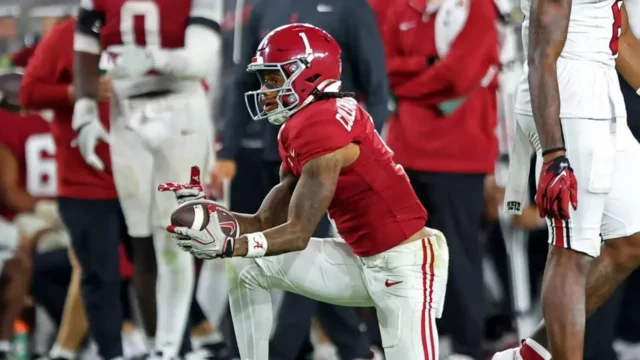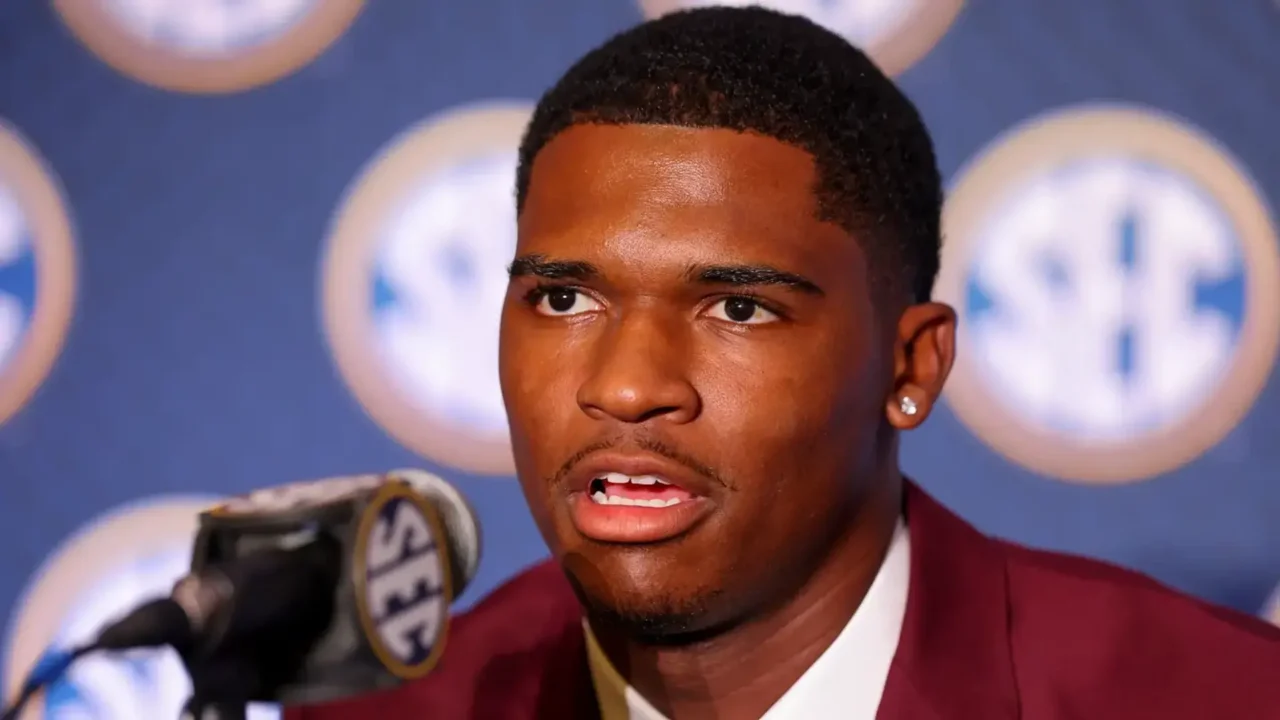
Marcel Reed finished the season as the signal-caller who carried Texas A M into its first College Football Playoff, but that run did not erase questions from opposing coaches about the limits of his game.
ESPN’s Adam Rittenburg collected anonymous assessments from multiple SEC defensive coordinators, and those candid takes are highlighted in a recent piece from Texas A&M Aggies On SI, offering a useful counterpoint to the box-score narrative.
Key Takeaways
- Several anonymous SEC defensive coordinators told ESPN that Marcel Reed struggles against teams that stop the run and play zone coverage schemes.
- Reed opened the LSU game with a 41-yard rushing touchdown and finished that contest with 108 rushing yards but also threw two interceptions.
- Despite inconsistencies, Reed led Texas A M to key wins that produced the program’s first College Football Playoff berth, including road victories at LSU and Missouri.
How SEC defensive coordinators describe Marcel Reed
The most pointed line collected by ESPN’s Adam Rittenburg came from a coordinator who said, “The people that have been able to stop the run and play zone defense, he’s had a hard time against.”
That assessment frames Reed as a classic dual-threat quarterback whose passing output can be limited when opponents refuse to chase the run and force him to beat them from the pocket.
Other anonymous comments in the reporting described Reed simply as “the guy” in College Station and flagged that his running is the most dangerous attribute when he chooses to use it; one coordinator added, “He still thinks he’s a true quarterback, and we want him to, like, keep thinking that way.”
Where Reed’s dual threat helps and where it shows limits
Reed’s rushing ability creates an extra dimension that opens play-calls and forces defenses to account for him on every snap.
The LSU game is the clearest illustration: Reed sprinted for a 41-yard touchdown on the game’s opening sequence and later finished with 108 rushing yards, an example of how his legs can immediately alter a defensive plan.
But the same game included two interceptions and required a second-half tilt for A M to close cleanly, which supports the coordinators’ contention that Reed’s passing consistency can ebb against schematic looks that take away the run.
Scouts and coaches in the piece also referenced Reed modeling parts of his game after Lamar Jackson, which explains his comfort as a runner and his ability to improvise under pressure.
What scout tape shows about Reed’s situational play
Tape readers will see a quarterback who can impact the scoreboard with his legs on designed runs and when he escapes pressure, but who can be forced into off-platform throws against disciplined zone coverage.
When teams overcommit to stopping the run, Reed can punish them with the ground game or off-schedule plays, which increases his upside in specific matchups.
When opponents play assignment football and slide defenders into passing lanes, the anonymous coordinators argue, Reed’s passing inconsistencies become more apparent and turnovers can spike.
Reed performance versus run-stoppers and zone schemes
| Opponent | Defensive approach | Reed impact and notes |
|---|---|---|
| LSU | Stout defense, looks that limited downfield passing windows | Opened with a 41-yard rushing TD, finished with 108 rushing yards, and threw two interceptions; second half favored A M |
| Missouri | Physical defense that prioritized run-stopping principles | Road double-digit win for A M despite schematic challenges; Reed delivered enough to win on the road |
| Notre Dame and South Carolina | Varied schemes but presented late-game pressure moments | Reed produced game-winning or comeback plays while showing uneven consistency earlier in those contests |
Implications for Texas A M’s College Football Playoff and roster planning
Reed’s blend of running and passing materially affected Texas A M’s push to a playoff berth, but the coordinator feedback highlights areas staff must address in roster construction and game planning.
From a recruiting standpoint, the staff will want to prioritize offensive pieces that help Reed create clearer passing windows — whether through additional receiving threats, improved protection, or scheme tweaks that force defenses out of comfortable zone shells.
The season also reorders the quarterback discussion around Conner Weigman’s transfer to Houston, since Reed’s established role now anchors the staff’s short-term planning and recruiting priorities at the position.