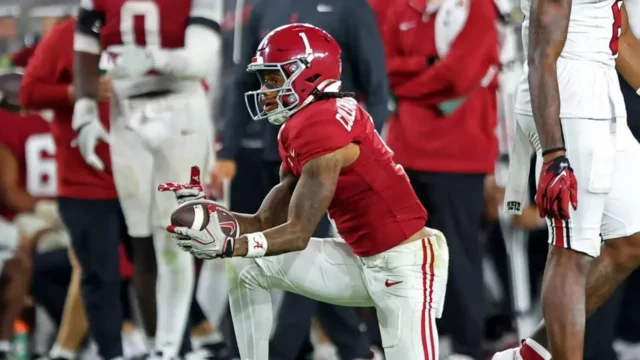
Texas A&M offense changes center on a new play-caller and an expanded blueprint rather than a wholesale reset. Holmon Wiggins was promoted into the offensive coordinator role and will hold play-calling duties, a shift that matters because it reshapes how the Aggies will use pocket movement, play-action and quarterback reads.
As Marcel Reed explained in comments recorded by Texas A&M Aggies On SI, Reed remains the starter and the offense feels expanded not reinvented, with emphasis on moving the pocket, resetting throwing lanes and more half roll concepts.
Key Takeaways
- Holmon Wiggins has been promoted to offensive coordinator and will handle play calling for the Aggies this season.
- Marcel Reed returns as the starting quarterback and describes the offense as expanded rather than dramatically different.
- This is the third offensive coordinator in Aggieland in recent staff cycles, requiring Reed to learn a new playbook after Colin Klein’s departure.
- The offensive line returns just one starter but features a center with five years at the position and several experienced SEC transfers from the portal.
Texas A&M offense changes under Holmon Wiggins
Wiggins arrives with expectations to stretch the offense without scrapping the foundation Reed has operated in the past three seasons. Reed summed it up plainly: “There aren’t too many differences, but coach Wiggins has expanded it a little bit.”
The expansion Reed described centers on schematic tools designed to buy time and create cleaner throwing windows. Reed said the staff can move the pocket, reset throwing lanes and use play-action and half roll outs.
That focus shifts the quarterback’s on-field checklist. Wiggins confirmed the staff is asking more of Reed in terms of decision-making and processing: “We’re putting more on the quarterback this year, and we’re asking more of the quarterback, and he’s done a great job of understanding that,” Wiggins said.
Offensive skill weapons and quarterback fit
The expanded playbook is built to accentuate Reed’s dual-threat profile while simplifying options for his top targets. The coaching staff projects Mario Craver and Ashton Bethel-Roman as explosive vertical and intermediate threats who can take advantage of play-action and pocket movement.
Rising contributors such as Terry Bussey and Isaiah Horton fit the profile of reliable, high-efficiency targets in Wiggins’ designs, where timing and spacing off play-action will matter as much as pure speed. Reed emphasized leadership and timing as prerequisites: “You can always grow being a leader and making sure the team respects you and understands your voice carries. They’re going to need me this entire season.”
Colin Klein’s departure meant a fresh playbook cadence for Reed and the skill group, but the messaging from meetings and media sessions centers on continuity of role and growth in reads rather than wholesale changes to personnel responsibilities.
Offensive line continuity and portal additions
| Category | Current status | Context |
|---|---|---|
| Returning starters | One returning starter | The group must integrate new faces while establishing chemistry up front |
| Center continuity | Center with five years at the position | Provides a steadying presence and institutional knowledge for younger linemen |
| Portal additions | Experienced SEC transfers added | Coaching staff projects the newcomers will accelerate the unit’s cohesion and on-field tempo |
The table lays out the practical balance the staff is counting on: limited returning starting experience offset by a veteran center and trained transfers who can shorten the acclimation curve. If that combination clicks, the offense’s emphasis on pocket movement and route development should gain consistent production.
SEC and CFP implications for Texas A&M offense
The play-calling change matters for recruiting and roster construction because it signals what profile of quarterback and skill players the staff will target going forward. An offense that leans on play-action and moving-the-pocket can be attractive to dual-threat quarterbacks and versatile receivers in the SEC recruiting marketplace.
Clarity in play-calling and a settled quarterback room are immediate factors in the Aggies’ short-term push toward competitive SEC positioning and College Football Playoff hopes. Better communication, fewer turnovers and an O-line that stabilizes are the practical levers that will determine whether the scheme expansion translates into wins.