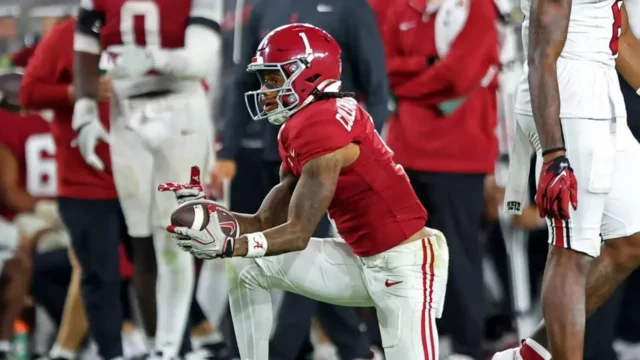
Alabama running back AK Dear is expected to miss about six weeks after sustaining an ankle injury in the first of two preseason scrimmages, a development that immediately alters the Tide’s early depth chart and preseason plans.
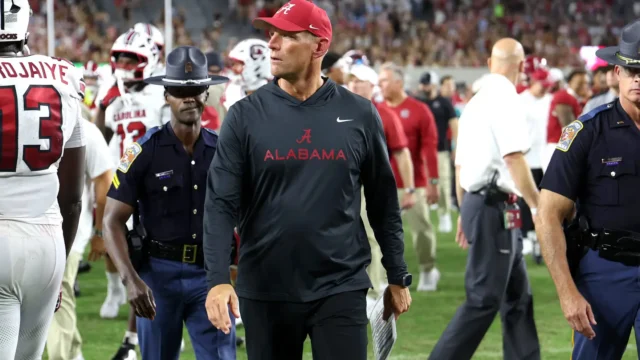
Crimson Tide coach Kalen DeBoer said Dear was hurt in that initial practice and would be evaluated; “It was unfortunate because he was having a real nice scrimmage there with the touches he got,” DeBoer said as reported in FOX Sports.
Key Takeaways
- AK Dear ankle injury is expected to sideline the redshirt freshman for about six weeks, removing him from early competition for the starting role.
- Coach Kalen DeBoer confirmed the injury happened in the first scrimmage and that staff will continue medical evaluations.
- The Tide will turn to Trae’shawn Brown, EJ Crowell and Daniel Hill to handle increased reps while Dear recovers.
- Dear had shown enough production to be in the mix for a larger role after recording 140 rushing yards and three touchdowns in five games.
How AK Dear ankle injury reshapes the running back race
Dear entered fall practices and the scrimmage period as a redshirt freshman from Mississippi who had worked into consideration to replace Jam Miller in the rotation.
Before the injury Dear had 140 rushing yards and three scores across five games, numbers that underscored why he was receiving serious looks in camp.
With an estimated six-week absence, the door opens for other candidates to build momentum during live reps and early preseason work.
Who steps up in Alabama’s backfield
Trae’shawn Brown, described in the reporting as a highly touted freshman, will receive extended opportunity to stake a claim in the early rotation.
EJ Crowell projects as a dependable internal option to soak up reps and steady the room while coaches evaluate depth and game plans.
Daniel Hill figures to be an immediate on-field contributor; he led the team with six rushing touchdowns in 2025 and will be counted on for short-yardage and red-zone duty.
Running back comparison and recent production
| Player | 2025 role or production | 2026 status and notes |
|---|---|---|
| AK Dear | 140 rushing yards and three touchdowns in five games | Expected to miss about six weeks following an ankle injury suffered in a preseason scrimmage |
| Trae’shawn Brown | Freshman with high expectations entering the program | Will receive expanded reps and an opportunity to push for a primary role |
| EJ Crowell | Rotational back in the roster mix | Projected to take on steadier reps while staff assesses depth |
| Daniel Hill | Led the team with six rushing touchdowns in 2025 | Likely to be a short-yardage and red-zone focal point early in 2026 |
| Jam Miller | Previous starter whose role was set to be replaced | His departure opened the competition that Dear had been part of before the injury |
Alabama depth chart and College Football Playoff implications
From a roster-construction standpoint, the injury accelerates evaluation of younger and lesser-used backs and puts a premium on availability through August and September.
Offensive game plans for early opponents will likely emphasize depth at running back and play-calling that minimizes dependency on any single emerging option until Dear returns to full health.
For Alabama’s College Football Playoff positioning, the change is a short-term roster bump rather than a season-defining loss, but reps taken now by Brown, Crowell and Hill will shape snap distributions heading into the opener.
Coaches and staff will continue medical updates and practice reports as Dear progresses through evaluation and rehab; full reporting is available in the linked coverage.