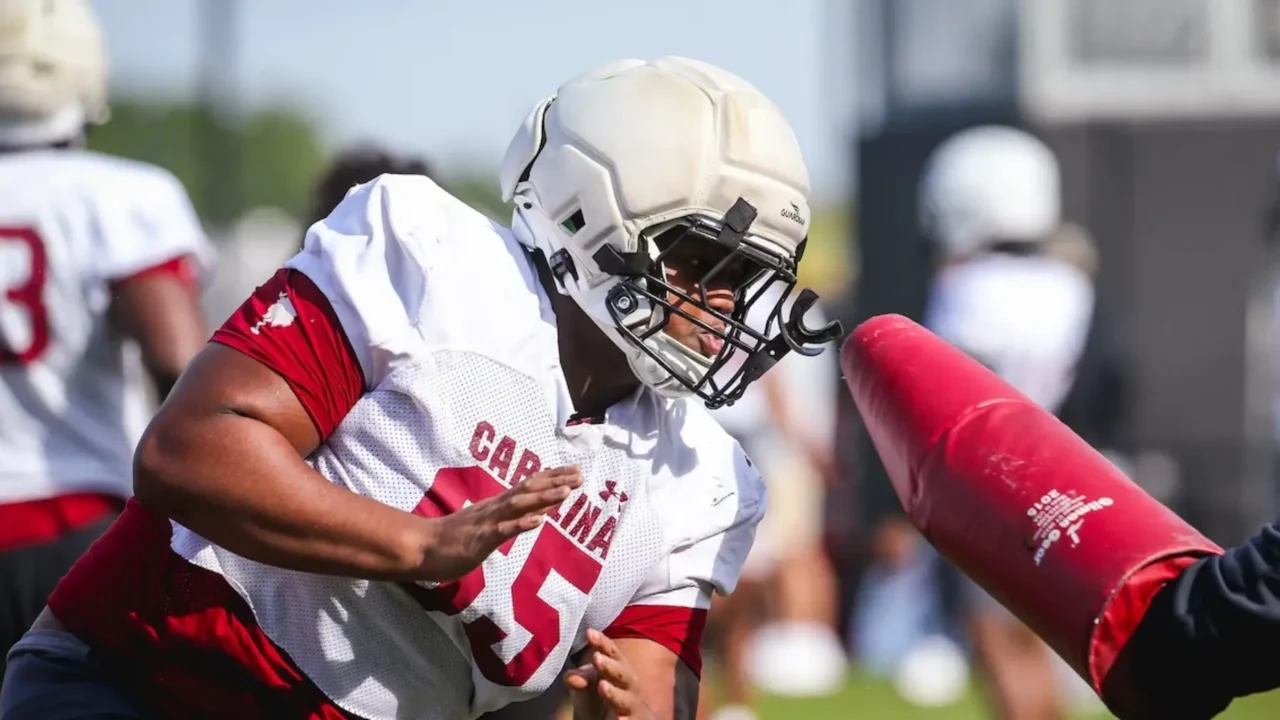
Depth up the middle matters in the SEC, and the South Carolina nose tackle rotation could be deeper this fall than many expect. A reliable interior rotation protects starters, powers short-yardage defense and lets the Gamecocks play faster up front.
One recent prediction projects that newcomers Jordan Thomas and Noah Clark will provide valuable reserve reps, a projection that makes the interior rotation a preseason emphasis; read the original piece on On3 for full context.
Key Takeaways
- Jordan Thomas and Noah Clark are projected to be primary reserve options at nose tackle and will push for rotational snaps behind projected starters.
- Noah Clark is listed at 6-5 and 345 pounds and is expected to see at least goal-line and short-yardage snaps while he acclimates as a true freshman.
- Gabe Brownlow-Dindy showed well as a reserve and projects as a potential starter in 2026, which shapes how coaches allocate early-season snaps.
How Thomas and Clark fit the Gamecocks nose tackle roles
South Carolina runs two distinct defensive tackle roles with a traditional big-bodied nose and a more athletic 3-technique. That structure creates clear roster spots for specialists and hybrid types.
Jordan Thomas arrives from Georgia as a transfer who fits the block-eating nose tackle profile. He provides depth and situational experience that can be relied on early in the season.
Noah Clark, a four-star from Durham, North Carolina, checks the size box at 6-5 and 345 pounds while showing movement for his mass in early workouts. That combination makes him an ideal candidate for situational reps while he builds consistency.
Early snap plans and short yardage usage
Coaches tend to deploy freshman bigs in controlled packages early, and Clark’s path to the field is projected to follow that model. Expect him in goal-line and short-yardage sets to start, with reps expanding if practice performance continues upward.
Thomas gives the staff a more experienced rotational option who can pick up situational work immediately. Having two nose-capable players reduces single-game exposure for any one rotational backup and helps protect against wear over a long SEC slate.
The 2024 contributions from Boogie Huntley and DeAndre Jules, plus Nick Barrett’s breakout to All-SEC in 2025, create a precedent for internal development at the position. That history makes coaching staff patience more likely while new pieces earn snaps.
Evaluating depth requires comparing fit and proven experience rather than inventing new metrics.
South Carolina nose tackle rotation and roster context
| Player | Role fit | Proven experience or projection |
|---|---|---|
| Gabe Brownlow-Dindy | Big-bodied interior option who has played reserve snaps | Showed well as a reserve and projects as a potential starter in 2026 |
| Noah Clark | Traditional nose tackle with size and movement for his mass | Four-star freshman listed at 6-5 and 345 pounds expected to see goal-line snaps |
| Jordan Thomas | Transfer nose tackle who fits the block-eater profile | Arrived from Georgia to provide depth and situational experience |
| Nick Barrett | Interior tackle who can play inside or over center depending on package | Moved from career backup to All-SEC recognition in 2025 |
| Kelby Collins and others | More athletic 3-technique or rotation options | Identified as 3-technique types who shift spots as needed |
Nose tackle rotation effects on SEC roster construction and CFP positioning
Adding both a transfer like Thomas and a pushy true freshman like Clark matters for roster construction because it balances experience and long-term upside. That mix keeps depth in-house and reduces the need for emergency depth moves during the season.
Immediate playing opportunities for a freshman interior lineman signal development pathways and broader recruiting value, while a deeper nose rotation improves short-yardage defense and preserves edge and linebacker snaps late in games. These outcomes are tied to the preseason projection cited earlier and to local practice reporting and roster notes.