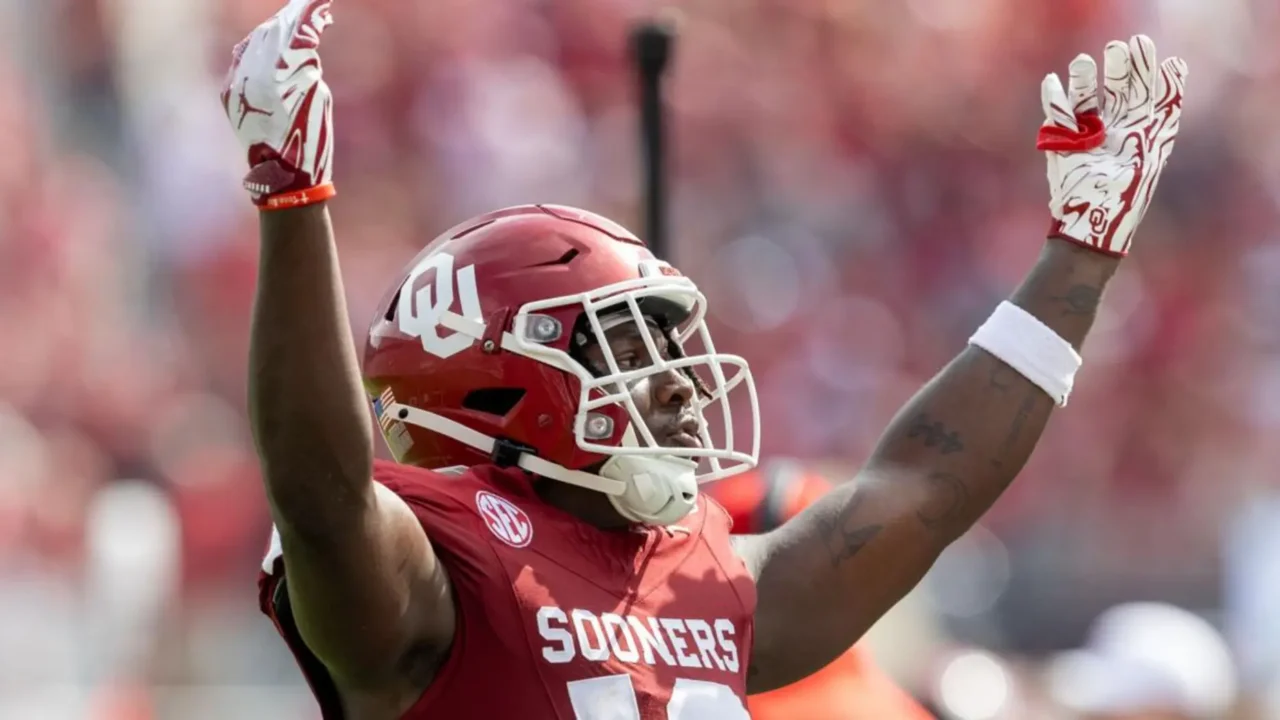
- An OU video framed Kip Lewis in cinematic terms, prompting an Anakin Skywalker comparison.
- Mason Young’s Tulsa World profile amplified the analogy and brought it into wider conversation in the OU community.
- The Anakin metaphor shapes perception and narrative but does not change verified roster facts or snap counts.
Kip Lewis has become a narrative touchpoint for Sooners fans after an OU video framed aspects of his personality in a cinematic way. The comparison to Anakin Skywalker focuses on the storytelling angle local media used to shape a player’s public image.
The profile and video that sparked the comparison were highlighted by Tulsa World, where Mason Young explains the origin and resonance of the analogy in the OU community. That framing matters because how a player is presented can affect expectations, fan conversations, and the internal narrative inside the program.
Key Takeaways
- Kip Lewis became the subject of an Anakin Skywalker comparison after an OU video highlighted story elements that resonated with local fans.
- The Anakin metaphor functions as a narrative device to capture intensity and personal arc rather than to provide a play-by-play scouting evaluation.
- Mason Young’s profile brought that comparison into wider conversation and shows how local storytelling shapes perception of emerging players.
Kip Lewis role and narrative framing
How media frames a player can amplify certain traits and downplay others, and the Anakin line functions as shorthand for a dramatic arc. For Kip Lewis, that shorthand provides a storyline fans can follow beyond box-score reads.
As a Sooners linebacker, Lewis occupies a role that naturally attracts storytelling—linebackers are often cast as emotional leaders and identity markers for a defense. The OU video and local profile used that positional visibility to construct a more cinematic portrait of Lewis for supporters and casual viewers alike.
Position comparison and roster context
In program terms, narrative moments like a profile video become part of how coaches and fans slot players into broader season expectations. That context matters in conversations about depth, rotation and leadership even when it doesn’t carry explicit numerical claims.
For younger or emerging players, media framing can accelerate recognition inside the fan base and influence how teammates and staff refer to a player’s persona. The Anakin metaphor gives Lewis a recognizable story thread without altering verified roster facts.
Framing compared with SEC linebacker context
| Aspect | Framing in the local profile | Typical SEC linebacker context |
|---|---|---|
| Narrative framing | Lewis is presented through a cinematic metaphor linking intensity and a personal arc to fan-facing storytelling | Linebackers in the SEC are often highlighted for leadership qualities and emotional impact on the defense |
| Media impact on perception | The OU video and profile create a memorable image that shapes discussions among supporters and local observers | Consistent profiles and highlights raise a player’s visibility for recruits, voters and media across the conference |
| Roster and recruiting context | The profile provides contextual color that supplements standard roster notes without altering verified roster facts | Programs use player narratives to build cultural identity and to attract recruits who fit the team’s public persona |
How Lewis’ profile factors into SEC recruiting and roster construction
A localized media narrative can play a supporting role in recruiting conversations by illustrating the kind of personality a program celebrates. When a player like Kip Lewis is cast in a vivid storyline, it reinforces cultural messages about the identity of the defense and the type of prospect the program prioritizes.
From a roster-construction standpoint, profiles do not change depth charts or snap counts, but they do influence how fans and observers interpret a player’s future trajectory. That matters in the SEC, where perception and momentum can affect recruiting chatter and the broader conversation around a program’s on-field identity.
| Player | Kip Lewis |
|---|---|
| Metaphor | Anakin Skywalker |
| Source | Tulsa World |
| Media | OU video |
Frequently Asked Questions
Why was Kip Lewis compared to Anakin Skywalker?
Because an OU video and a Tulsa World profile highlighted cinematic story elements that resonated with local fans and prompted the analogy.
Does the comparison change roster or scouting facts?
No. The article states the metaphor provides narrative framing without altering verified roster facts, depth charts, or snap counts.