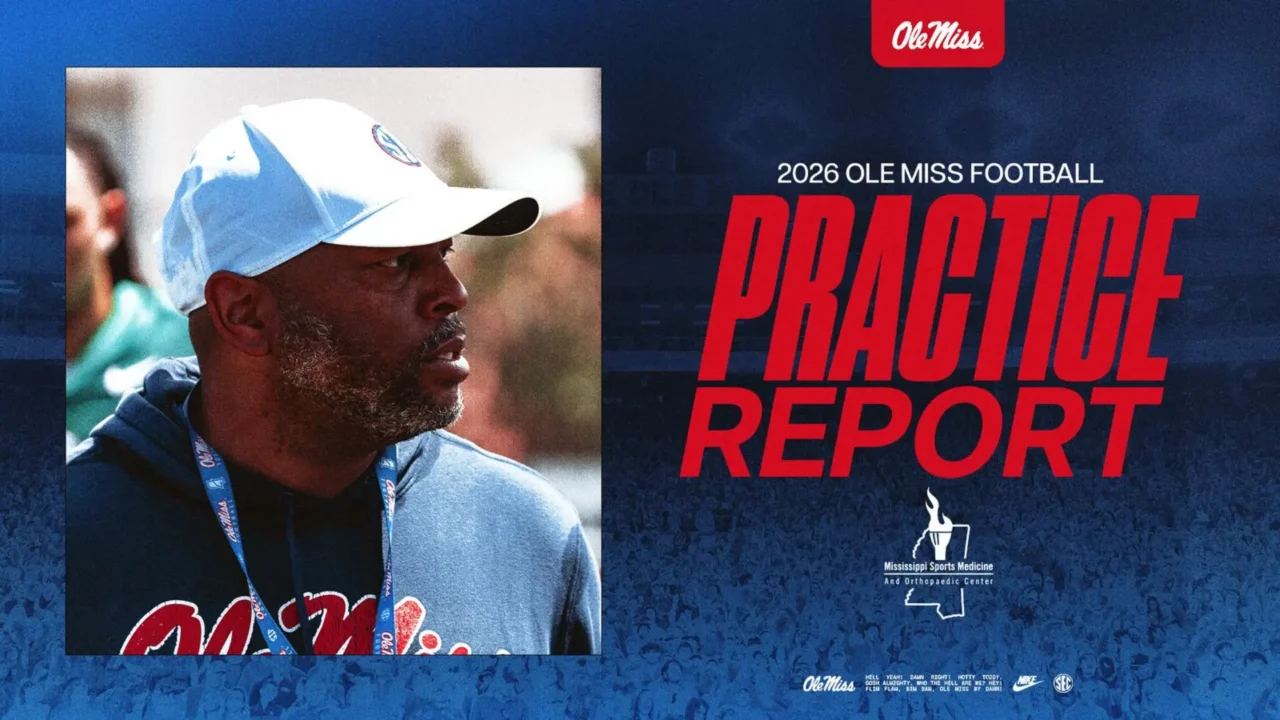
Ole Miss defense entered the third week of fall camp focused on sharpening an identity built around physicality, speed and discipline. The first scrimmage at Vaught-Hemingway Stadium gave the staff a game-like window to evaluate communication and playmaking under stadium conditions.
The Rebels remain nationally regarded after earning an AP Poll No. 9 preseason ranking, and defensive coordinator Bryan Brown used the scrimmage as a checkpoint for how the unit will handle its workload and distribution of pass-rush duty as the season approaches, as detailed by Ole Miss Athletics.
Key Takeaways
- The first fall scrimmage allowed the staff to evaluate communication and who can perform in a stadium environment.
- Bryan Brown said the pass rush will be a shared effort across the front rather than relying on a single player.
- Several edge and front-seven players have stepped up in camp and contributed to pressure in team periods.
- Linebacker Keaton Thomas earned praise for preparation, competitiveness and consistent film-room work.
Bryan Brown on Ole Miss defense and pass rush
Brown framed the desired defensive identity in clear, simple terms: physical, fast and disciplined. “The number one thing we want to be physical. We want to be a really, really physical defense,” he said, adding that the group wants to “play fast” and “limit explosive plays”.
The coordinator emphasized evaluation beyond raw plays, noting the scrimmage revealed who can communicate without coaches on the field and who can make plays when the environment is elevated. On the pass rush specifically, Brown was candid that the responsibility will be shared: “I think just from up front, I think we’re doing it as a group.”
Players who stepped up in camp and roles to watch
Brown called out Suntarine Perkins, Kam Franklin, Blake Purchase and Jonathan Maldonado as examples of players who have “stepped up” and provided pass-rush contributions during camp. That group has given the staff multiple options as it sorts through rotation and situational looks.
Brown also highlighted linebacker Keaton Thomas for his preparation and competitiveness, saying, “He’s hungry. He’s really, really hungry to prove that he belongs in this league.” He noted Thomas’ consistent presence in the film room and his ability to communicate and make plays on the field.
Fall camp pass-rush roles and experience
| Player | Camp role | Noted for |
|---|---|---|
| Suntarine Perkins | Front-seven pass-rush contributor | Highlighted by coaches as stepping up in team periods |
| Kam Franklin | Edge pass-rush option | Called out for contributing to pressure during the scrimmage |
| Blake Purchase | Rotation pass-rusher | Recognized for increased pass-rush production in camp |
| Jonathan Maldonado | Depth pass-rush piece | Listed among those who have stepped up during fall camp |
| Keaton Thomas | Linebacker with special teams and communication duties | Praised for preparation, competitiveness and film-room consistency |
What this means for the SEC race and College Football Playoff hopes
With Ole Miss slotted inside the AP Poll Top 10, defensive consistency matters for both conference ambitions and national positioning. A front that can distribute pass-rush responsibility reduces the pressure on any single player and helps the Rebels defend tempo and explosive plays against high-level SEC competition.
How the unit performs in the opener at Louisville will set early expectations for the season and influence how the staff manages rotation through the non-conference slate. Continued development from the players Brown mentioned will be essential as Ole Miss navigates a schedule that includes several power-conference tests.
Full practice details are available in the original report linked above.