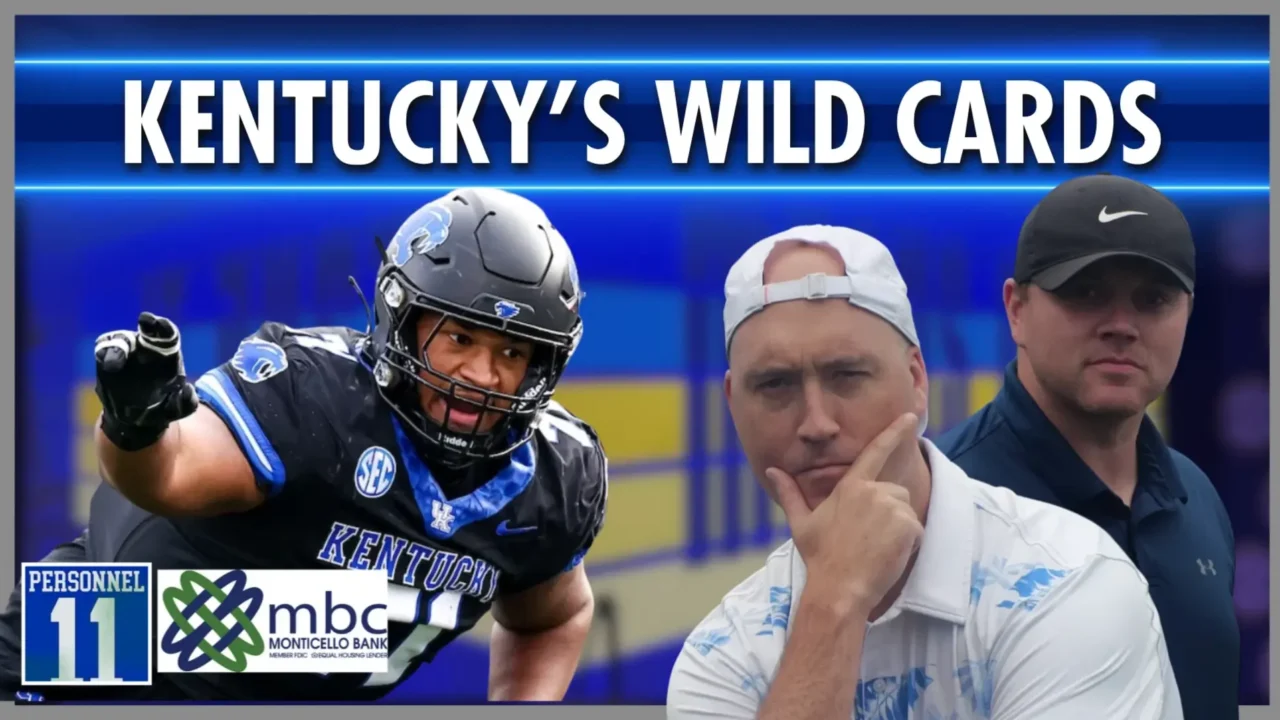
Kentucky Football Wild Cards emerged as the central theme on the latest 11 Personnel episode during fall camp, with the show laying out which position groups could raise the Wildcats’ ceiling this season.
The program also delivered an immediate personnel update: Alex Brown has joined the Kentucky front office, a move detailed by On3 that figures into recruiting and roster planning as the program prepares for the season and a slate of sponsor-driven local events.
Key Takeaways
- Alex Brown joining the front office was announced on the 11 Personnel podcast and is presented as an immediate addition to Kentucky’s staff structure.
- The show identified pass-catchers as potential game-changers who could materially expand Kentucky’s offensive ceiling this season.
- Questions in the cornerback room were highlighted as a defensive wild card that could create variance in the Wildcats’ performance week to week.
- 11 Personnel is presented by Monticello Bank and will appear at the Beaumont Centre in Lexington, and the show noted a partnership with Cash App tied to teen financial education and promotional offers.
Kentucky Football Wild Cards who can swing the season
The podcast framed the Wildcats’ immediate upside around a handful of high-leverage groups rather than one headline name, and that framing matters when projecting outcomes for a physically balanced roster.
Pass-catchers were the first group singled out as bona fide wild cards; the hosts argued that if the unit coalesces around consistent separation, contested-catch ability and reliable route-versus-coverage execution, Kentucky’s offense could operate at a higher tempo and produce chunk plays more frequently.
The other clear wild card resides in the cornerback room, where unresolved depth and alignment questions could force schematic shifts or increased rotation on early downs.
How the staff addresses those questions in the first weeks of camp will have direct downstream effects on defensive play-calling and opponent game plans.
Front office addition and recruiting context
Adding Alex Brown to the front office is a structural move the podcast framed as more than a title change; the hosts positioned it as a hire meant to bring expertise into roster management and recruiting coordination without specifying duties.
In practical terms, the presence of a new front-office voice during fall camp can influence how positional priorities are communicated to recruits and how evaluative feedback is consolidated across on-field coaches and support staff.
That coordination matters especially for the groups described as wild cards, because accelerated buy-in from targets and transfers hinges on coherent messaging about role, development plan, and schematic fit.
Podcast takeaways and local context
| Topic | Podcast takeaway | Local context |
|---|---|---|
| Pass-catchers | Presented as the offense’s highest upside area capable of redefining the attack if consistency and separation improve. | Hosts tied this group’s potential to improved route-running and a chance to produce more contested-catch wins, with camp reps determining early pecking order. |
| Cornerback room | Flagged as a source of uncertainty that could force schematic adjustments or heavier rotation. | Podcast discussion suggested depth and alignment remain under evaluation, making the room a weekly variable for defensive game planning. |
| Event and sponsor activations | 11 Personnel will stage an appearance at the Beaumont Centre in Lexington and highlighted partnerships supporting community engagement. | Monticello Bank sponsorship and a Cash App partnership aimed at teen financial education were listed as part of the show’s local outreach. |
SEC and CFP implications for Kentucky roster moves
From a conference perspective, the wild cards the show identified are the exact types of roster swings that can change a team’s positioning inside the SEC pecking order over the course of a season.
If pass-catchers legitimately raise offensive efficiency while the cornerback room stabilizes, Kentucky can improve its scoring margin and net more games against comparable East and West opponents, which matters for league standing and CFP positioning.
The front-office hire is also relevant to recruiting and roster construction because a stronger evaluation-and-communication process can accelerate talent returns and target prioritization across the wider SEC recruiting battlefield.