Arkansas football 2026 begins as a deliberate reset under Ryan Silverfield after a 2-10 season and a complete roster reshuffle.
A preseason team preview from PFF catalogues the turnover, noting an SEC-high 42 transfers arriving and a secondary that lost seven of the eight players who logged at least 150 snaps.
Key Takeaways
- Arkansas brought in an SEC-high 42 transfers as part of a front-to-back roster overhaul.
- The Razorbacks finished 2-10 in 2025 and went winless in SEC play, creating urgent roster and schematic changes.
- The rushing attack projects as Arkansas’ clearest path to immediate improvement based on returning and incoming talent.
- The secondary is the largest on-field question after Arkansas ranked 126th nationally in coverage grade and lost most of its snap leaders.
Arkansas secondary risks and turnover
The cornerstones of Arkansas’ 2026 projection are less about single players than about cohesion in a reconstituted secondary.
Losing seven of eight defensive backs who played at least 150 snaps creates both opportunity and risk, as new faces must learn technique, alignments and communication quickly in a conference that tests coverage every week.
Silverfield transfer haul reshapes the secondary
The incoming portal class includes cornerbacks and safeties who, on paper, fill holes left by departures.
Notable newcomers listed among the transfer additions include Joker Johnson and La’khi Roland at corner, plus Carter Stoutmire and Christian Harris at safety, names that aim to replace lost snap leaders.
Why the rushing attack gives a realistic path to wins
The most immediate reason for tempered optimism is the ground game, which provides a way to control tempo while the secondary builds chemistry.
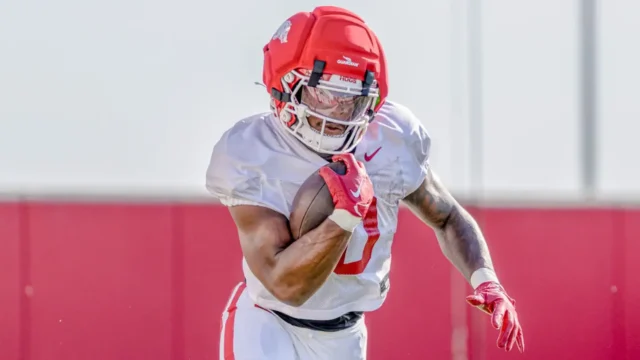
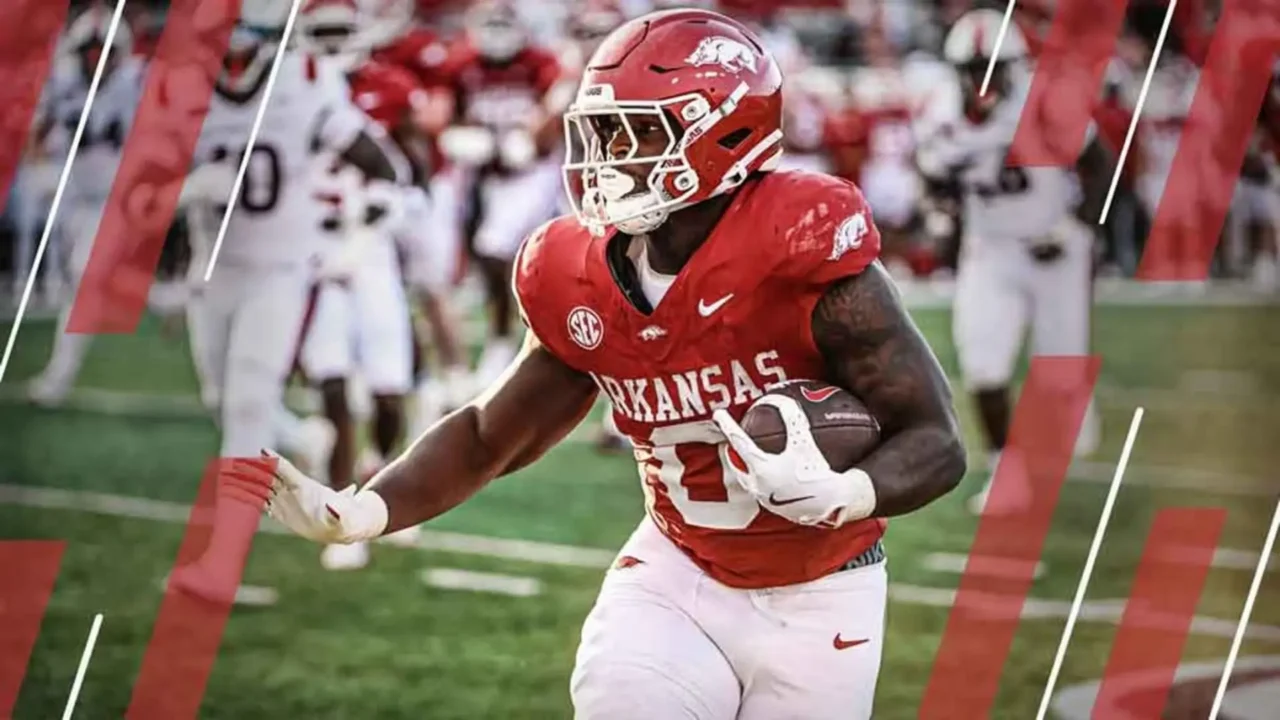
Braylen Russell projects as the lead back after averaging more than 5.0 yards per carry in his career and earning an 81.6 rushing grade with 3.24 yards after contact on 55 carries, and adding Sutton Smith, who totaled 675 rushing yards a season ago, further beefs up the backfield.
Quarterback competition and roster construction
The quarterback room enters 2026 with an open competition between incumbent KJ Jackson and AJ Hill, who previously served as a backup under the new staff.
Transfer additions across the skill positions and the offensive line will shape playcalling and game scripts, and protection plus reliable receiving will determine how successfully Arkansas leans on a run-first identity.
Defensive back turnover and roster context
| Category | 2025 Arkansas context |
|---|---|
| Defensive backs lost (150+ snaps) | Seven of eight snap leaders departed, forcing heavy turnover in the secondary |
| Notable incoming defensive backs | Joker Johnson, La’khi Roland, Carter Stoutmire and Christian Harris are primary additions to address coverage issues |
| Coverage grade | Arkansas ranked 126th nationally in coverage grade, highlighting the need for immediate improvement |
| Edge production | Quincy Rhodes Jr. led the team with 35 pressures and seven sacks, preserving a pass-rush building block |
SEC standing and Arkansas’ College Football Playoff path
Arkansas’ short-term ceiling is pragmatic: after a 2-10 season and a winless SEC campaign, rebuilding toward respectability will likely take a season or two.
The transfer haul supplies depth and immediate options, but converting that inventory into consistent SEC wins requires fast assimilation in coverage assignments and careful scholarship management for recruiting and roster balance.