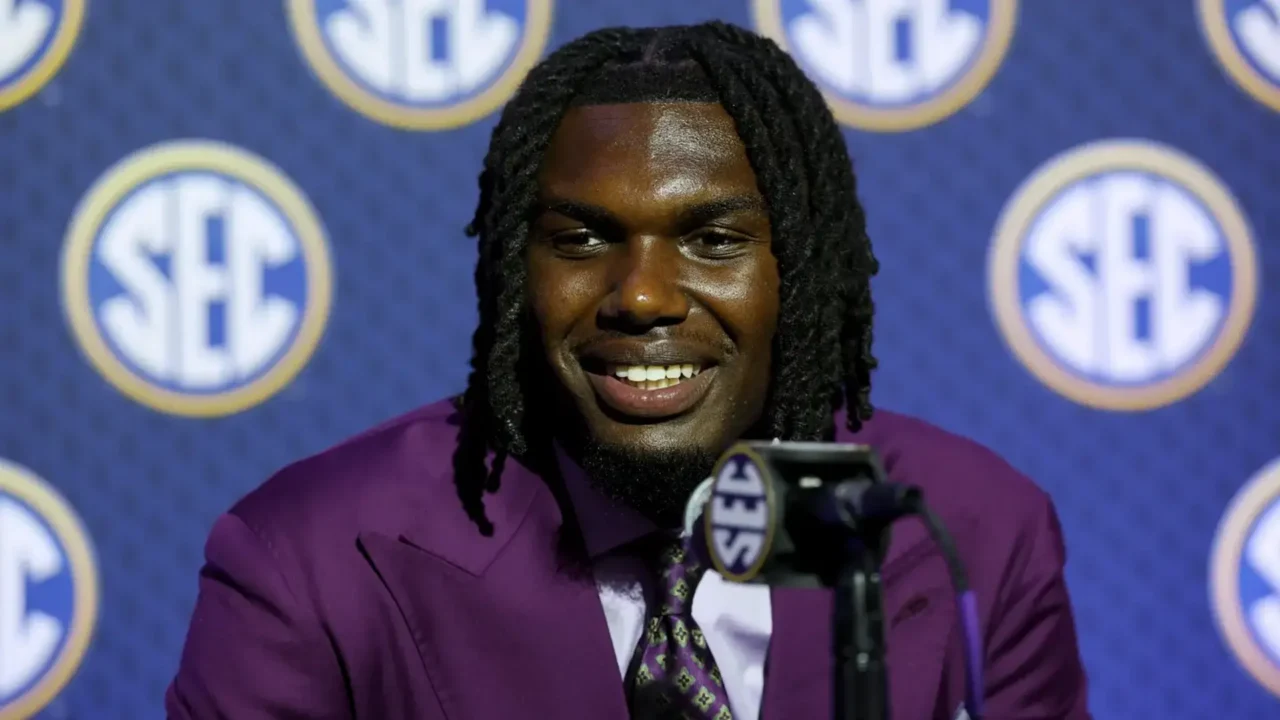
Trey’Dez Green has become a central piece of LSU’s offseason narrative after drawing pointed praise from new offensive coordinator Charlie Weis Jr. The attention isn’t just about size or production; it’s about a pro-level approach to preparation that, at this stage of camp, separates him from the pack.
Weis’ observations about Green were public and carry weight for how LSU plans to deploy one of its top offensive assets this season. The reporting that profiles Green’s camp work and the coaching staff’s plan appears in this profile LSU Tigers On SI
Key Takeaways
- Trey’Dez Green earned strong praise from Charlie Weis Jr. for an elite mindset and consistent extra work during fall camp.
- Weis believes Green can handle a heavy mental load, which permits the staff to use him in multiple positions on offense.
- Green enters the season viewed as a top national tight end prospect and projects as a breakout candidate under the new staff.
How Weis is expanding Trey’Dez Green role
Charlie Weis Jr.’s assessment was straightforward: Green’s preparation and attention to detail set him apart.
Weis said, “How much work he puts into it, and his mindset is elite. I mean, he’s an absolute pro in everything that he does and the extra work.”
That kind of public endorsement from an offensive coordinator who followed Lane Kiffin to Baton Rouge sends a clear signal to opponents and evaluators.
How the coaching shift affected Green’s projection
The offseason coaching changes that brought Lane Kiffin to LSU and Charlie Weis Jr. as his offensive coordinator reset expectations across the roster.
Green benefits from a staff that values flexibility and schematic creativity, which directly translates to increased snap variety for multi-role players.
Weis’ portfolio as a developer of players means Green will be coached with an emphasis on both technical polish and situational nuance.
Positional and recruiting context
| Aspect | Trey’Dez Green (LSU) | Typical SEC starting tight end |
|---|---|---|
| Recruiting and standing | Identified in reporting as the highest-ranked tight end in the nation, making him a focal prospect on the roster | Recruiting profiles vary widely; many starters arrive with solid but less nationally prominent evaluations |
| Positional versatility | Viewed by coaching staff as able to handle multiple positions and formations because of his mental processing and preparation | Many SEC starters are used primarily in conventional inline or H-back roles with less routine cross-training |
How Weis plans to use Green as an offensive weapon
Weis said, “I think what’s cool is how much he can handle mentally, you know, putting on his plate, which allows us to put him in a lot of different positions and do some really cool things with him.”
Practically, that means Green can be moved into the slot, flexed wide, or kept in-line depending on matchup advantages. The staff’s willingness to create mismatches around him makes Green a potential day-one focal point in pass concepts and red-zone design.
Because Weis tied increased opportunities to Green’s preparation, the onus is on game reps to translate camp polish into production.
LSU roster construction and recruiting impact
Green’s multi-role ability affects LSU’s roster construction by reducing the need for narrowly defined situational specialists and increasing lineup flexibility.
On the recruiting side, his national standing and early camp work reinforce LSU’s appeal to tight end prospects who seek a program that develops positional versatility.
By Brooke Benedict