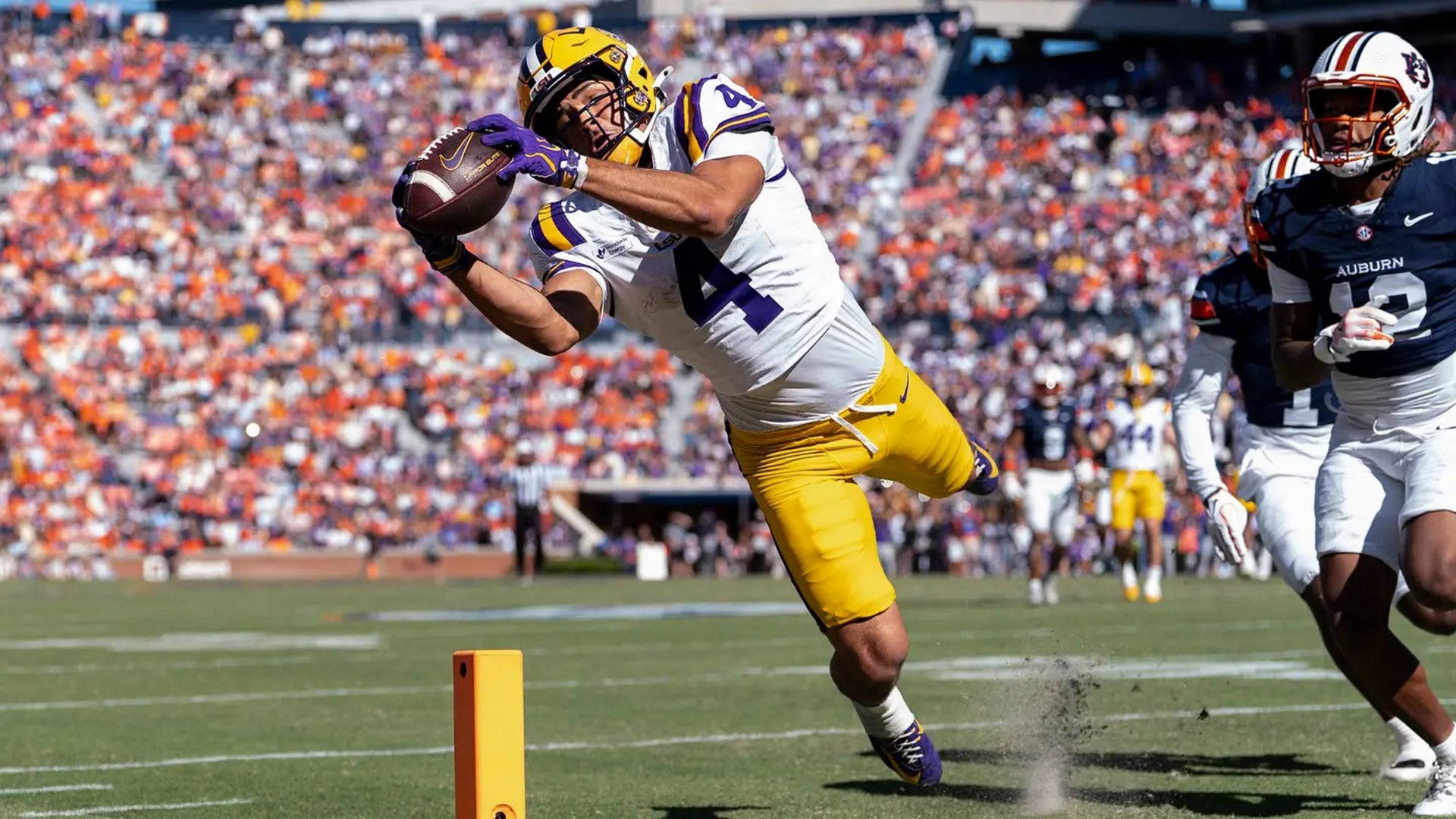

The LSU running back room arrives in 2026 with acute focus and realistic pressure. After a season that produced just 102.1 rushing yards per game, the Tigers must find consistent ground production to unlock the staff’s offense.
Depth and health will decide whether a refreshed corps can replace a season that ranked 122nd nationally, and the room’s trajectory will shape play calling, protection responsibilities and how Sam Leavitt is asked to manage games, as noted by LSU Tigers On SI
Key Takeaways
- LSU averaged 102.1 rushing yards per game last season, a number that must improve for the offense to function as intended.
- Dilin Jones is the expected lead back after transferring from Wisconsin despite a season-ending foot injury in his last season there.
- Harlem Berry and Caden Durham are positioned to provide rotation depth and push for early snaps if Jones’ recovery or consistency becomes an issue.
Why the LSU running back room matters to the offense
The running game dictates play-calling balance, pass protections and the effectiveness of play-action for LSU’s quarterbacks. Without credible ground production, defensive fronts can pin edges and force quick reads from Sam Leavitt, limiting the passing game.
Improving a 102.1-yard rushing average changes fourth-down decisions, short-yardage packages and tempo choices. That makes the running back room central to both pregame plans and in-game adjustments.
Player profiles and the projected depth chart
Dilin Jones arrives in Baton Rouge as the presumptive lead back after his work at Wisconsin, where he ran for 300 yards and two touchdowns before a season-ending foot injury. His talent package offers a chance to reintroduce a downhill element to the rushing attack if he returns to full strength.
Behind Jones, Harlem Berry and Caden Durham provide complementary traits and experience, giving the staff rotation options that can preserve fresh legs and present matchup problems to SEC fronts. The balance between a primary workhorse and situational backs will be central to sustaining drives and converting short-yardage downs.
How the offensive line and scheme will influence running back outcomes
The offensive line remains a pivotal variable for any projection of running back success. The staff believes there is enough in-game experience up front to provide lanes, but cohesion and scheme fit under a new staff will be tested early in camp and nonconference play.
The new staff’s stated belief in a working run game means play design will aim to maximize blocking angles and leverage, but consistent output will hinge on the line creating seams and sustaining blocks through the second level. That interplay between scheme and line play will dictate whether the running back room delivers routine production or a sporadic lift.
Rushing context versus SEC peers
| Metric | Context |
|---|---|
| 102.1 rushing yards per game | LSU rank: 122nd nationally and second-worst in the SEC, highlighting a clear shortfall in run production |
| Power Four comparison | LSU’s rushing average was the sixth-worst among Power Four teams, underscoring the gap to elite conference rivals in ground efficiency |
SEC and CFP implications for LSU running back room
The running back room’s performance will ripple across recruiting, roster construction and LSU’s path in a 16-team SEC. Improved rushing production helps control clock management and reduces turnover risk, which matters in a conference where line play often determines game outcomes.
On the recruiting trail, a visible, productive backfield would help LSU compete for regional backs who value both early playing time and pro-style rushing work. Conversely, continued struggles on the ground would make it harder to close on targets who want assurance their development will include substantive carries.
For College Football Playoff calculations, a reliable run game reduces variance in high-stakes conference matchups and strengthens LSU’s profile in close losses or one-score wins. The running back room therefore has direct implications for the Tigers’ ability to climb the SEC standings and position themselves for postseason consideration.
Reporting by JD Andress informed this analysis.