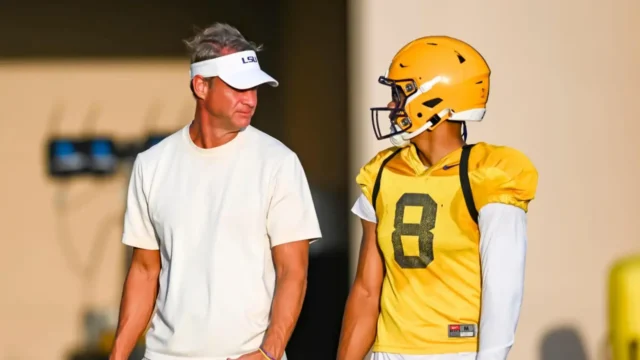
Lane Kiffin LSU roster additions reshaped LSU’s depth chart in an instant after a Louisiana judge granted 16 players an extra year of eligibility and ordered an August transfer window.
Reporting from NOLA.com notes that Kiffin used that court-ordered window to sign veterans with college and NFL experience, a move that creates immediate depth but also legal and conference questions.
Key Takeaways
- A Louisiana court granted 16 players another year of eligibility and ordered an August portal window, opening an unusual late roster opportunity.
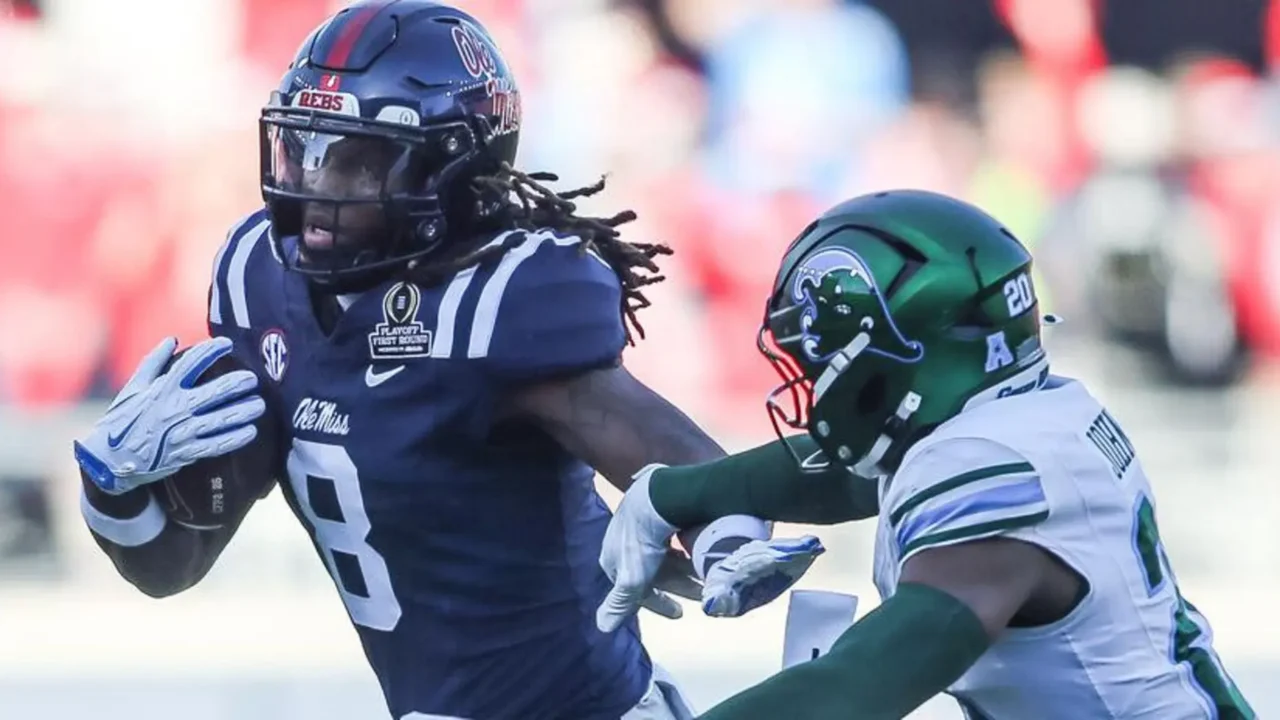
- Lane Kiffin added former Ole Miss starters Dae’Quan Wright and Zxavian Harris plus Notre Dame transfer Junior Tuihalamaka during the August window.
- Their ability to suit up for LSU depends on appellate review of the court order and any SEC review or enforcement action.
How Lane Kiffin LSU roster additions fit into the roster
Kiffin’s August signings are a clear attempt to convert experience into immediate availability. Dae’Quan Wright, Zxavian Harris and Junior Tuihalamaka together bring roughly 4,000 career snaps, per the reporting.
Dae’Quan Wright gives LSU a tight end who already knows Kiffin’s offense and can step into 12-personnel sets alongside Trey’Dez Green. Wright carried momentum from Ole Miss, posting just over 1,000 receiving yards across two seasons and leading tight ends with 394 yards after the catch, according to Pro Football Focus. He was not a plus run-blocker in 2025 — PFF ranked him 409th of 431 tight ends as a run-blocker — but he offers reliable pass-catching and familiarity with Kiffin’s routes.
Zxavian Harris addresses interior defensive-line depth in a way freshmen sometimes cannot. At 6-8 and 330 pounds, Harris recorded 58 tackles and nine tackles for loss en route to All-SEC honors last season. A March foot surgery limited his NFL prospects, but if healthy he can reduce pressure on LSU’s young interior group and give coaches a veteran anchor against power running games.
Junior Tuihalamaka brings edge depth that helps plug a run-stopping gap created by Gabriel Reliford’s ACL tear in spring. Tuihalamaka started three games at Notre Dame last season and posted a 73.6 PFF grade as a run defender, placing him in the top 28% of edges. His addition complements other veteran edge options Kiffin has pursued, including Princewill Umanmielen and Jordan Ross.
Kiffin framed the signings as part of a relentless roster-building approach, telling players the staff will “look at every avenue to give you the best team.” That message underscores why he targeted veterans who can contribute immediately rather than waiting on freshmen to develop.
Veteran profiles and verified context
| Player | Verified recent context | Role at LSU |
|---|---|---|
| Dae’Quan Wright | Just over 1,000 receiving yards in two seasons at Ole Miss and led TE group with 394 yards after catch, per PFF; ranked 409th of 431 TEs as a run-blocker in 2025 | Plug-and-play tight end who pairs with Trey’Dez Green in 12 personnel and provides pass-catching familiarity with Kiffin’s offense |
| Zxavian Harris | 58 tackles and nine TFL last season, earned All-SEC; underwent foot surgery in March that affected NFL chances | Interior space-eater expected to stabilize the DT rotation and ease reliance on freshmen against power running attacks |
| Junior Tuihalamaka | Started three games at Notre Dame; 73.6 PFF run-defense grade placed him in the top 28% of edges last season | Run-stopping edge who shores up depth after Reliford’s ACL injury and complements LSU’s other veteran additions |
Why those signings matter to LSU’s front seven
LSU’s defensive line mix was already leaning on promising young pieces such as Deuce Geralds and Richard Anderson. Kiffin’s additions shift the balance toward experience, limiting the number of high-leverage reps that must be entrusted to true freshmen.
Harris’s interior profile and Tuihalamaka’s edge work both directly address run-defense shortfalls highlighted by Reliford’s injury. The staff also has to reconcile how many veteran snaps they will allocate to newcomers versus developing underclassmen and recent transfers already on the roster.
On offense, Wright’s ability to operate within the tight end role gives Kiffin more schematic flexibility, allowing Green to function more as an oversized slot and Wright to handle inline blocking and intermediate catch responsibilities.
SEC review and College Football Playoff implications for LSU
The judge’s temporary restraining order and the ordered August portal window are subject to appeal, and any appellate reversal would remove the roster access Kiffin used. The SEC also retains the ability to review intraconference movement and eligibility matters, which could affect whether those players are cleared for league play.
From a short-term competitive perspective, adding proven, experienced pieces can reduce immediate depth risk and protect LSU’s ability to compete for division and playoff positioning. From a roster-construction standpoint, the moves force a re-evaluation of how the staff allocates scholarships and snaps ahead of a pressure-filled season.