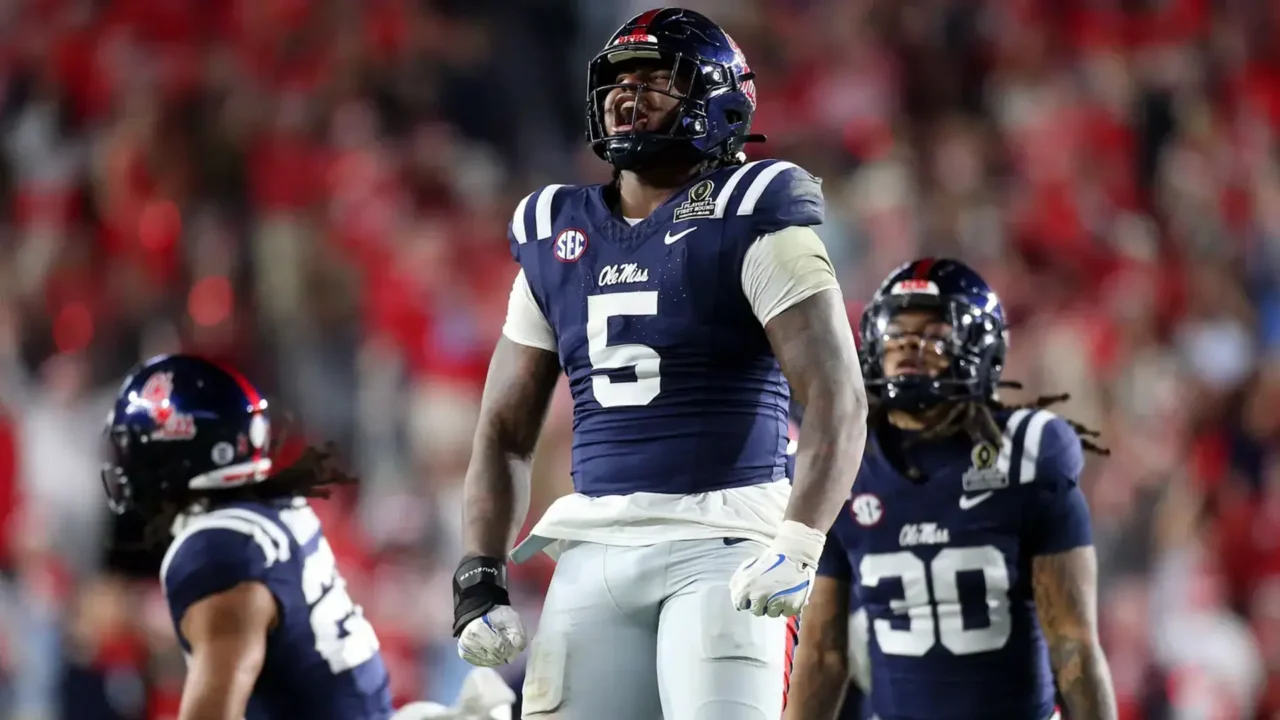
Ole Miss depth is the single factor most likely to raise or lower the Rebels’ 2026 ceiling. With high-end starters fronting both sides of the ball, the true measure of this roster will be how well role players and transfers carry the load when starters get taxed.
Reporting from Ole Miss Rebels On SI frames the core issue: Trinidad Chambliss and Kewan Lacy headline an offense built to score, while Will Echoles and Suntarine Perkins anchor a defense that needs supporting depth to absorb a brutal SEC slate.
Key Takeaways
- Makhi Frazier’s arrival matters because he offers a proven rotational option to ease Kewan Lacy’s workload after offseason shoulder surgery.
- Will Echoles and Suntarine Perkins are the defensive anchors, but the front seven must replace lost production and answer depth questions.
- Ole Miss depth will determine whether top-end talent can carry the Rebels through the SEC schedule and withstand inevitable injuries.
Why Ole Miss depth will decide the offense
Kewan Lacy and Trinidad Chambliss are the clear engine of this offense, but Lacy’s heavy usage last season and offseason shoulder work have pushed the staff to plan for shared carries. The arrival of Michigan State transfer Makhi Frazier, who posted 520 rushing yards last season, is the most concrete reinforcement listed by the reporting; his change-of-pace skill set is described as the primary avenue to protect Lacy from overuse.
Beyond the backfield, returners such as Deuce Alexander and lineman Patrick Kutas give the offense continuity. Kutas’ preseason recognition signals a reliable presence up front, but the overall narrative in camp has been that rotation and depth on the offensive line and at skill positions will determine whether the Rebels maintain efficiency late in games.
Game-planning in the SEC is a war of attrition, so the staff’s ability to deploy reliable rotational pieces will shape play-calling and minutes for stars. If backups like Frazier and rotational receivers can match situational production without forcing schematic changes, Ole Miss keeps its ceiling intact; otherwise, schematics and stamina will be the limiting factors.
How Ole Miss depth reshapes the defense
Will Echoles and Suntarine Perkins are presented as the defensive headliners who should give Pete Golding and Bryan Brown’s front seven a lift. Kam Franklin’s production last season — five sacks and 69 total tackles — marks him as one of the internal options expected to shoulder more pass-rush and run-defense burden after the staff lost last year’s sack leader to the transfer portal.
Princewill Umanmielen’s departure creates a clear production gap up front that the Rebels must fill through internal growth and newly added pieces. The reporting highlights Keaton Thomas and Luke Ferrelli as immediate-impact newcomers at linebacker, with Ferrelli carrying ACC Defensive Rookie of the Year credentials and expected to call the defense on the field.
If Thomas and Ferrelli deliver downhill play and reliable play-calling respectively, the defense can compensate for lost edge production and avoid a drop-off in late-game situations. If those younger pieces lag behind expectations, opponents will test depth by running sustained series against the front seven.
Roster depth comparison and returning roles
| Position group | Key returning pieces | Departures | Incoming help or role |
|---|---|---|---|
| Running back room | Kewan Lacy (lead carrier), Trinidad Chambliss (offensive contributor) | None specified | Makhi Frazier arrives from Michigan State to reduce Lacy’s workload and provide change-of-pace reps |
| Defensive front seven | Will Echoles, Suntarine Perkins, Kam Franklin (five sacks, 69 tackles last season) | Princewill Umanmielen (team sack leader left via transfer portal) | Keaton Thomas and Luke Ferrelli projected to stabilize linebacker play; internal reps expected to replace edge production |
| Offensive skill and line | Deuce Alexander (WR), Patrick Kutas (OL; SEC Preseason All-Third Team) | None specified | Returners provide continuity while coaches evaluate mid-season portal additions and rotations |
How depth affects Ole Miss SEC and CFP path
The SEC schedule magnifies even small depth deficits; rotating reliable backups keeps stars fresh across a multi-month gauntlet. If role players and transfers perform at or near the levels outlined in the reporting, Ole Miss has the roster architecture to remain competitive in key conference games.
Recruiting and roster construction will be influenced by early-season durability and visible rotational success, since demonstrated depth eases pressure on future classes and the portal. The Rebels’ ability to sustain production away from the top names will define whether they chase conference wins and maintain CFP relevance.