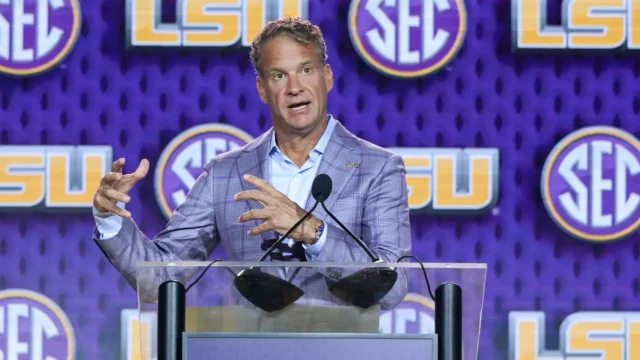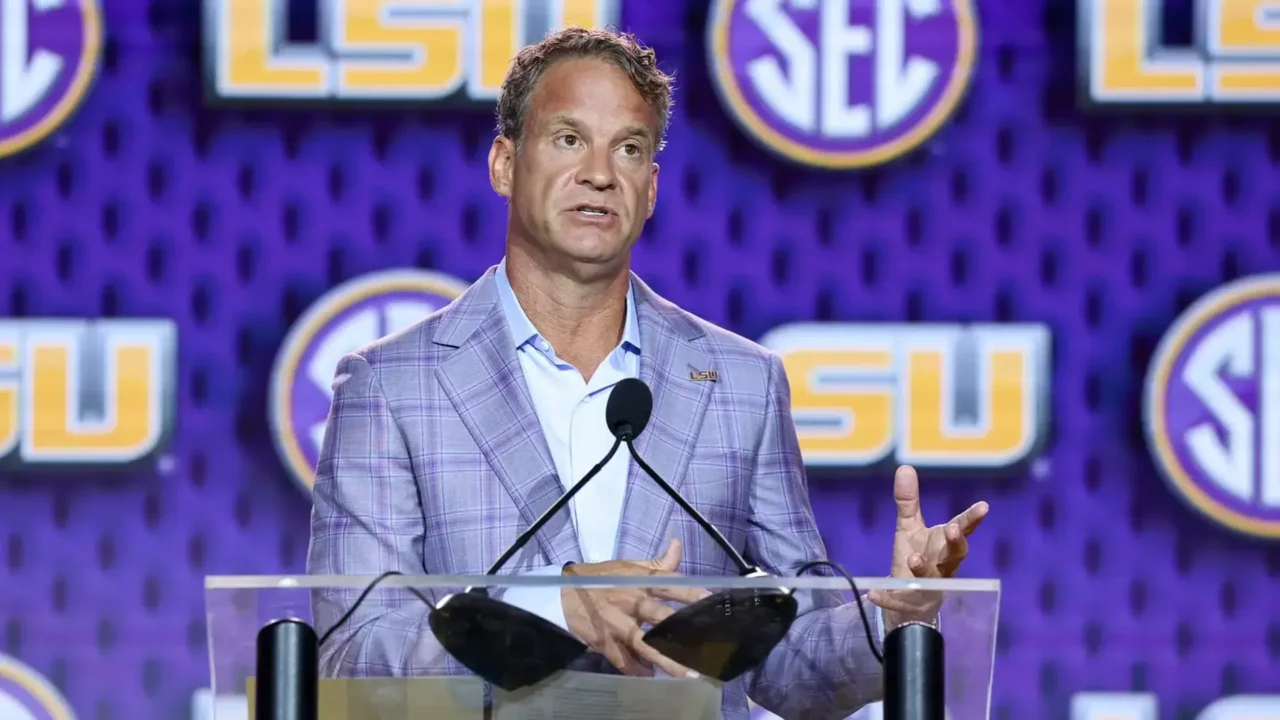
Lane Kiffin mock game day preparations turned Tiger Stadium into a rehearsal of the most intense Saturday routines as LSU counts down to its season opener against Clemson. The work on pageantry and procedures is aimed at removing surprises and giving players a comfortable script for a high-pressure night in Death Valley.
Over the weekend the Tigers ran a full simulation that included a walk down Victory Hill with cheerleaders and the LSU band, a tunnel entrance with fireworks and a reported scout team wearing Clemson colors, a detail relayed in reporting by LSU Tigers On SI.
Key Takeaways
- The mock day included a walk down Victory Hill accompanied by the LSU band and cheerleaders to recreate the game-day entrance experience.
- Pyrotechnics were used when the team ran out of the tunnel to help players acclimate to the sensory load of a night game.
- A scout team was reported to wear Clemson uniforms during the simulation, reinforcing opponent-specific preparation.
- Lane Kiffin said the staff rehearses hotel routines, meals, walk-throughs and how players dress from Sunday through Saturday.
Lane Kiffin mock game day details
Lane Kiffin framed the mock game day as a practical, detail-oriented rehearsal designed to remove chaos from the actual game night. He told reporters that the program conducts full mock games to cover logistics and routines, saying that they go through “hotel, meals, walk-throughs, everything that they do” from the start of the week to kickoff.
The simulated Saturday went beyond a closed walkthrough. Players moved down Victory Hill with cheerleaders flanking the procession while the band played, giving the roster a look and feel of an authentic entry into Tiger Stadium. Kiffin noted that even seeing unexpected fans and hearing the band during the rehearsal helped make the experience feel more realistic for the players.
Visual and auditory elements were part of the drill. Fireworks streamed across the Baton Rouge sky when LSU ran out of the tunnel, a staging choice intended to replicate the sensory spike players will face under the lights. The use of pyrotechnics during the mock run was called out in social reporting of the day and serves as a rehearsal for handling the stimulus surge at kickoff.
Opponent-focused elements also were included. A social post reported that a scout team would don Clemson uniforms to give the first-team defense and offense a cleaner look for their game-week reps. That tactic aims to reduce cognitive load for players by providing a closer approximation of the visual matchups they will see on Saturday night.
Kiffin emphasized routine and repetition as the program’s approach to preparation. Practicing dressing protocols, meal timing and how the team moves from hotel to stadium is meant to eliminate small mistakes that can compound into larger game-day distractions. For a program seeking immediate cohesion under a new staff, those repetition drills are a pragmatic step toward consistent execution.
Mock day compared to opponent and past preparations
| Feature | This Mock Game Day | Opponent / Past Context |
|---|---|---|
| Stadium entry and pageantry | Full Victory Hill walk with band and cheerleaders to simulate stadium entry | Clemson arrives after a 7-6 2025 season and will face an LSU entrance crafted to match a high-intensity environment |
| Environmental stimuli | Pyrotechnics at tunnel exit to prepare players for noise and flashes | Past LSU rehearsals prioritize procedural comfort; this mock adds sensory replication to those routines |
| Opponent simulation | Reported use of a scout team wearing Clemson uniforms to mimic look and feel | Opponent-specific scout work is a common practice; this iteration emphasizes visual accuracy |
CFP and recruiting implications for LSU
Detailed game-day rehearsals are a recruiting signal as much as they are an operational exercise. Prospective players and families notice organizational thoroughness, and a staff that rehearses logistics can present a message of program stability and preparation when recruiting visits occur.
From a College Football Playoff perspective, early-season readiness can set the tone for a conference run. Removing preventable errors in Week 1 preserves depth and momentum for the opening stretch of SEC play, and staff emphasis on routine reduces the chance that environmental factors dictate the outcome.
On the roster side, the mock day gives depth players and specialists meaningful exposure to game conditions without the cost of live-game reps. Those reps can sharpen situational awareness and limit first-game jitters, which is valuable when LSU opens a high-profile night game at home. Reporting by Ylver Deleon-Rios.