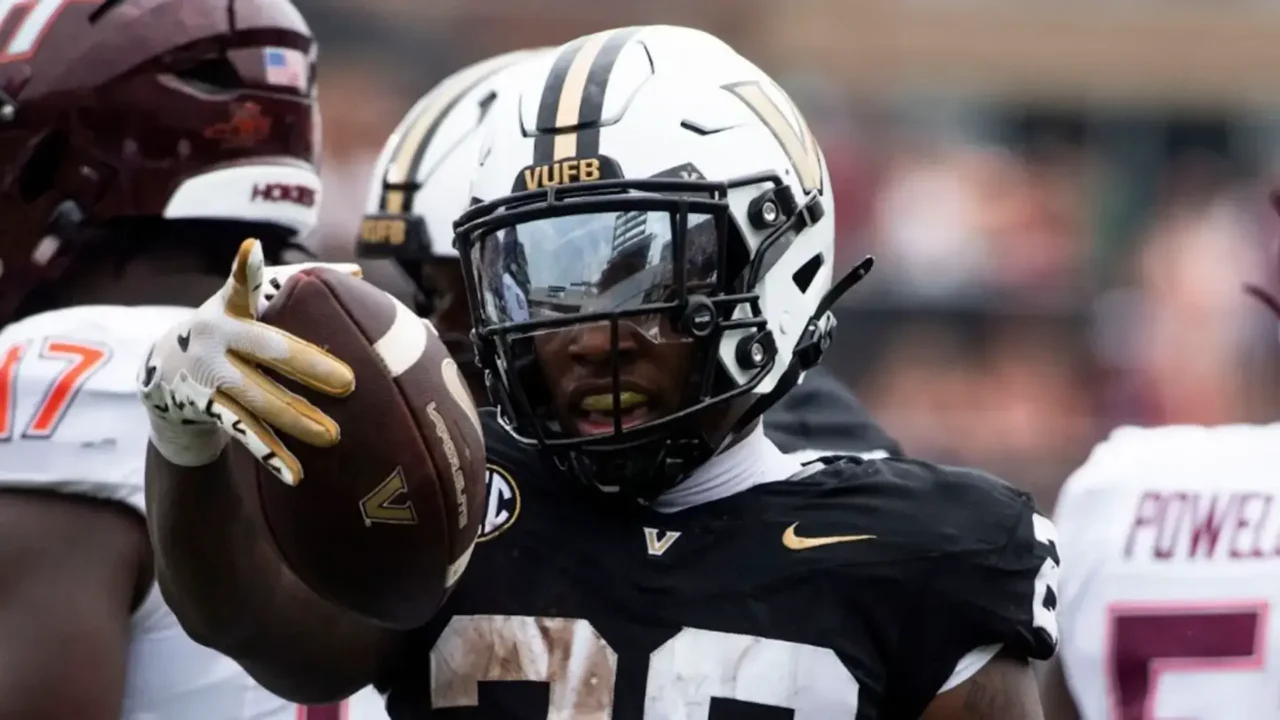
Sedrick Alexander received the first snap and carried on the next three plays, a sequence that signaled Vanderbilt would lean on its veteran back early as detailed by Vanderbilt Commodores.
He finished with 10 carries for 60 yards and an 18-yard touchdown that included a broken tackle, and the outing came with Alexander back to full health.
Key Takeaways
- Sedrick Alexander carried on the first four plays and capped his appearance with an 18-yard touchdown that included a broken tackle.
- Alexander finished the game with 10 carries for 60 yards and the score, reasserting himself as the primary early-down workhorse.
- Both Blaze Berlowitz and Jared Curtis saw snaps and avoided major mistakes while the staff evaluates a long-term starter.
- Leaning on Alexander early signals Vanderbilt will emphasize the running game to set tempo while the quarterback competition continues.
Sedrick Alexander workload and skill set
The opening series featured short, inside runs meant to establish gap integrity and build physical momentum for the offensive line.
Alexander’s 18-yard touchdown included a broken tackle and displayed contact balance and short-area burst as he finished the play in the secondary.
With Alexander back to full health, the staff can rely on consistent early-down production rather than pushing high-variance passing concepts.
Quarterback reps and the ongoing competition
Both Blaze Berlowitz and Jared Curtis received live reps and completed drives without obvious turnovers or major errors in this appearance.
The limited sample did not produce a clear-cut starter, which explains a game plan that reduces passing risk and leans on the run to protect whoever takes the snaps.
That conservative approach in early scripts allowed Alexander to shoulder front-line work while the coaching staff evaluates the signal-callers.
How this usage affects play calling and roster construction
Prioritizing Alexander in early-game calls simplifies play design by emphasizing downhill rushing lanes and predictable blocking assignments.
Other backs retain roles on passing downs and special teams, but a healthy feature back creates clearer snap-allocation patterns for the staff.
Having a reliable primary option in the run game reduces immediate pressure to chase an urgent short-term replacement in recruiting and lets coaches target complementary profiles instead.
Running back and positional context
| Player or context | Game snapshot | Health and availability | Role |
|---|---|---|---|
| Sedrick Alexander | 10 carries, 60 yards, 1 TD (18-yard run with broken tackle) | Back to full health | Primary early-down workhorse and tempo setter in early scripts |
| Recent Vanderbilt primary backs | Variable single-game snapshots without uniform short-sample numbers | Workloads and availability have fluctuated season to season | Roles have alternated between committee and feature back depending on game plan and personnel |
SEC implications for Vanderbilt recruiting and roster construction
In a conference that prizes physical running games, a dependable early-down back helps Vanderbilt remain competitive in time-of-possession battles and physical matchups.
Showing a clear path to consistent touches for a healthy lead back can influence prospect evaluations and the staff’s recruiting priorities in the near term.
Local reporting and in-stadium observation supplied the game details that informed this report.