
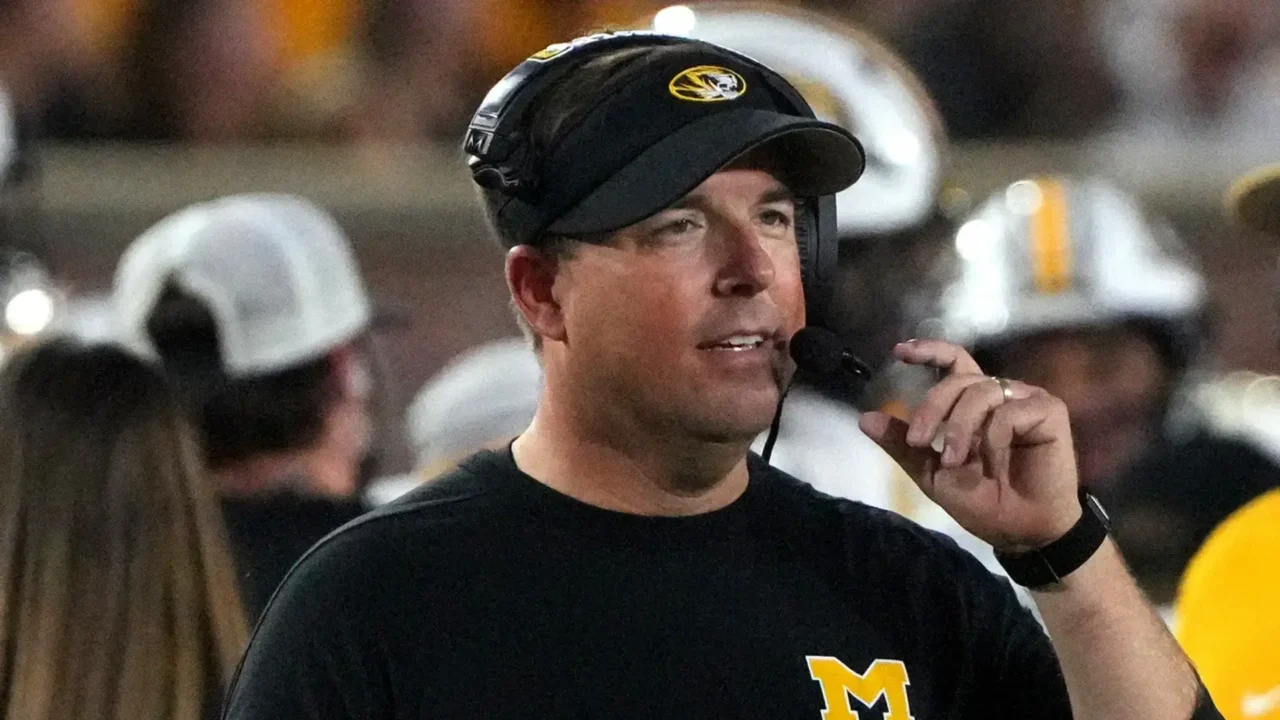
Mizzou football AP Top 25 movement landed the Tigers inside the national conversation this week after a decisive Week 1 performance. Missouri defeated Arkansas-Pine Bluff 54-14, a win that put the program back on voters’ radars.
The AP poll shift also tracked around an uneven weekend across the country and helped Missouri leapfrog a couple of teams; the change was noted by Sports Illustrated, which published the updated Week 1 standings.
Key Takeaways
- Missouri moved from No. 25 to No. 23 in the latest AP Top 25 poll after a 54-14 win over Arkansas-Pine Bluff.
- Iowa and Houston sit immediately ahead of Missouri in the poll after each moved up one spot following Week 1 results.
- The Tigers still face four current top-10 opponents on the SEC slate, making every conference week consequential for rankings and perception.
Why Mizzou football AP Top 25 rise matters
The jump to No. 23 is meaningful beyond a single box in the standings because it reflects both Missouri’s performance and how the rest of the nation fared this opening weekend. The Tigers’ 54-14 result provided a clean, repeatable storyline for voters evaluating early resumes.
That said, the move was not purely self-contained; several teams ahead of Missouri either slipped or saw little upside from their own results. Michigan survived a dramatic finish, Louisville lost to Ole Miss, and Iowa and Houston each climbed one spot, which helped open room in the middle of the poll.
Week 1 game takeaways and roster notes
The scoreline against Arkansas-Pine Bluff was straightforward: Missouri controlled the game and did so without turning the result into a national narrative of fatigue or vulnerability. The margin and consistency across phases gave voters a clear impression of a competent, well-prepared opening-day performance.
From a roster perspective, the opener offered stability rather than drama. Coaches were able to evaluate depth and rotation in live action, and the available evidence points to a team that executed its structure against an inferior opponent. The immediate takeaway is that Missouri’s depth held up early and the coaching staff had a workable plan to present to voters.
AP poll context and Week 1 comparison table
| Team | Week 1 result | Poll movement or status |
|---|---|---|
| Missouri | Beat Arkansas-Pine Bluff 54-14 | Moved up from No. 25 to No. 23 |
| Iowa | Week 1 results lifted the program in voters’ eyes | Moved up one spot and sits ahead of Missouri |
| Houston | Improved standing after their opening weekend | Moved up one spot and remains ahead of Missouri |
| Louisville | Lost to Ole Miss | Declined in relative standing after the loss |
SEC slate and CFP stakes for Missouri
The ranking is a snapshot that will matter most when Missouri takes meaningful conference swings against the league’s upper tier. The Tigers still face four teams currently inside the top 10, a sequence that raises the difficulty of Missouri’s path to a sustained ranking.
Home dates and travel windows now carry added weight; Texas A&M arrives in Columbia on Oct. 10 for the Tigers’ sixth game, and games against Georgia, Texas and Ole Miss remain season-defining tests. Each of those matchups will be treated as a referendum on whether this early AP placement represents a durable step forward or a temporary recognition tied to Week 1 dynamics.
Full Week 1 poll results and the original reporting are available in the linked report above.