Alabama football spring practice: Coaching tweaks and freshmen fuel an offensive revival
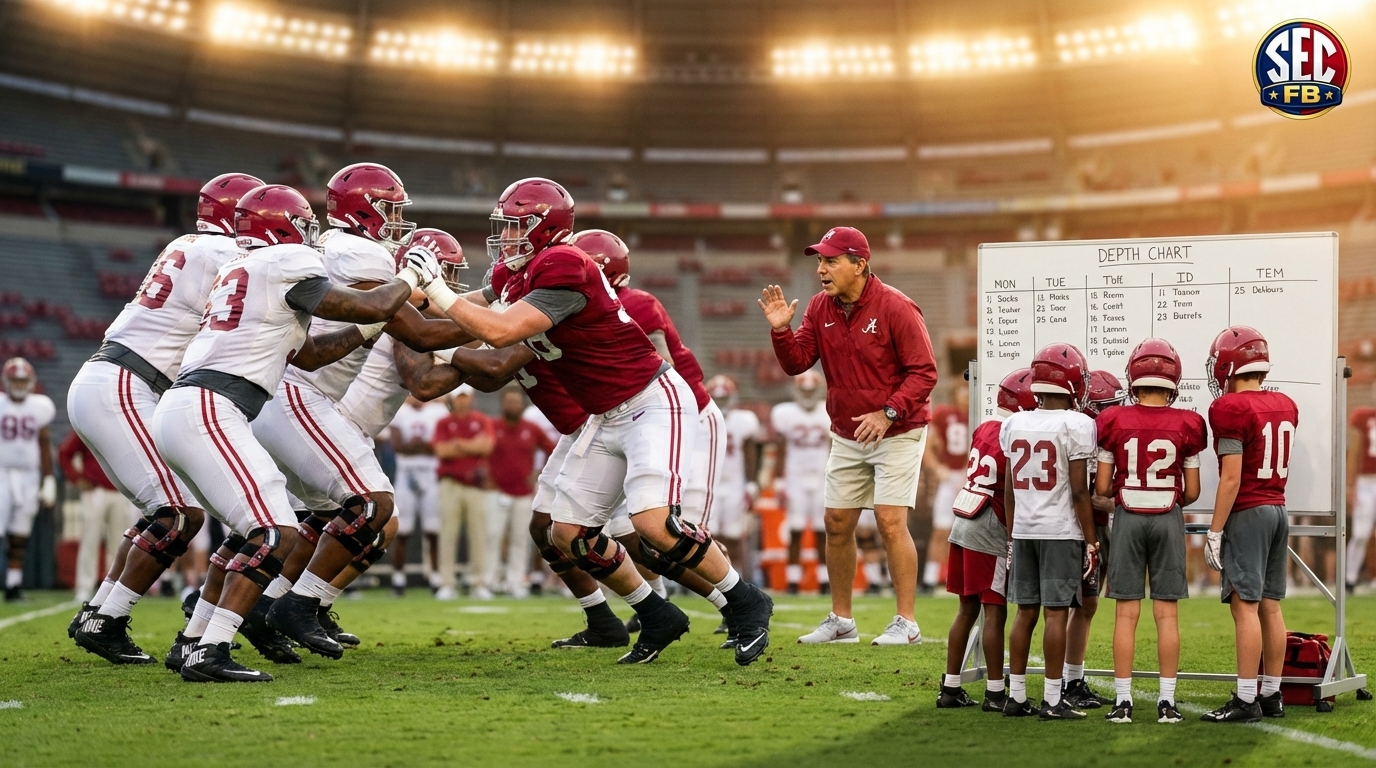
At Alabama football spring practice coaches pushed new techniques and alignments, and the offense already looks sharper. Because new assistants added fresh voice, linemen and tight ends show quicker feet and better instincts. Rising freshmen like Kaleb Edwards have pushed the depth chart, and they brought game-ready polish.
Coaching tweaks matter because technique and play-calling drive offensive line success. For example, Richard Owens and Bryan Ellis emphasized run blocking and pass protection during drills. As a result, the offense showed cleaner footwork and fewer mental errors in situational periods.
Spring practice provides a strategic laboratory where coaches test schemes and evaluate depth. Therefore, every rep matters because it reshapes the depth chart and game plans. Fans should feel optimistic, however, since the offense blends veteran toughness with hungry newcomers. In short, Alabama appears poised to translate spring gains into a tougher, more explosive attack. Expect spring narratives to shape preseason depth debates and early game scripts.
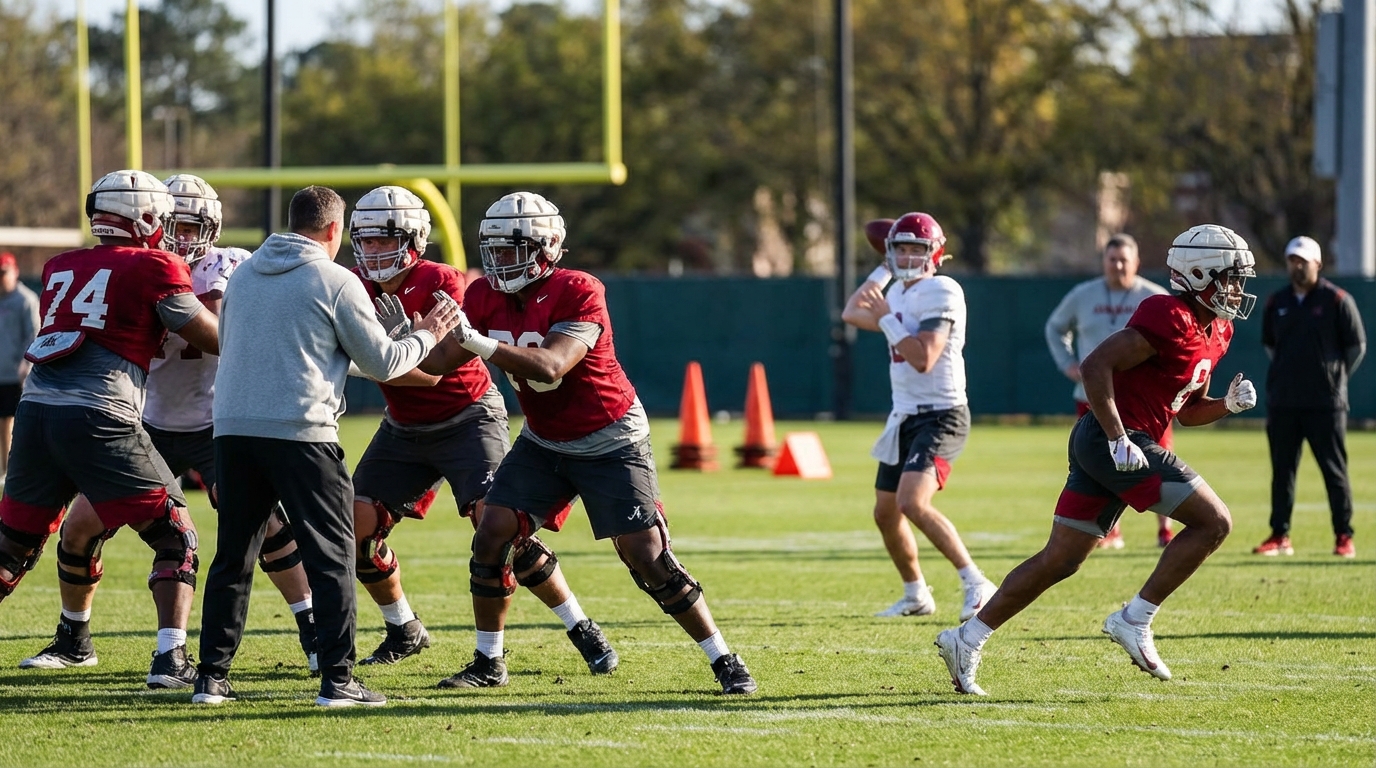
Coaching impact and staff tweaks
Richard Owens has reshaped the offensive line routine this spring. He focuses on base technique, hand placement, and sustainable drive blocks. Because Owens stresses run blocking fundamentals, tight ends and tackles show clearer leverage in pads. As Kaleb Edwards put it, “I am learning running and run blocking from Coach Owens,” Edwards said Tuesday in his media availability after spring practice. “I think that is probably the difference.” Consequently, Edwards credits Owens for better footwork and situational awareness. Bryan Ellis has reinforced pass protection calls and cadence timing. Meanwhile head coach Kalen DeBoer coordinates scheme installs and tempo in team periods.
Trent Simpson brings a defensive line pedigree learned under Brent Venables at Oklahoma. Therefore he injects aggressive edge techniques and gap discipline into rep work. As a result, Alabama’s offensive staff must sharpen protection plans during seven-on-seven and line drills. Simpson’s presence raises practice realism, because he coaches rush moves that created high sack numbers at Oklahoma. Fans will notice crisper slide protections and quicker punch timing.
The coaching philosophy blends technique with play-design. DeBoer emphasizes adaptable fronts and run-pass balance. Thus the offense practices multiple looks to teach recognition. For depth chart implications, freshmen and backups earn reps by mastering Owens’s techniques. For more on spring impressions from underclassmen see spring impressions from underclassmen and for depth projections visit depth projections. For official staff bios see official staff bios. For broader team news see broader team news.
| Player | Height | Weight | 2025 Receptions | 2025 Yards | 2025 Touchdowns | Expected impact (spring practice notes) |
|---|---|---|---|---|---|---|
| Kaleb Edwards | 6-foot-6 | 258 lb | 11 | 150 | 1 | Freshman All-SEC. Improved run blocking and route polish under Richard Owens. Projects as a move tight end and red-zone target. |
| Jase McClellan | — | — | — | — | — | Experienced young back. Showed burst in spring running and pass protection drills. Will compete for rotational carries. |
| EJ Crowell | — | — | — | — | — | Power back with short-yardage chops. Added contact balance in team drills. Could push for third-down reps. |
| Cederian Morgan | — | — | — | — | — | Versatile receiver. Sharpened route running in spring. Adds boundary and inside depth. |
| Owen Heinecke | — | — | — | — | — | Scout team quarterback. Improved timing in scripted periods. Provides depth and competition under center. |
| Kip Lewis | — | — | — | — | — | Explosive slot threat. Displayed quickness in open-field work. Offseason gains could translate to game snaps. |
Depth chart implications for the offense
Spring practice has tightened battles across the offensive roster. Because coaches emphasized technique, the offensive line shows clearer hierarchy at spots. Veterans still hold starter roles, however freshmen and rotational players pushed for snaps by earning cleaner footwork and better hand placement. Run blocking and pass protection reps mattered most, and coaches graded every alignment and combo block.
Tight ends now factor heavily into game plans. Kaleb Edwards grew into a primary mismatch option because he improved route timing and run blocking under Richard Owens. As a result, Edwards looks ready for bigger red zone usage and two tight end sets. Other tight ends also gained snaps, therefore depth at that spot feels stronger than last season.
At offensive line, competition tightened during position drills and team periods. Bryan Ellis reinforced protection calls, and Owens stressed drive and finish on blocks. Consequently, backups who mastered slide protection and combo techniques earned meaningful reps. That development creates late game flexibility, because the staff can rotate to keep linemen fresh.
Skill positions moved beyond names on a chart to true position battles. Running backs expanded passing game roles, and receivers improved route sharpness in open field work. Thus the coaching tweaks may shift playing time toward players who protect the quarterback and sustain drives. Increased competitiveness means more reliable depth across early season weeks.
Overall, spring practice reshaped the depth chart by rewarding technique and situational awareness. Kalen DeBoer and his staff now face easier choices, because multiple players proved they can execute the offense. Therefore Alabama enters the spring with deeper, tougher, and more competitive offensive depth.
Conclusion
Spring staff tweaks and hungry freshmen combined to reshape Alabama’s offense in clear ways. Because Richard Owens tightened technique and Trent Simpson elevated rush realism, the trenches now feel tougher. Kalen DeBoer’s scheme work added variety, and Kaleb Edwards showed tangible growth in run blocking and route polish. Therefore the offense looks more balanced and adaptable heading into the offseason.
As a result, fans should feel optimistic about increased competitiveness. Freshmen earned real reps, and backups improved pass protection and combo blocks. Consequently the depth chart now includes multiple players ready to contribute on game day. That depth should help Alabama sustain drives and finish strong in late quarters.
SECFB LLC reported these spring observations and analysis. For more coverage visit SECFB and follow the conversation on Twitter/X at @ZachGatsby. Overall, coaching adjustments plus rising talent point to a tougher, more explosive Crimson Tide offense next season.
Frequently Asked Questions
What did Alabama football spring practice reveal about the offense?
Spring practice revealed clearer technique and depth. Because coaches emphasized run blocking and pass protection, linemen and tight ends improved. As a result, the offense looks more balanced and adaptable.
How did recent coaching tweaks affect run blocking and pass protection?
Richard Owens tightened fundamentals and hand placement. Bryan Ellis reinforced protection calls and cadence. Therefore protections are cleaner and combo blocks finished better in drills.
Will freshmen such as Kaleb Edwards earn more playing time?
Yes, freshmen earned meaningful reps. Edwards learned running and run blocking from Coach Owens. He projects as a rotational tight end and red-zone target.
What impact does Trent Simpson bring to practice prep?
Simpson brings Oklahoma techniques learned under Brent Venables. Consequently defenders present realistic rush moves and that sharpens the offense’s protection work.
Does spring practice guarantee immediate season improvement?
Improvement is not guaranteed, however spring builds the foundation. Because depth and technique improved, Alabama increases its chances to sustain drives and finish games stronger.