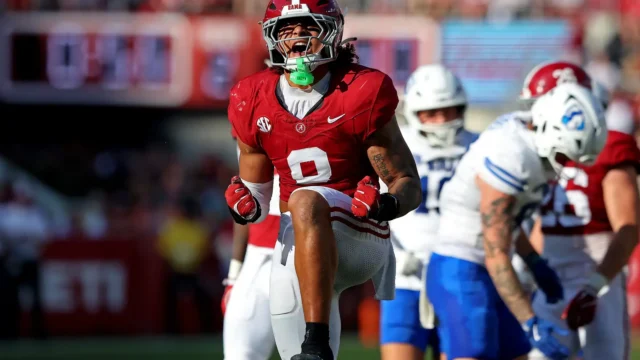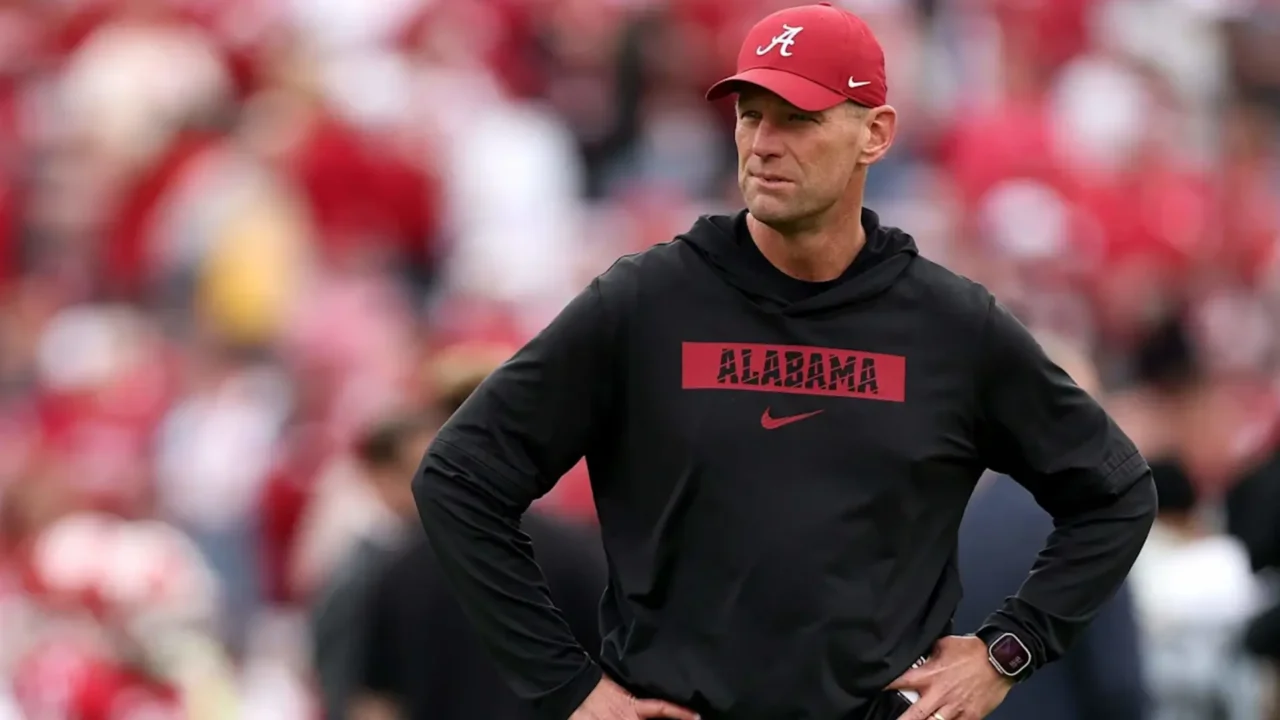
Alabama morphing into a Pac-12 team has become a flashpoint for critics after the Rose Bowl, with the claim landing squarely on the program’s recent identity and approach.
Shane Shoemaker raised the argument in a column linked on Yahoo Sports, and the line has stuck with fans and evaluators watching tape and roster moves this offseason.
Key Takeaways
- The claim that Alabama is “morphing into a Pac-12 team” began as a stylistic critique tied to the Rose Bowl and has renewed scrutiny of the program’s direction.
- Observers point to schematic choices on film and personnel alignment as the basis for the characterization rather than a conference change or institutional shift.
- The debate matters because perception affects recruiting narratives, College Football Playoff seeding conversations, and how opponents prepare for Alabama.
Alabama morphing into a Pac-12 team
The headline phrase “Morphing Into a Pac-12 Team” is an evaluative shorthand for a set of stylistic observations, and that phrasing frames the broader critique.
At its core the criticism questions whether the program’s on-field presentation and roster choices are sliding toward the offensive-minded, spacing-and-speed reputation typically associated with West Coast leagues, as opposed to the archetypal SEC power blueprint.
That tension—between identity and adaptation—drives the conversation more than any administrative or conference-level change, and commentators are using it to interpret tape and personnel decisions after the Rose Bowl.
How Alabama looks on film and on the roster
Watching the Rose Bowl tape against Indiana, the criticisms centered on play design, tempo cues, and personnel deployment rather than a clear statistical overhaul or a wholesale schematic reinvention.
Those watching closely noted instances where formations, spacing and movement concepts prompted the Pac-12 comparison, and opponents and evaluators cited those visual markers when summarizing the game plan.
Style-of-play observations differ from structural program changes; the former can be adjusted week to week while the latter requires sustained roster shifts and recruiting commitments over time.
Style and roster comparison table
| Area | Claimed shift after the Rose Bowl | Traditional SEC characteristic |
|---|---|---|
| Philosophy and public perception | Observers described increased emphasis on spacing, tempo, and outside-the-box play design as reasons for the Pac-12 label. | The SEC perception historically emphasizes physical personnel, power-run looks and defensive identity in public narratives about program style. |
| Personnel cues and deployment | Critics pointed to alignment choices and situational personnel groupings shown at the Rose Bowl as visual support for the comparison. | SEC programs are often characterized by favoring traditional position size profiles and rotational defensive depth in public scouting reports. |
What this means for Alabama CFP chances and SEC recruiting
Perception matters in recruiting conversations, and a high-profile critique that a program has shifted stylistically can alter how recruits and coaches frame fit at the position level.
For College Football Playoff seeding and national perception, critics will point to style as part of the narrative evaluators use when assessing Alabama’s resume and comparative strength of schedule.
That said, single-game visuals and headline-driven takes are one part of the picture; long-term roster construction, recruiting success and consistent results carry more weight with playoff committees and targets on the trail.
Reporting credit for the original critique goes to Shane Shoemaker, and the photograph referenced in the coverage is credited to Luke Hales/Getty Images.