Alabama two fastest players: DeBoer names the Tide’s speed leaders and what it signals for special teams and receiver rotation
Kalen DeBoer has put a spotlight on Alabama speed, and the result demands attention. Alabama two fastest players are already emerging, and that reality reshapes how the Tide use tempo. Because speed fuels big plays, special teams and receiver rotation will feel the impact.
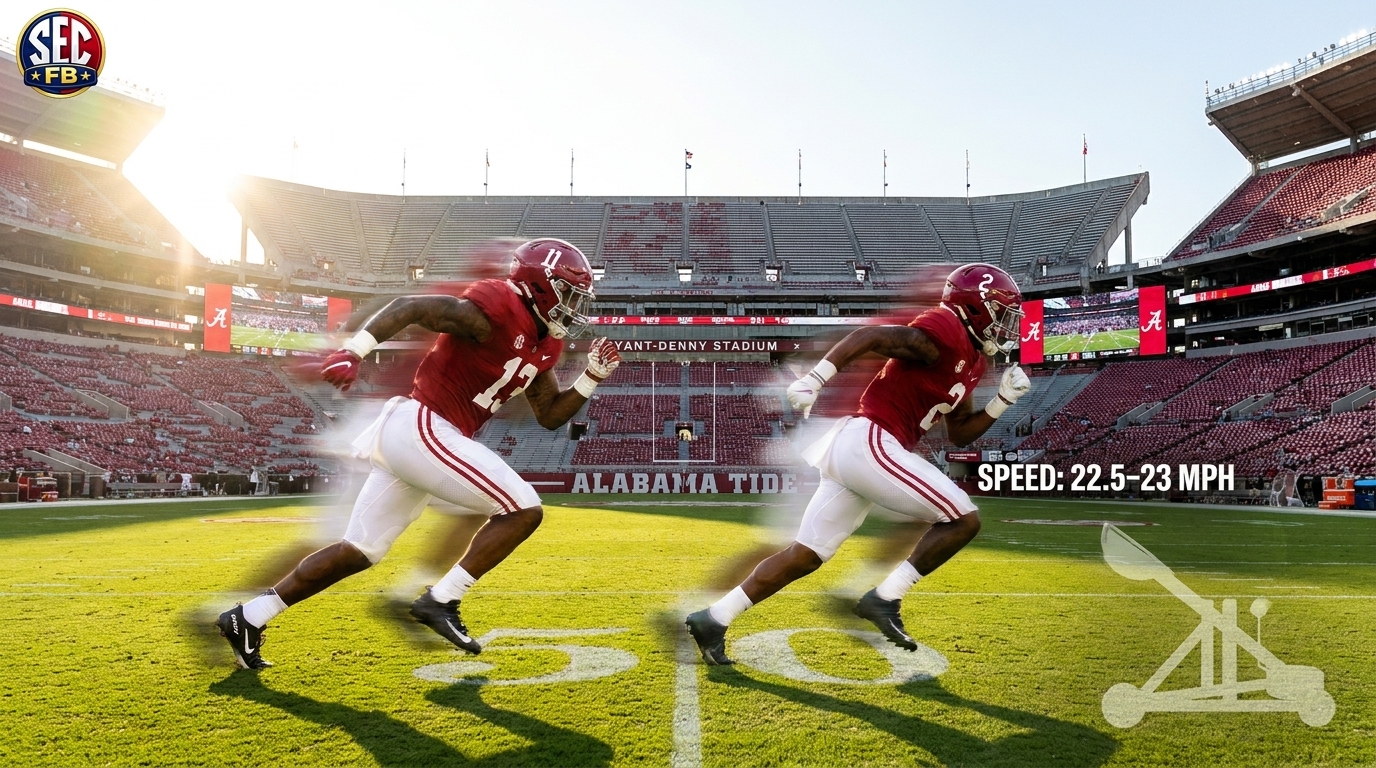
DeBoer praised sprinters such as Ryan Coleman-Williams and Lotzier Brooks during spring drills. Moreover, catapult data has shown bursts near 23 miles per hour for multiple players. Therefore, coaches can open packages that favor space and quick reads.
As a result, return units may get faster alignments and more aggressive schemes. Meanwhile, receiver rotation should lean toward players who threaten defenses vertically. Fans should expect more explosive plays and lineup flexibility this fall.
In short, Alabama’s speed profile gives DeBoer strategic options on both sides of the ball. We will break down who tops the chart and what that means for returns and targets. Stay tuned for the full speed chart and analysis.
Alabama two fastest players: Ryan Coleman-Williams and Lotzier Brooks
Alabama’s catapult numbers this spring highlighted true game breakers. Several Tide players reached top speeds between 22.5 and 23 miles per hour, and Ryan Coleman-Williams plus Lotzier Brooks stood out. Because head coach Kalen DeBoer named them specifically, the coaching staff is now viewing personnel through a speed lens. “I don’t know who is officially the fastest player on the team, but I would put Ryan Coleman-Williams and Lotzier Brooks up there,” DeBoer said. “I would say they are two of the fastest on the team.”
Below are quick profiles and measured data for each player:
-
Ryan Coleman-Williams
- Class year: junior
- Top measured speed range: 22.5 to 23 miles per hour
- Background: former five-star recruit who dazzled as a 17-year-old freshman in 2024
- Role: emerging downfield playmaker and special teams option
- NFL outlook: projected as a first-round pick in the 2027 NFL Draft
-
Lotzier Brooks
- Class year: sophomore
- Top measured speed range: 22.5 to 23 miles per hour
- Background: New Jersey native and versatile contributor in Alabama’s offense
- 2025 stat line: 32 catches for 441 yards and two touchdowns
- Role: rotational receiver who also provides value on returns and gadget plays
Because both players can consistently hit elite sprint marks, special teams gain a clear upgrade. Therefore return packages and boundary snaps can include faster personnel. Moreover receiver rotation becomes more flexible, as coaches can mix speed with size to create mismatches. As a result, DeBoer gains more scheming room to attack defenses vertically and on the perimeter.

Alabama two fastest players and special teams for the Alabama Crimson Tide
Kalen DeBoer highlighting Alabama two fastest players forces a rethink on special teams. Because Ryan Coleman-Williams and Lotzier Brooks hit top speeds near 22.5 to 23 miles per hour, return units gain new options. Coaches can design alignments that create clear lanes and favor long returns.
- Kickoff returns gain big play potential because speed helps exploit wedge breaks and open field angles.
- Punt return packages can include one of the two fastest players to increase yards after catch.
- Coverage units benefit as well because those players can flip roles and chase down a returner quickly.
- Moreover, faster gunners on punt team reduce opponent space and improve field position.
Alabama two fastest players and receiver rotation strategy
DeBoer now has the luxury to mix speed in receiver rotation. Therefore he can match personnel to game plans more easily. Coaches can pair a burner with a bigger receiver to create mismatches downfield.
- Situational snaps become more flexible because speed lets coaches game plan vertical routes.
- Early down packages may use speed to stretch defenses horizontally and vertically.
- Rotational reps give both Coleman-Williams and Brooks chances to produce while managing snaps.
- Additionally, gadget plays increase because coaches trust these two in open space.
Because both players can sustain elite sprint marks, the Alabama Crimson Tide can attack opponents in multiple phases. As a result special teams look more aggressive and receiver depth becomes a tactical advantage. Fans should expect more explosive plays, quicker scoring drives, and a wider array of formations that emphasize space and tempo.
| Player | Top speed (mph) | Class year | Catches (2025) | Yards (2025) | Touchdowns (2025) | Draft prospects |
|---|---|---|---|---|---|---|
| Ryan Coleman-Williams | 22.5 23 | Junior | N/A | N/A | N/A | Projected first round (2027) |
| Lotzier Brooks | 22.5 23 | Sophomore | 32 | 441 | 2 | Early-round upside with more tape |
| Other top speedsters (group) | 22.5 23 | Mixed | Varied | Varied | Varied | Mixed NFL interest |
Notes
- Top speeds come from Alabama’s catapult system, with several players hitting 22.5 to 23 miles per hour. Therefore the Tide show elite sprint talent.
- Because Coleman-Williams is a former five-star recruit, he carries high draft upside. Moreover he dazzled as a 17-year-old freshman in 2024.
- Brooks proved versatile in 2025, as he caught 32 passes for 441 yards and two touchdowns. As a result coaches trust him in rotation and on returns.
Key takeaways
- Coleman-Williams and Brooks clearly sit atop the team speed chart. Therefore special teams and receiver rotation can lean on their burst.
- Moreover other speedsters keep DeBoer flexible with matchups and packages.
- In short, the Alabama Crimson Tide have game changing pace across multiple players.
Conclusion
Alabama two fastest players Ryan Coleman-Williams and Lotzier Brooks highlight the speed emerging at Alabama. Because both hit top speeds near 22.5 to 23 miles per hour, they change how coaches plan. They give Kalen DeBoer more options on special teams and in the receiver rotation.
Coleman-Williams pairs elite burst with high draft upside while Brooks brings production and versatility. Therefore return units can become more aggressive and receiver packages more creative. Moreover both players let the Alabama Crimson Tide attack defenses vertically and in space.
In short, these two athletes represent a fast paced identity for the program. Alabama continues to recruit and develop explosive athletes. As a result the Tide remain a national model for combining speed with size.
For more Alabama football coverage visit SECFB.com at https://secfb.com. Also follow Zach Gatsby on Twitter at https://twitter.com/ZachGatsby for timely updates and deeper analysis. Stay with SECFB for breakdowns, film study, and the latest Tide news.
Frequently Asked Questions (FAQs)
Who are the Alabama two fastest players named by Kalen DeBoer?
Head coach Kalen DeBoer singled out Ryan Coleman-Williams and Lotzier Brooks. Both topped Alabama’s catapult speed readings this spring. Because DeBoer named them, coaches view them as core tempo weapons.
What top speeds did these players reach on the catapult system?
Both players hit top speeds between 22.5 and 23 miles per hour. Therefore they rank among the fastest athletes on the roster. These readings suggest elite open field burst.
How does their speed affect special teams and returns?
Speed opens lanes and creates matchup problems on kickoff and punt returns. Consequently coaches can use them as returners or gunners. Special teams may become more aggressive because of their burst.
What are the players’ backgrounds and draft outlooks?
Ryan Coleman-Williams is a former five-star recruit and a junior with high draft upside. Scouts project him as a possible first-round pick in 2027. Lotzier Brooks is a versatile sophomore from New Jersey with 32 catches for 441 yards and two touchdowns in 2025.
Will Alabama change receiver rotation because of this speed?
Yes. Coaches can mix burners with bigger targets to create mismatches. As a result the Alabama Crimson Tide gain more flexibility in schemes and personnel packages.