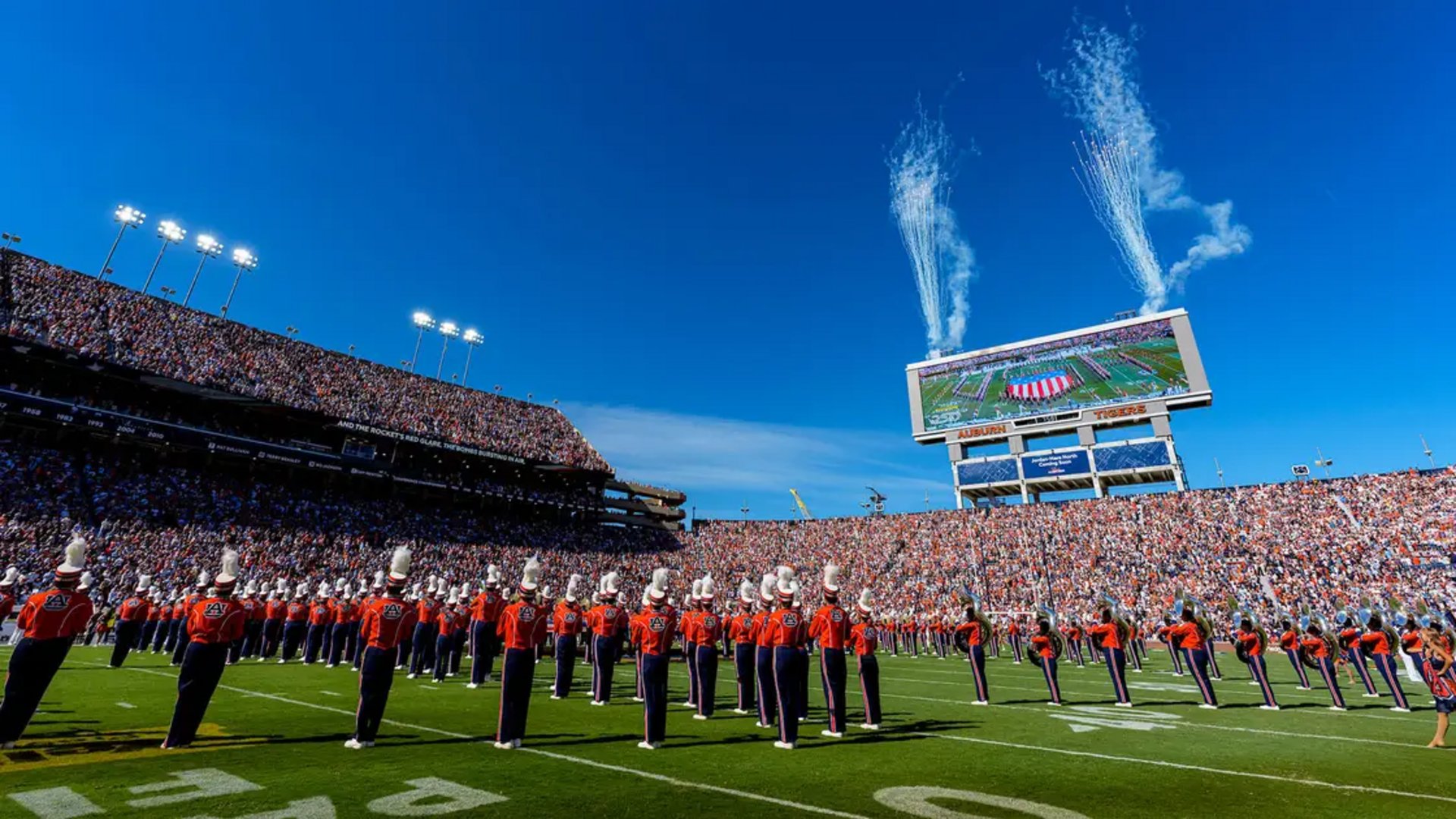

With ceremonial shovels in the north end zone, Auburn University officially launched construction on the Jordan-Hare North Project, a seven-level, 300,000-square-foot addition to Jordan-Hare Stadium that university leaders describe as the largest capital project in Auburn Athletics history.
Auburn University outlined a plan that pairs premium game-day capacity with year-round campus use, and the announcement was published by Auburn Tigers – Official Athletics Website as the ceremony concluded.
Key Takeaways
- The Jordan-Hare North Project is a seven-level, 300,000-square-foot structure slated for full completion in the spring of 2029.
- The project will add more than 3,000 new and expanded premium experiences in the stadium’s north end zone while creating retail, meeting and flexible event spaces.
- The development is a joint effort between Auburn Athletics and the Division of Student Affairs and is designed for year-round campus programming beyond football.
Jordan-Hare North Project scope and campus uses
The Jordan-Hare North Project is being presented as both an athletic expansion and a campus amenity that serves students outside of game days.
University leaders described plans for conference and event spaces, retail venues, student activity areas and meeting rooms that will be available throughout the calendar year, not solely on Saturdays.
Those student-focused features are tied directly to the Division of Student Affairs’ objective of supporting Auburn’s roughly 580 student organizations, and administrators said the facility will provide flexible space for gatherings, leadership activities and everyday student life.
How the project fits into Jordan-Hare’s history
Officials framed the north build as the latest chapter in a stadium timeline that began with the venue’s opening in 1939 and continued through later expansions, including a west upper deck added in 1980.
Speakers at the groundbreaking referenced the 1977 Board decision that led to the West Upper Deck, noting how prior expansions changed game-day dynamics and ultimately filled to capacity under later teams and eras.
University officials also tied the current project to the stadium’s recent streak of 23 consecutive sellouts and a reported capacity figure that underscores the venue’s standing as a consistent draw for fans.
Design priorities and game-day impact
On game days, the north addition is expected to increase premium-seat inventory by more than 3,000 experiences while keeping the stadium’s historic character intact.
Athletics leaders emphasized premium seating as a way to diversify the stadium product and to create new ticketing and hospitality options without removing the stadium’s core traditions.
At the same time, the inclusion of retail and flexible event venues signals an intention to extend the facility’s usefulness beyond athletics, offering additional revenue and campus activation opportunities throughout the year.
Project timeline and historical context
| Project | Year | Notable features |
|---|---|---|
| Jordan-Hare Stadium original opening | 1939 | Initial construction that established the stadium as Auburn’s primary football venue |
| West Upper Deck expansion | 1980 | Board-approved west upper deck that later filled under succeeding teams and increased capacity |
| Jordan-Hare North Project | Groundbreaking 2026; completion spring 2029 | Seven levels, roughly 300,000 sq ft, more than 3,000 premium experiences, and year-round student and event spaces |
Recruiting and College Football Playoff implications for Auburn
Facility investments are recurring themes in recruiting conversations, and adding large-scale premium seating plus year-round campus amenities can bolster Auburn’s presentation to prospects visiting campus.
While a new north end development does not directly change on-field personnel, athletics officials framed the project as a signal of institutional commitment to both student life and competitive football, which can influence recruiting narratives and program momentum over time.
Upgraded facilities are one component among many that affect program perception, roster construction and event-day atmosphere in SEC and College Football Playoff discussions, and Auburn leaders noted the build as an investment in the future trajectory of both athletics and the university.