Auburn football 2026 begins with a clear identity shift as Alex Golesh installs a high-paced, transfer-fueled offense meant to reverse five straight losing seasons while confronting acute line-room uncertainty.
The roster picture is stark: ten of 11 projected offensive starters are transfer arrivals and the program must replace every offensive lineman who logged at least 250 snaps last year as detailed by PFF.
How quickly Golesh’s system takes hold will hinge on line development and the coaching staff’s ability to convert portal experience into consistent protection and run blocking.
Key Takeaways
- Ten of Auburn’s 11 projected offensive starters arrived through the transfer portal, reshaping the roster in one offseason.
- Byrum Brown posted a 91.5 grade in 2025 and has forced 123 missed tackles since 2023, the most among FBS quarterbacks.
- Auburn endured its fifth straight losing season in 2025, prompting the coaching change that brought Golesh to campus.
- The Tigers must replace all six offensive linemen who logged at least 250 snaps last season, creating the program’s primary roster question.
Auburn 2026 outlook
Golesh arrives after engineering a rapid turnaround at USF, where the program improved to 23-16 over his three seasons following a 4-29 stretch in the three years before his hire.
USF ranked sixth nationally in yards per play under his direction, and that attacking blueprint explains Auburn’s heavy portal activity to populate his offense with experienced pieces.
If Auburn can replicate even a portion of that efficiency against SEC defenses, the offense will look markedly different from the units that produced the recent losing streak.
How Golesh’s offense projects at Auburn
Golesh’s scheme emphasizes speed, spacing and tempo, traits that fit the arrival of a transfer-heavy receiving corps and a dual-threat quarterback in Byrum Brown.
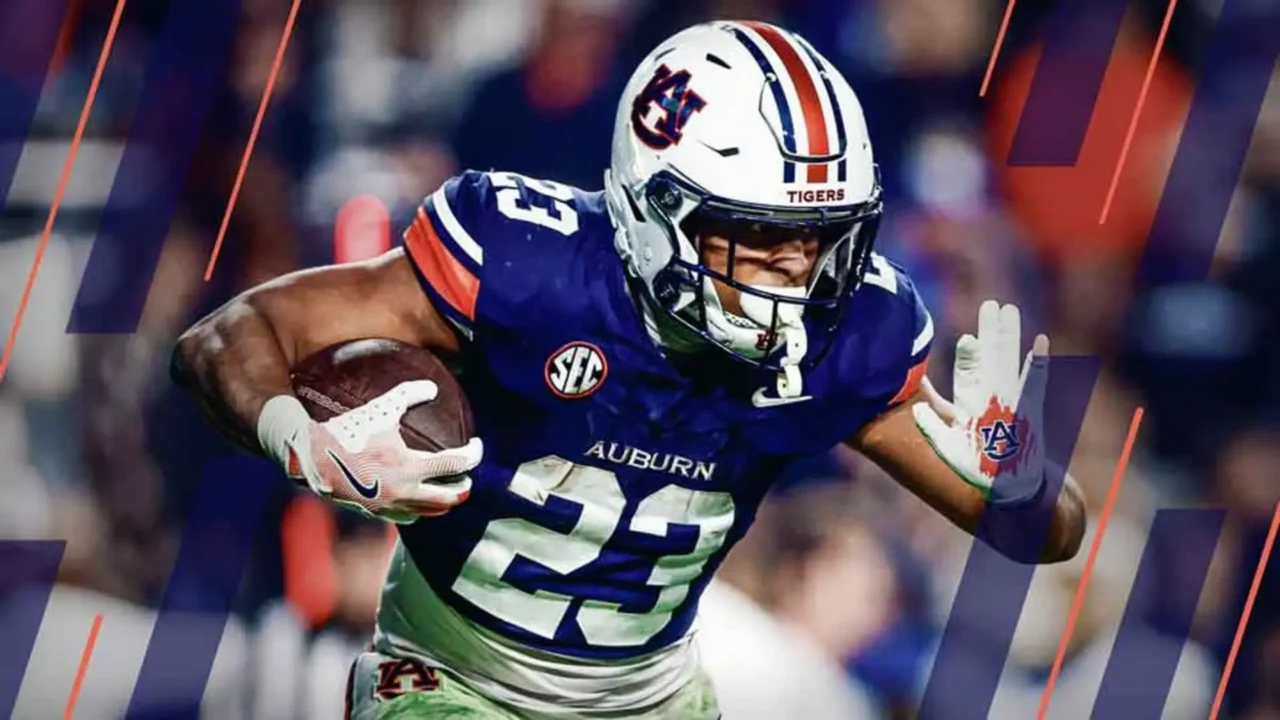
Brown is the centerpiece, providing explosive rushing upside and the ability to create plays after contact, but evaluators note his accuracy and processing can wobble under elite interior pressure.
Complementing Brown, Auburn returns a productive back in Jeremiah Cobb and has several receivers and running backs who are familiar with Golesh’s system, which should ease schematic installation.
Transfer impact on skill positions
The portal haul supplies immediate starters at multiple skill spots, shortening the timeline for offensive cohesion compared with a multi-year rebuild through recruiting alone.
Notable incoming pieces include Brown at quarterback alongside receivers and backs who played significant roles under Golesh previously, which helps reduce learning-curve friction in fall camp.
Departures through the portal removed some continuity from last year’s group, but the incoming starters are experienced in Golesh’s tempo-focused offense and should accelerate execution if protection holds up.
Quarterback projection and playmaking balance
Byrum Brown gives Auburn an immediate high-ceiling signal-caller who can stress defenses horizontally with his legs and vertically with downfield throws when protection holds.
His 91.5 grade and league-leading missed-tackle production since 2023 supply a new dimension of explosive playmaking that Auburn lacked during recent seasons.
That upside comes with a caveat: Brown’s accuracy and decision-making under pressure will be under scrutiny early in SEC play, making line play and receiver efficiency central to sustained success.
Offensive line turnover and continuity
| Category | 2025 status | 2026 status |
|---|---|---|
| Starting offensive linemen | All six starters logged at least 250 snaps for Auburn during the 2025 season | All six of those players will be replaced, creating open competition across the line |
| Incoming options and continuity | The 2025 line provided snap continuity but failed to stabilize Auburn over the multi-year losing stretch | Center Cole Best and guard Cole Skinner followed Golesh from USF and are expected to start, while tackles Stanton Ramil and Jack Leyrer return from season-ending injuries and are intriguing options |
| Stability outlook | Established starters and clear depth chart positions entering 2025 | Competition for starting jobs could continue into the season; line development is the key determinant of Auburn’s offensive ceiling |
How the rebuild shapes Auburn’s SEC path
The roster reset creates a binary window: if the offensive line stabilizes, Auburn can reach bowl eligibility and improve its SEC positioning; if the trenches falter, the offense’s talent will be muted by negative plays and turnovers.
Recruiting and roster construction will follow the outcome of this season — immediate progress along the line will ease future recruiting pitches and reduce short-term portal dependency, while continued struggles will force persistent emphasis on interior and tackle depth.
How Auburn navigates this season will determine whether the program moves quickly back toward competitiveness in the conference or must extend its rebuild into another cycle.