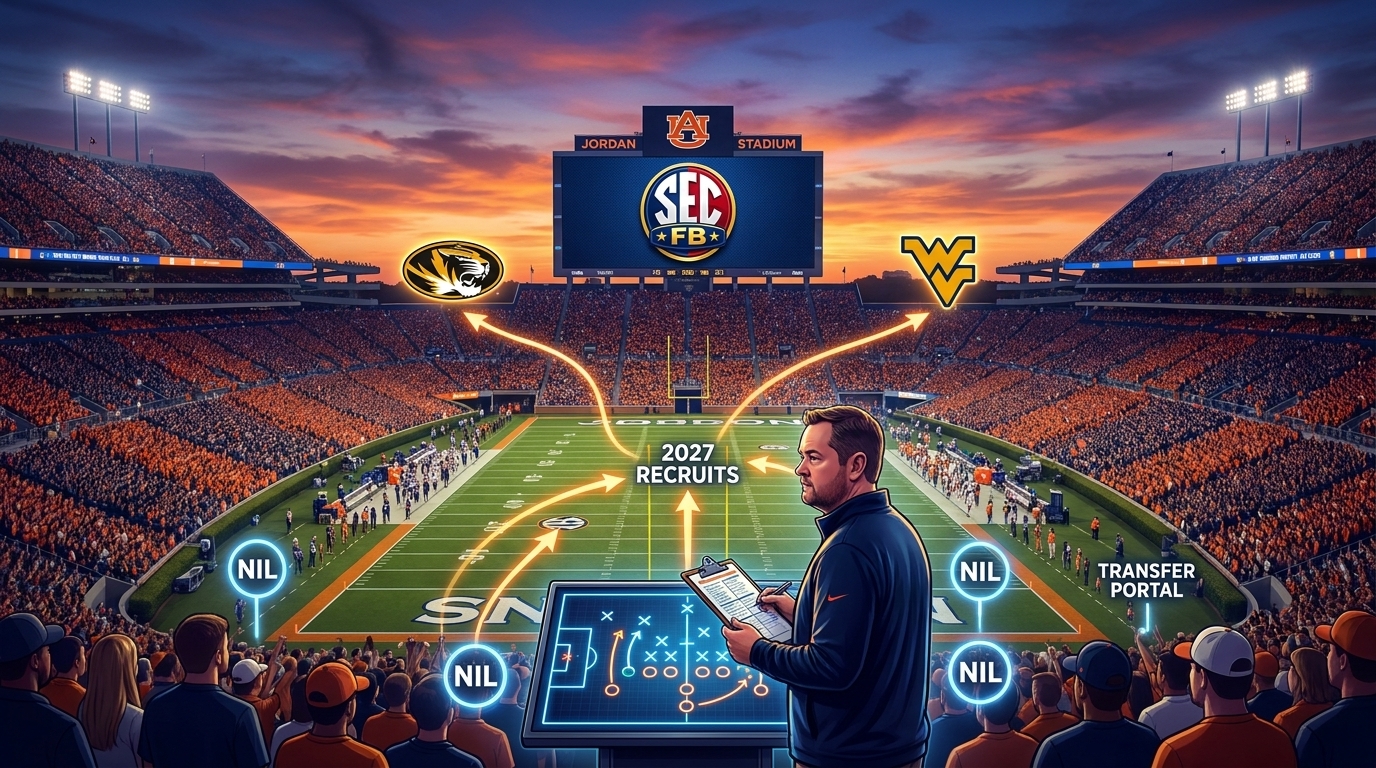
Auburn recruiting strategy under first-year coach Alex Golesh faces early turbulence. Kingston Miles, a 4-star running back from St. Mary’s (MO), flipped from Auburn to Missouri on Monday afternoon. That move underscores volatility in Auburn’s 2027 recruiting class, and it raises fresh questions about staff momentum.
However, Auburn did flip Southwind star Khamoni Williams from West Virginia on Sunday night. Because SEC recruiting moves fast, every swing feels high stakes. Miles could flip again, and that uncertainty forces the staff to hedge aggressively.
Alex Golesh is in his first year as Auburn’s head coach. He brings SEC experience, yet he did not win a title like Dan Lanning. Therefore, his staff appears to hedge with portal work, relationship building, and targeted transfers. Still, skepticism makes sense because hype has outpaced results before. We will assess whether Golesh’s early moves stabilize the class, or if more decommitments follow. This piece takes a cautious, analytical look at the 2027 class.
Auburn recruiting strategy under first-year coach Alex Golesh
Auburn recruiting strategy under first-year coach Alex Golesh centers on hedging against roster volatility. However, early swings like Kingston Miles flipping to Missouri show how fragile commitments remain. At the same time, Auburn landed Khamoni Williams, so the staff mixes urgency with targeted gains.
Key elements of Golesh’s hedging approach
- Curtis Luper anchors running back recruiting through clear development promises and close relationships. Miles praised Luper for the way he treats backs and for weekend cookouts that build trust.
- The staff leans into the transfer portal to fill immediate needs and reduce exposure to late decommitments. Therefore, portal work complements high school recruiting in the NIL era.
- Auburn tries to borrow lessons from stable programs like Oregon under Dan Lanning, which won consistently and showed program building patience. Golesh brings SEC experience, but he did not arrive with Lanning’s title resume.
- Boosters and administrators, including Jimmy Rane, provide resources and public support. As a result, money in recruiting and NIL investments have become central to the plan.
- The approach blends relationship recruiting, portal acquisitions, and selective high school targets. Still, the strategy carries risk if more prospects flip.
In short, the staff hedges across multiple channels because time is limited. With slightly more than five months to firm the 2027 class, pressure will intensify. That margin could decide the season.

| Player | Star rating | Original commitment | Current status | Notable influencing factors |
|---|---|---|---|---|
| Kingston Miles | 4-star | Committed to Auburn | Flipped to Missouri | Curtis Luper relationship; promises of development; weekend visits and cookouts; could flip again |
| Khamoni Williams | Unspecified | Committed to West Virginia | Flipped to Auburn | Immediate fit at running back; staff momentum; local recruiting ties |
| Versatile defensive back (per Steve Wiltfong) | Unspecified | Various | Committed to Auburn | Beat Georgia for the recruit; versatility and scheme fit |
| Offensive lineman (per Steve Wiltfong) | Unspecified | Various | Committed to Auburn | Beat Notre Dame for the recruit; size and blocking profile |
Quick takeaways
- Volatility remains high after Kingston Miles flipped, so commitments feel fragile.
- Therefore Auburn must hedge with the transfer portal and targeted signings in the NIL era.
- Curtis Luper’s hands-on recruiting reduces churn at running back, however the risk persists.
- Boosters and administrators, including Jimmy Rane, supply money in recruiting and public backing.
- With slightly more than five months to finalize the 2027 class, more swings are likely.
SEC recruiting volatility and booster class pressure
Auburn faces intense SEC recruiting volatility as the 2027 cycle unfolds. Kingston Miles flipping to Missouri underscored how quickly prospects move. Therefore the threat of future decommitments remains real. Steve Wiltfong’s reporting shows Auburn can win battles, but wins mean little if commits do not stick. Boosters and administrators, including Jimmy Rane, publicly back Alex Golesh. As a result, resources and a booster class mentality are already in play. However money in recruiting and NIL deals complicate decision making for prospects.
Culture building, NIL era and relationship-building hurdles
Golesh must build culture quickly while courting recruits in the NIL era. Curtis Luper’s hands-on work helps anchor running back recruiting, but relationship-building takes time. The staff also leans on the transfer portal to cover shortfalls. Consequently portal additions reduce immediate roster risk, yet they can undermine long-term recruiting rhythms. Competition from West Virginia and Missouri shows this plainly. Auburn beat schools like Miami and Georgia for targets, yet every victory invites counteroffers. Moreover prospects weigh scheme fit, development promises, and weekend visits when choosing. In short, Auburn needs both fast fixes and sustainable culture work. With slightly more than five months to shore up the 2027 class, pressure will only increase. Therefore expect more swings, more portal moves, and continued scrutiny of Golesh’s first-year recruiting strategy.
CONCLUSION
Auburn’s 2027 recruiting class remains volatile, and that reality defines Alex Golesh’s early approach. Kingston Miles flipping to Missouri highlighted how quickly commitments can change. Therefore Golesh and his staff have hedged by mixing relationship-building, transfer portal work, and targeted high school wins.
Curtis Luper’s hands-on recruiting helps at running back, however the broader class still faces pressure. Boosters and administrators, including Jimmy Rane, provide resources and public support. As a result, NIL deals and money in recruiting shape choices. With just over five months left, more swings and portal moves are likely.
Balanced judgement matters moving forward. Auburn’s strategy shows urgency and awareness, yet risks remain. For ongoing coverage and deeper SEC recruiting analysis, follow SECFB LLC online at SECFB LLC and on Twitter/X at @ZachGatsby. Stay tuned for updates as the 2027 cycle settles.
Frequently Asked Questions (FAQs)
Why is Auburn’s 2027 recruiting class so volatile?
Auburn’s cycle faces high competition across the SEC. Prospects weigh NIL offers, portal options, and relationships. Kingston Miles’ flip to Missouri showed how quickly choices change. Therefore staff must hedge and recruit both high school players and portal transfers.
What happened with Kingston Miles?
Kingston Miles, a 4-star RB from St. Mary’s (MO), decommitted from Auburn and flipped to Missouri on Monday. He cited Curtis Luper’s relationship and development plan. However, the report notes he could flip again.
Who is Khamoni Williams and why does he matter?
Khamoni Williams flipped from West Virginia to Auburn. He adds immediate depth at running back. As a result, the staff can cover part of the roster gap left by Miles.
What is Alex Golesh’s recruiting approach in year one?
Golesh blends relationship-building with portal usage and NIL engagement. He brings SEC experience, but lacks Dan Lanning’s title resume. Boosters like Jimmy Rane back his plan.
Will more decommitments follow and what should Auburn do?
More swings are possible because five months remain. Auburn should continue active relationship-building, prioritize development, and use the transfer portal wisely. That balanced approach reduces long-term risk.