What’s BYU vs Texas March Madness first-round takeaway?
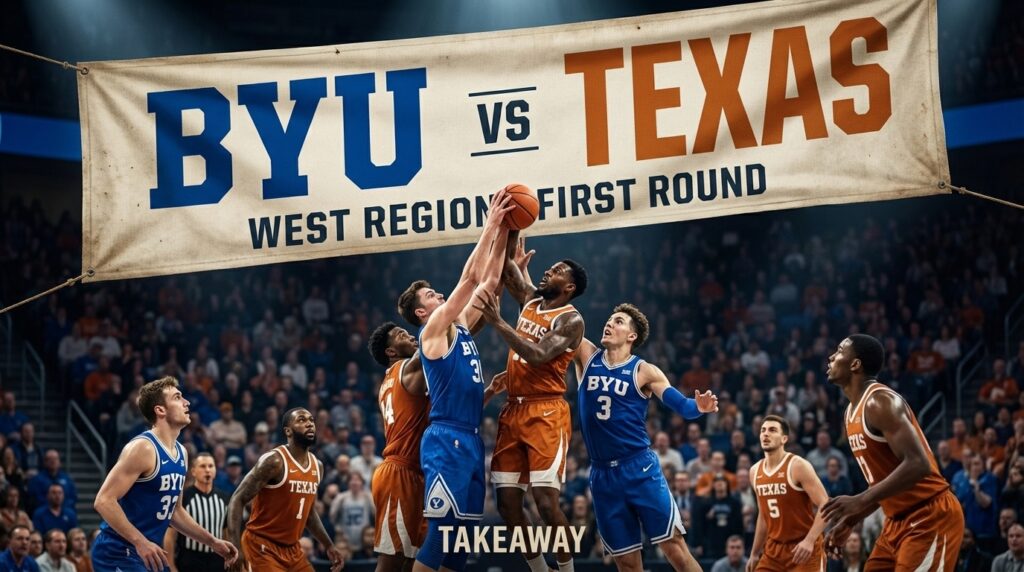
BYU vs Texas March Madness first-round takeaway: A disappointing end for a Top 10 start
BYU vs Texas March Madness first-round takeaway feels like a season collapsed under avoidable flaws. However, the 79 to 71 loss to Texas exposed deeper problems. AJ Dybantsa’s 35 points masked BYU’s defensive breakdowns and inconsistent guard play.
Because BYU finished with a .500 conference record, lost Richie Saunders to a season ending injury, and surrendered a second half that began 10 of 16 from the floor for Texas, the early season Top 10 promise now reads as squandered potential and tactical failure under coach Kevin Young.
Therefore, rather than a collapse explained by a single star headed to the NBA, this defeat reveals roster depth issues, defensive schemes that failed to adjust, and a lack of late game execution that cost BYU its tournament life and now hands Texas a statement win heading into a matchup with Gonzaga or Kennesaw State.
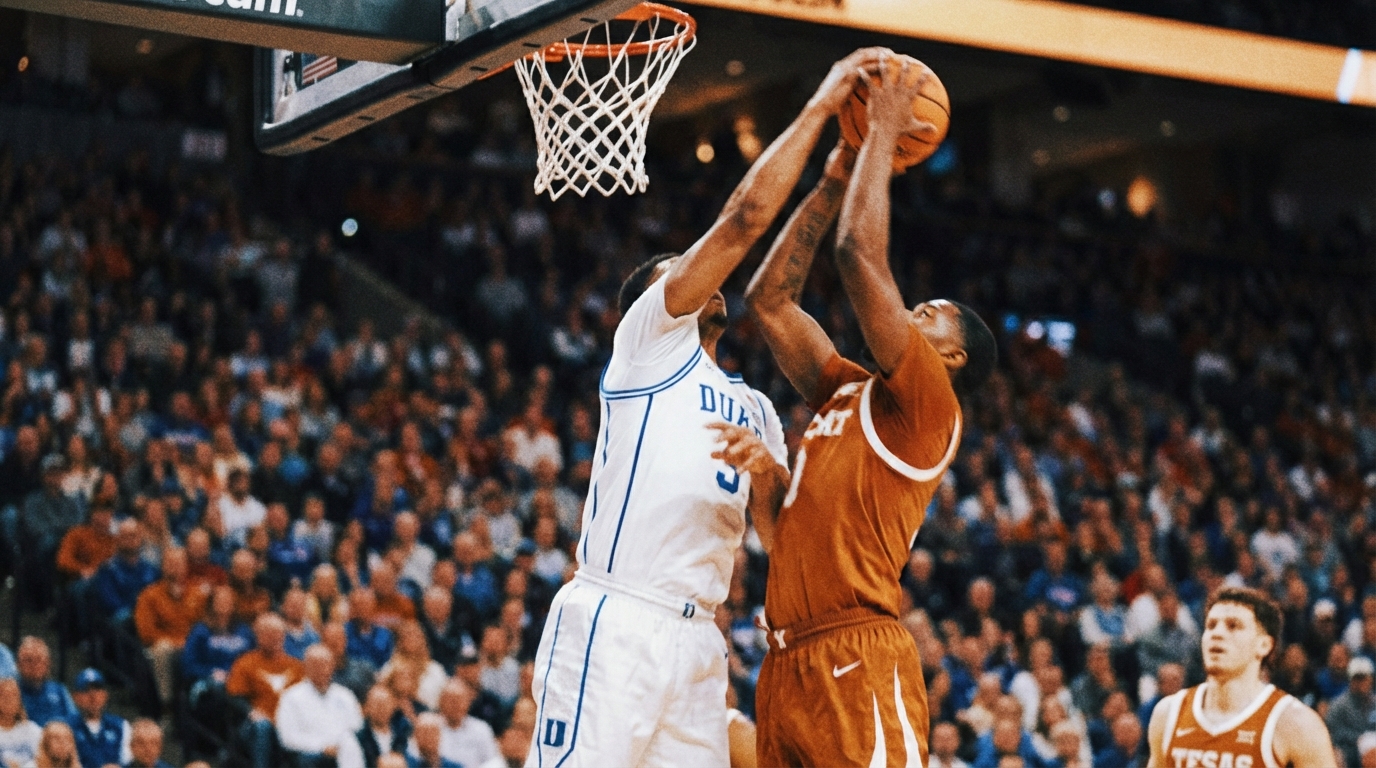
BYU vs Texas March Madness first-round takeaway: Key player performances and defensive cracks
AJ Dybantsa carried BYU on offense and did so with brutal efficiency in spurts. He scored 35 points on 11-25 shooting and grabbed 10 rebounds. Importantly, he poured in 20 of BYU’s first-half 37 points and kept the Cougars competitive. However, individual heroics could not paper over team flaws. Because BYU leaned so heavily on Dybantsa, the Longhorns could scheme elsewhere. As a result, support scoring dried up late.
Texas punished BYU to open the second half by going 10-for-16 from the floor. That 10-16 burst exposed rotation and closeout issues. BYU failed to contest shots at the arc and allowed easy penetration into the paint. Meanwhile, rebounding balance suffered despite Dybantsa’s ten boards. Richie Saunders’ season-ending injury mattered here, because BYU lacked depth to plug defensive gaps. Therefore, defensive communication and help-side rotations looked thin and predictable.
Beyond box score optics, the matchup showed a roster built around one future NBA prospect. Dybantsa proved a Top 2 pick level scorer at times, but his workload highlighted roster limits. Consequently, BYU finished with a .500 conference mark and looked outmatched schematically. Still, Texas earned a statement win and carries momentum into a likely Gonzaga or Kennesaw State matchup. In short, this game framed BYU’s season as underachieving and in need of structural fixes.
BYU vs Texas March Madness first-round takeaway: Game stats comparison
| Statistic | BYU Cougars | Texas Longhorns | Why it mattered |
|---|---|---|---|
| Final score | 71 | 79 | Texas won by 8 points, the final margin |
| Leading scorer | AJ Dybantsa 35 points | Multiple contributors (not specified) | Dybantsa paced BYU but lacked reliable help |
| Dybantsa rebounds | 10 | — | Dybantsa controlled boards individually, but team rebounding balance was unclear |
| Second half burst | — | Opened 2nd half 10-for-16 (62.5%) | Texas seized momentum early in the half |
| Team field goal percentage | N/A | N/A | Full-game team FG% not available; Texas surge swung efficiency |
| Three point percentage | N/A | N/A | Perimeter contesting broke down for BYU in key stretches |
| Turnovers | N/A | N/A | Turnover edge unknown, but ball security influenced possessions |
| Bench points | N/A | N/A | Texas depth appeared more impactful late |
However, the box score tells a clear story. Because AJ Dybantsa scored 35 and grabbed 10 rebounds, BYU still stayed competitive. Still, Texas’ hot second half start changed the game quickly. Therefore, the Longhorns’ efficiency and depth compensated for any single player deficit. Moreover, BYU’s defensive lapses and limited supporting scoring explained the upset. In short, individual brilliance could not cover schematic and roster shortcomings that cost BYU its tournament life.
March Madness takeaways: Implications for BYU and Texas
BYU’s loss ends a season that began with top 10 expectations. However, the defeat feels less like a single upset and more like an exposure. AJ Dybantsa produced 35 points and 10 rebounds, but he cannot carry a roster alone. Because Dybantsa is headed to the NBA, BYU will lose elite scoring. Still, the program must ask whether it built supporting pieces around him. Richie Saunders’ season ending injury worsened the problem, because it removed a key wing defender.
BYU finished .500 in conference play, which hints at systemic inconsistency. As a result, questions land on coaching, recruitment, and scheme flexibility. Kevin Young faces a roster that lacks reliable secondary scorers and defensive depth. Therefore, the offseason must prioritize perimeter defense and guard play. Moreover, adjustments in help rotations and closeout discipline will prove essential. Consequently, BYU risks sliding back from Sweet 16 contention if fixes lag.
Texas, by contrast, gained momentum from this statement win. Because the Longhorns opened the second half hot, they control game tempo. They now draw Gonzaga or Kennesaw State in round two. Gonzaga presents size and scoring threats, while Kennesaw State would force physicality. Texas must sustain defensive focus and outside shooting against either foe. If they do, the Longhorns can reach the Sweet 16. Still, Texas will need to manage offensive balance to avoid relying on streaks.
In short, BYU’s season ends in disappointment, and Texas advances with renewed belief.
The BYU vs Texas March Madness first-round takeaway is stark and sobering. BYU arrived with Top 10 hopes but exited in disappointing fashion. AJ Dybantsa scored 35 points and grabbed ten rebounds in the loss. However, his heroics only highlighted roster imbalance and defensive breakdowns. Because support scoring dried up and communication failed, BYU could not close. Richie Saunders’ season-ending injury further exposed depth issues.
Moving forward, BYU must address recruitment and tactical flexibility. Kevin Young faces pressure to develop perimeter defense and guard play. Additionally, Dybantsa’s likely NBA entry removes elite scoring for next season. Therefore, the program needs sustained recruiting and clearer schemes. Texas, by contrast, earned momentum from a major road victory. They opened the second half hot and controlled tempo when it mattered. They now prepare for Gonzaga or Kennesaw State with growing confidence.
For more coverage and timely reaction, consult SECFB LLC. Visit SECFB LLC and follow on Twitter at Zach Gatsby. These sources will provide updates, roster analysis, and tournament tracking. Still, this game marks a painful end for BYU and a clear statement for Texas.
Frequently Asked Questions (FAQs)
What was the final result?
Texas upset BYU 79-71 in the NCAA Tournament First Round. The Longhorns advanced in the West Region.
How did AJ Dybantsa play?
Dybantsa scored 35 points and grabbed 10 rebounds on 11-25 shooting. He scored 20 of BYU’s first-half 37 points. Because he projects to the NBA, his performance still felt like a lone hero act.
Why did BYU lose?
BYU’s defense collapsed early in the second half as Texas started 10-for-16. Also, support scoring faded and Richie Saunders missed the season with injury. Therefore, depth and defensive rotation problems cost the Cougars.
What lies ahead for Texas?
Texas now draws Gonzaga or Kennesaw State. They carry momentum; however they must sustain defensive focus and balanced scoring to reach the Sweet 16.
What should BYU fix this offseason?
BYU must recruit perimeter defenders and reliable secondary scorers. Coach Kevin Young needs to sharpen schemes and improve rotations. As a result, the program can avoid another early exit.