College football recruiting class rankings drive expectations and shape offseason narratives. Because recruiting momentum can flip boards and energize fanbases, the stakes feel immediate. However, the transfer portal has added a new variable to talent evaluation. Therefore, understanding both high school classes and portal pickups matters more than ever.
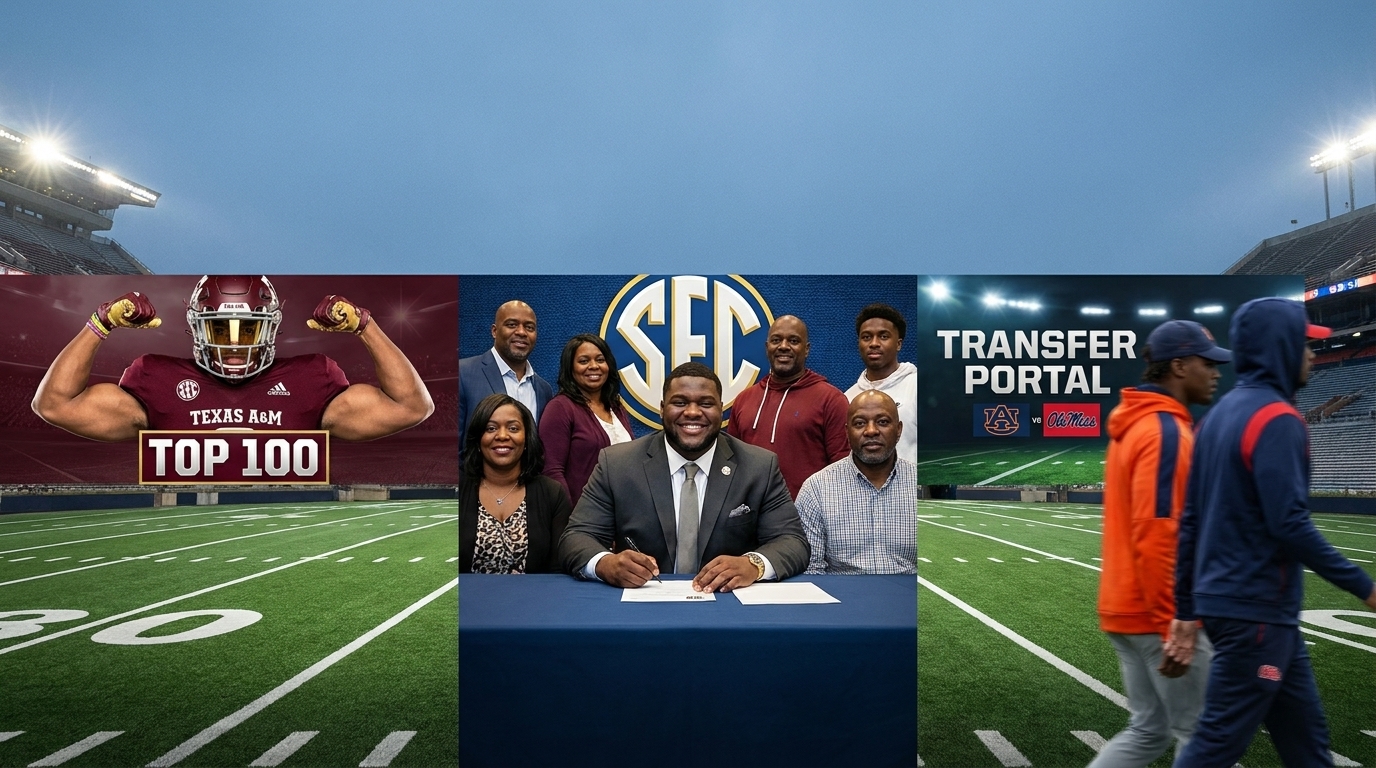
Texas A&M commands attention with the top-ranked class, nine top-100 prospects, and several recent blue-chip additions. Auburn has generated momentum during official visits, adding multiple four-star commits and moving into the top 20 nationally. Ole Miss made noise this weekend by landing three blue-chip recruits and establishing a competitive class near the top 20. As a result, this roundup takes an analytical, cautiously optimistic view of which programs can sustain recruiting growth when commitments and portal pickups collide.
We will break down class rankings, prospect profiles, and portal additions. Then, we will identify momentum trends and potential pitfalls. Read on to gauge which recruiting classes carry realistic championship hope.

college football recruiting class rankings: momentum shifts in the SEC
Momentum matters because it changes perception and practical recruiting outcomes. Texas A&M sits atop the 247Sports Composite in this cycle. The Aggies have nine top-100 prospects and recent additions like five-star offensive tackle Mark Matthews and four-star edge Ards. As a result, A&M’s class carries both elite talent and positional balance.
- Texas A&M
- No. 1 class nationally according to the 247Sports Composite
- Nine top-100 prospects including Mark Matthews and Ards
- Recent commits add depth at tackle and edge, which often correlate with on-field success
- Auburn
- Moved into the top 20 after gaining five commitments during official visits
- Recent additions include four-star linebacker Isaac McNeil and four-star Kingston Miles
- Momentum there looks real, but the class needs sustained top-end talent
- Ole Miss
- Ranks about 20th after adding Jeremiah Culpepper, Miguel Whitley, and Marvin Nguetsop
- That trio represents three blue-chip pickups in one weekend
- As a result, Ole Miss is closing gaps with peers, but depth still lags at some spots
For broader context, see SECFB’s deeper look at class trajectories and what the 2027 boards reveal: SECFB 2027 Recruiting Class Rankings.
college football recruiting class rankings: transfer portal impact and roster strategy
The portal reshapes recruiting because it allows programs to address immediate needs. However, portal additions do not erase the value of high school blue-chip development. Teams that blend a strong high school class with smart portal pickups gain roster flexibility.
- Transfer portal effects
- Portal pickups can shore up experience at receiver, linebacker, or quarterback quickly
- In contrast, high school commitments secure long-term depth and recruiting continuity
- Team examples
- Texas A&M: pairing elite high school talent with targeted portal moves keeps the roster balanced
- Auburn: official visit momentum can be complemented by a timely portal acquisition
- Ole Miss: blue-chip weekend boosts optimism, yet the portal will likely fill veteran gaps
For more on how recruiting discussions tie into season previews, consult SECFB’s SEC mailbag and recruiting analysis: SECFB SEC Mailbag and Recruiting Analysis.
college football recruiting class rankings: why top-rated commits still move the needle
Top-rated commits matter because they raise a class average and change recruiting conversation. Five-star and top-100 prospects carry higher expected ceilings. Therefore, programs that land multiple blue-chip players often see class rankings jump fast.
- Key facts
- High-end commits improve class rankings and public momentum
- They also force competitors to respond during official visits and the portal
- Miami’s rise to No. 3 shows how a handful of elite flips can alter standings
Finally, these shifts will reflect in preseason projections and early depth charts. As momentum builds, watch how each staff mixes portal veterans and high school talent to sustain growth. For a related view on rankings and preseason analysis, see SECFB 2026 Man Machine.
| Program | National rank | Commitments and top-100 prospects | Average player rating | Notable commits and notes |
|---|---|---|---|---|
| Texas A&M | No. 1 | Nine top-100 prospects; several recent commits | N/A | Five-star offensive tackle Mark Matthews; adds tackle depth and edge help; recruiting momentum strong; top-100 prospects highlight class quality |
| Auburn | No. 19 | Five commitments since official visits began | N/A | Four-star linebacker Isaac McNeil and four-star Kingston Miles; official visits drove momentum; needs sustained top-end talent |
| Ole Miss | No. 20 | Three blue-chip recruits this weekend | N/A | Jeremiah Culpepper, Miguel Whitley, Marvin Nguetsop; weekend haul boosts blue-chip depth |
| Miami (FL) | No. 3 | Six top-100 commits; four five-star prospects | 92.99 | Jaiden Bryant flip shows how elite flips change class standings; five-star prospects raise average rating |
| Clemson | No. 6 | 22 commitments | 89.98 | Large class size provides depth; class average solid despite fewer recent flips |
| North Carolina | No. 19 | Six current commitments; signed 41 in 2026 cycle | N/A | Lauifi Tosi committed; long-term roster building through high school recruiting and official visits |
Midway insight: how official visits, transfer portal and high school recruiting shape momentum
Official visits move the needle because they create face time and urgency. As a result, recruits often commit after productive weekends on campus. “They’re doing an awesome job,” an ACC personnel staffer said, noting how visits can shift perceptions quickly. Therefore, momentum from visits helped Auburn pile up five commitments and rise into the top 20.
Transfer portal activity changes timelines. Because experienced college players arrive ready to play, portal pickups shorten rebuild windows. However, portal additions do not erase the need for high school recruiting. Texas A&M still benefits from nine top-100 prospects, including five-star tackle Mark Matthews. As a result, A&M blends high school blue-chip upside with targeted veteran help.
High school recruiting remains the long game. Programs that sign five-star prospects and top-100 prospects raise their class averages. Then, that improved standing attracts more official visits and occasional flips. Ole Miss’s three blue-chip pickups this weekend illustrate that chain reaction. Recruiting momentum can snowball if staffs convert visits into commitments and pair those commits with smart portal fills.
- Practical effects on team building
- Texas A&M: elite high school talent creates depth and future starters. Portal moves will plug experienced gaps.
- Auburn: official visits built urgency. The staff must land a few higher-rated commits to sustain the climb.
- Ole Miss: blue-chip weekend improved class quality. The portal will matter for immediate roster balance.
In short, momentum depends on converting visits and balancing classes with portal signings. Therefore, watch which staffs sustain that conversion rate. If they do, their college football recruiting class rankings will reflect genuine roster improvement.
College football recruiting class rankings remain the clearest snapshot of offseason momentum. Therefore, class boards show which programs attract blue-chip prospects and depth. However, the transfer portal now changes timelines and immediate roster needs. As a result, rankings reflect both high school recruiting and veteran portal moves.
Texas A&M’s No. 1 class proves how sustained momentum and top-100 prospects can set expectations. Auburn’s official visits delivered urgency and meaningful commitments, but the staff needs more elite pieces to climb. Ole Miss’s weekend haul shows how a concentrated recruiting push can alter a class quickly. In each case, momentum and portal strategy will decide whether rankings turn into on-field gains.
SECFB LLC will keep tracking shifts in recruiting and portal activity across the SEC. For ongoing coverage and deeper analysis, visit SECFB and follow SECFB on Twitter/X @ZachGatsby. Finally, watch which staffs convert visits and portal additions into long-term roster stability.
Frequently Asked Questions (FAQs)
How are college football recruiting class rankings determined?
Rankings rely on composite metrics like the 247Sports Composite and class averages. They weigh commitments, average player rating, top-100 prospects, and five-star prospects. Because evaluators use common scales, a few elite flips can change standing quickly.
How does recruiting momentum affect a class?
Momentum creates urgency during official visits and social buzz. As a result, programs with strong weekends convert more commits. However, momentum needs follow-through. Teams must add depth beyond headline commits to sustain a climb in rankings.
What impact does the transfer portal have on rankings?
The portal brings experienced players who can fill immediate needs. Therefore, portal signings often raise short-term expectations. However, portal moves rarely replace the long-term value of high school recruiting and developing top-100 prospects.
Are official visits more valuable than other recruiting tools?
Official visits offer face time and coaching evaluations. They often decide tight decisions. Yet, evaluations, film, and the portal all matter. In practice, visits convert recruits when staffs show clear roles and development plans.
How should fans read mid-cycle ranking swings?
Treat mid-cycle swings as indicators, not guarantees. Because classes change, look at depth, balance, and number of blue-chip commits. If a staff pairs portal veteran additions with strong high school classes, that momentum looks sustainable.