
Jo Simmons delivered a concise message as fall camp opened: Auburn’s offensive line has taken a massive step forward. That kind of internal confidence from a returning lineman matters because the line sets the foundation for the offense’s early performance and unit continuity.
The optimism Simmons expressed is an early, player-sourced signal about group cohesion and preparation, not an independent stat line. As reported in On3, Simmons said the unit showed clear progress to begin work in pads and meetings.
Key Takeaways
- Jo Simmons believes Auburn’s offensive line has made a massive step forward entering fall camp.
- The comment represents an inside read from a veteran lineman rather than an external evaluation with metrics.
- Improved cohesion along the offensive front can ease depth concerns and sharpen early-game execution for Auburn.
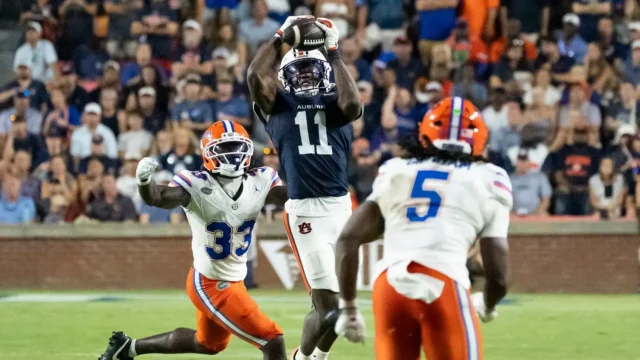
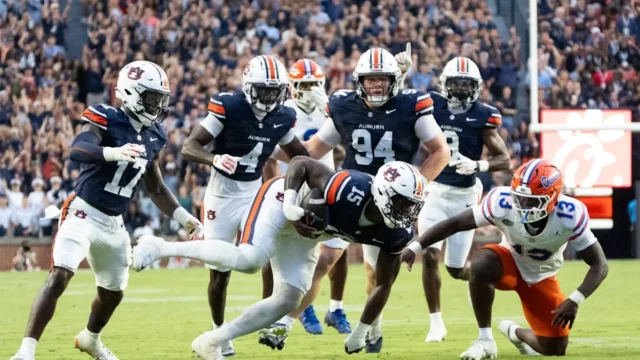
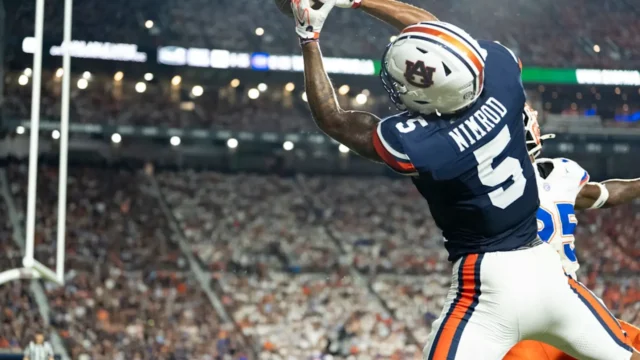
- Photo coverage of Simmons at camp was provided by Austin Perryman and Auburn athletics.
How Jo Simmons describes the line progress
Simmons framed the improvement as a unit-level jump rather than an individual breakout. His perspective centers on the group’s collective work at the outset of fall camp and how the unit is aligning after offseason preparation.
That sort of assessment from a player is useful because linemen are the ones working most closely on communication, assignment clarity and physical timing during early practices. Simmons’ characterization should be read as a barometer of internal confidence that coaches can either validate or recalibrate as camp progresses.
Roster impact and depth chart outlook
An offensive line that reports better cohesion has direct implications for starter battles and rotation plans. If coaches hear the same optimism from multiple players and see it translate on the field, competition at tackle and interior spots tightens and early-season depth worries are reduced.
For Auburn, the practical impact will show up in who closes camp on the field versus who remains in developmental or reserve roles. Simmons’ comments put a higher premium on continuity and technique — both factors that influence the first-week offensive game plan and how quickly young linemen are asked to contribute.
Auburn offensive line returning experience comparison
| Context | Verified detail from reporting |
|---|---|
| Player-reported improvement | Jo Simmons stated the offensive line made a “massive step” entering fall camp. |
| Returning experience clarity | The source does not provide a breakdown of returning starters or snaps, only player perspective on progress. |
| Early-camp indicators | Simmons’ assessment signals internal cohesion; independent metrics or outside evaluations were not included in the report. |
How an improved offensive line affects Auburn SEC and CFP outlook
A cleaner, more cohesive offensive line can have outsized effects in SEC play where defenses are physical and games hinge on protection and third-down efficiency. Even modest improvements up front can translate into more consistent passing windows and more sustainable rushing lanes against top competition.
From a recruiting and roster-construction angle, early positive reports can help coaches manage development timelines and allocate practice reps with less urgency. That can be meaningful when projecting depth across a long SEC season and when gauging Auburn’s short-term competitiveness within the conference and for broader postseason positioning.
Photo credit Austin Perryman/Auburn athletics.