Kalen DeBoer Alabama spring practice leadership and quarterback development
Kalen DeBoer Alabama spring practice leadership and quarterback development sits at the center of offseason buzz. Fans and analysts watch spring drills with cautious optimism, because new leadership choices matter. DeBoer has kept his leadership group open this year, so players must emerge naturally.
Meanwhile, the quarterback picture remains fluid as Austin Mack and Keelon Russell split reps. However, DeBoer emphasized development more than immediate perfection during a frank interview with Josh Pate. He noted issues with the offensive line and new plays, yet he still praised their potential.
As a result, evaluation from spring scrimmage will hinge on growth, poise, and decision making. This introduction previews what follows: DeBoer’s leadership style, quarterback development, and A-Day expectations. Therefore, read on for a balanced view that blends analysis with cautious hope.
By the end, you will understand how competition can breed leadership and sharper quarterback play. Ultimately, DeBoer’s measured approach suggests steady progress is both realistic and attainable.
Kalen DeBoer Alabama spring practice leadership and quarterback development: spring scrimmage evaluation
Spring scrimmage gave a real glimpse into the quarterback race. Kalen DeBoer said, “They split it up pretty even. That was the goal. I’m not sure how it exactly ended… But they’ve been splitting it.” That illustrates just how even reps were between Austin Mack and Keelon Russell. However, DeBoer added, “I would say today wasn’t their sharpest day.” As a result, evaluation requires context and patience.
DeBoer blamed some issues on the offensive line and new plays. He noted, “A lot of it’s what we’ve been talking with the offensive line. I think there’s just getting in sync with guys… the things that we have as part of our base offense that we’ve done now for two years here, you can see everyone being in sync, and when you’re playing with confidence, you’re going to rip it with confidence. And there’s some of the new stuff that maybe isn’t even things we’ve had until this year or done as much of until this spring, you can see that we struggled with it.” Therefore, some misses reflected team growing pains more than quarterback failure.
Key takeaways on quarterback development
- Reps were shared evenly which helps competition and development. This supports deeper evaluation as spring progresses.
- Strengths included short to intermediate accuracy and quick decision making under pressure. These areas showed consistent growth.
- Weaknesses centered on timing with the offensive line and execution of newer plays. As a result, consistency lagged on some drives.
- DeBoer believes some plays are game-ready, saying, “there are some things that they do really well that we’re confident in, that they can execute at a high level.” Therefore, readiness is mixed but promising.
Spring practice impacts readiness by accelerating chemistry and testing new concepts. Meanwhile, A-Day will offer a clearer comparison. For now, coaches and fans should weigh process over single-day results.
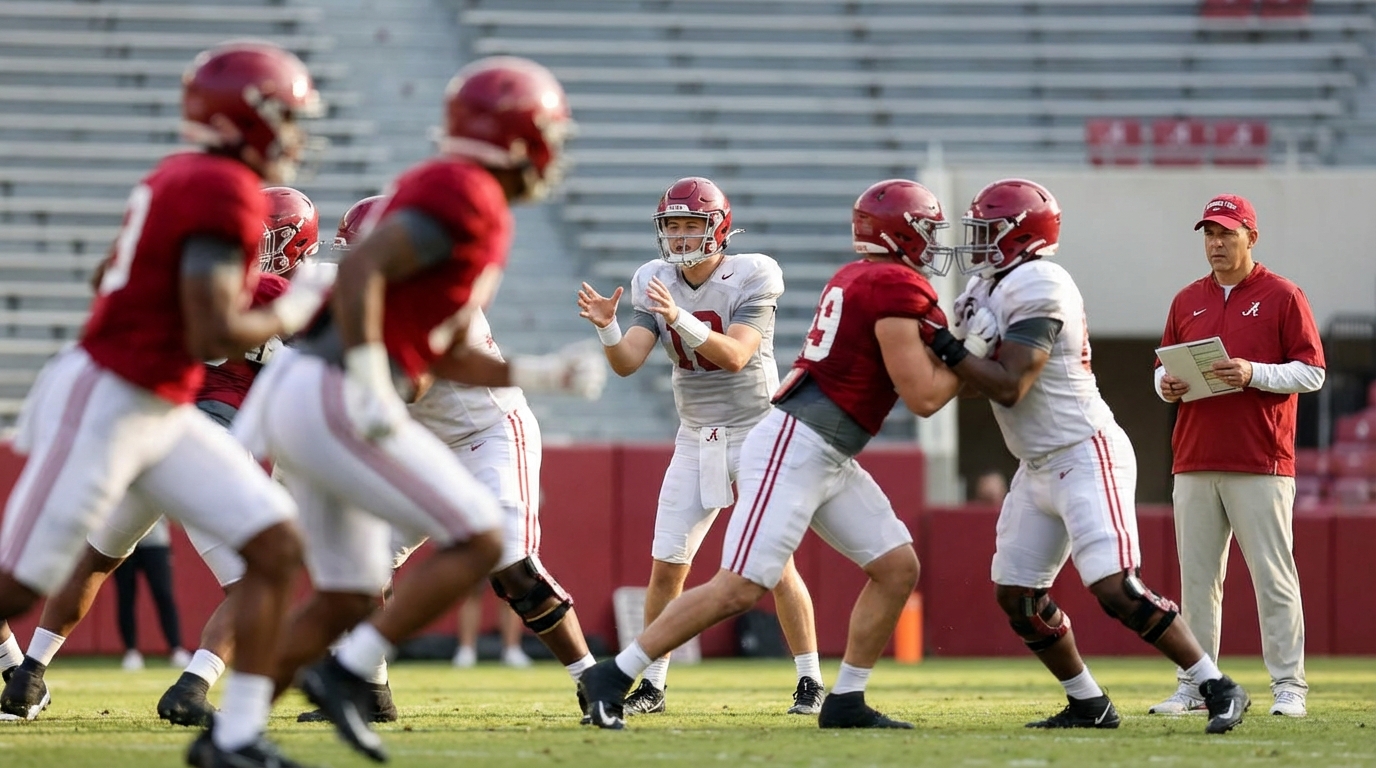
Kalen DeBoer Alabama spring practice leadership and quarterback development: open leadership process
Kalen DeBoer has taken a different tack this spring, and he summed it up plainly: “Yeah, we have really left it much more open this year.” Fans expected a named leadership council before fall camp. However, DeBoer wants leaders to emerge through work and accountability rather than appointment.
He explained the reason bluntly: “A lot of times in the past, I would have had some type of leadership group that the team would have chosen. I just took a different take on it this year because I don’t know if it had been a popularity contest or just kind of based on who people know. We had so many new faces that came in, and I just left it open.” That shows DeBoer’s emphasis on merit and cohesion.
Implications for team dynamics
- Encourages organic leadership: Players earn roles by example and performance.
- Boosts competition: As DeBoer noted, “Competition is back in the program, and it breeds for optimal leadership.”
- Increases accountability: Teammates must step up without a formal title.
- Tests communication: Coaches will watch who naturally organizes the huddle and line calls.
DeBoer believes the approach has long term benefits. He added that the method helps players own leadership consistently. As a result, the team may find more durable leaders. Meanwhile, this approach ties closely to quarterback development and rep distribution. Therefore, watch for who rises by A-Day and into fall camp.
| Quarterback | Spring reps | Key strengths | Areas for improvement |
|---|---|---|---|
| Austin Mack | Even split of reps with Keelon Russell; steady in live reps | Strong short and intermediate accuracy; quick processing; leadership flashes in the huddle | Timing with the offensive line; consistency on newer plays; needs sharper anticipation under pressure |
| Keelon Russell | Even split of reps with Austin Mack; shared development opportunities | Accurate on quick reads; mobility to extend plays; competitive pocket presence | Sync with offensive line timing; execution on new concepts; decision making on deep timing routes |
CONCLUSION
Kalen DeBoer Alabama spring practice leadership and quarterback development has set a pragmatic foundation for the season. DeBoer’s open leadership approach and split quarterback reps created a competitive, accountable environment. As a result, players earn their roles through performance and consistency. This method reduces guesswork and rewards daily work.
Quarterback development looks promising but measured. Austin Mack and Keelon Russell shared reps, which accelerated evaluation and growth. However, timing issues with the offensive line and some new plays showed room for improvement. Therefore, readiness will depend on chemistry, repetition, and in-season refinement.
DeBoer’s leadership strategy also affects team culture. By leaving the leadership group open, he encourages players to lead by example. As a result, leadership should feel earned and sustainable. Meanwhile, competition will reveal who can guide the locker room under pressure.
For continued coverage and deeper analysis, trust SECFB LLC. Visit SECFB LLC for Alabama updates. Also follow the team conversation on Twitter at @ZachGatsby. SECFB offers timely reporting, context, and informed takes as spring turns to A-Day and the regular season.
Frequently Asked Questions (FAQs)
What happened with the quarterback reps during spring scrimmage?
Kalen DeBoer said, “They split it up pretty even. That was the goal.” Therefore, Austin Mack and Keelon Russell shared meaningful reps. This gave coaches a clearer read on both players.
Were the quarterbacks sharp in the scrimmage?
DeBoer admitted, “I would say today wasn’t their sharpest day.” However, he noted some plays still looked game-ready. As a result, evaluation must account for team growing pains.
How does the open leadership approach affect the quarterbacks?
DeBoer stated, “Yeah, we have really left it much more open this year.” Thus, quarterbacks must lead by performance. Meanwhile, organic leadership can strengthen locker room buy-in.
What strengths stood out for the quarterbacks?
Coaches saw short to intermediate accuracy and quick decision making. DeBoer added, “there are some things that they do really well that we’re confident in.” Therefore, confidence exists despite inconsistency.
Will competition improve leadership and readiness?
DeBoer believes so. He said, “Competition is back in the program, and it breeds for optimal leadership.” Consequently, the process should reveal who can guide the team.