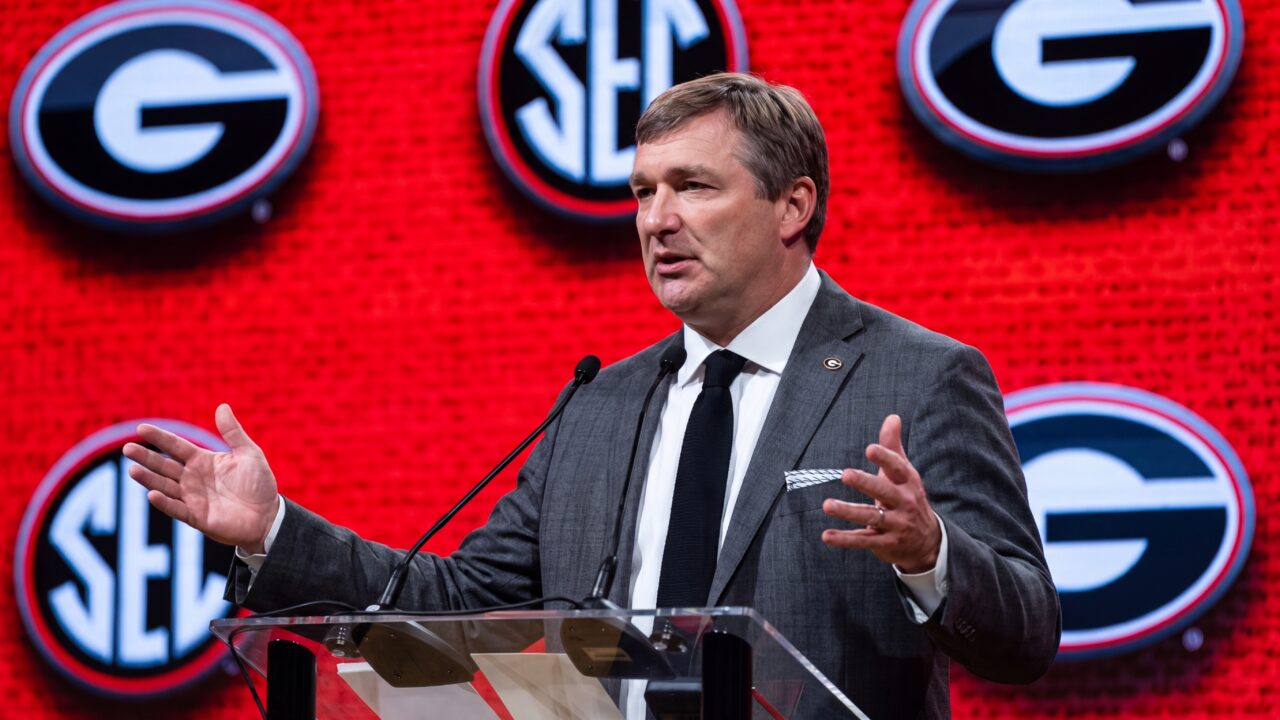
The prospect of the SEC breaking away from the NCAA re-entered the national conversation after Georgia coach Kirby Smart reaffirmed his stance and told reporters, “Yeah, I’ve actually been there for a long time,” when discussing recent comments from the league office, as reported by Saturday Down South
Those remarks follow SEC Commissioner Greg Sankey’s comment that talks about the conference leaving the NCAA are real, which places governance, rule-making and postseason questions back on the table for coaches and athletic administrators.
Key Takeaways
- Kirby Smart reaffirmed his prior stance supporting a potential SEC exit and said he would consider conference autonomy if uniform national rules cannot be found.
- SEC Commissioner Greg Sankey told reporters that discussions about the league’s relationship with the NCAA are real and are being considered at the conference level.
- The Protect College Sports Act has been mentioned publicly as a potential legislative route, with reported elements including a 19-team cap and a five-year independent requirement for moves between power leagues.
- Prediction-market figures cited in the reporting list Georgia and Texas among early title odds, providing competitive context to governance conversations.
Smart’s stance and coach-level influence
Smart extended earlier remarks made at the SEC Spring Meetings, saying, “I’ve been a huge advocate that if we can’t find rules that everybody plays by, then we should play our own,” which underscores his willingness to pursue conference-specific governance.
He also said he was “not afraid to break away” and presented that view from the perspective of a coach leading one of the conference’s most prominent programs, which can shape peer conversations on competitive parity and roster planning.
Sankey’s comments and governance options
Commissioner Sankey’s statement that the talks are real signaled the league office is at least entertaining contingency planning rather than dismissing coach-level frustration, and that the conference would need to address revenue distribution and scheduling mechanics in any shift.
Public discussion has included legislative pathways and proposals tied to the Protect College Sports Act as a potential mechanism to create uniform rules, with guardrail concepts reported such as a team cap and waiting period for moves between leagues.
Public positions and reported proposals comparison
| Item | Reported position or proposal | Noted market context |
|---|---|---|
| Kirby Smart | Advocates for conference autonomy if national rules cannot be agreed upon; expresses willingness to break away. | Georgia appears among early title odds cited in reporting. |
| Greg Sankey | Characterized discussions about the NCAA relationship as substantive and ongoing; governance options are being explored at the conference level. | Texas is also listed among early title odds cited in reporting. |
Recruiting and roster-construction implications for the SEC
An SEC that sets its own rules would change the recruiting calculus for elite prospects, altering how coaches pitch roster construction and pathway stability to recruits and their families.
Conference-level standards on eligibility, transfers and compensation management could shift bargaining dynamics and resource allocation inside the league, and postseason access including College Football Playoff arrangements would be central to any negotiated framework.