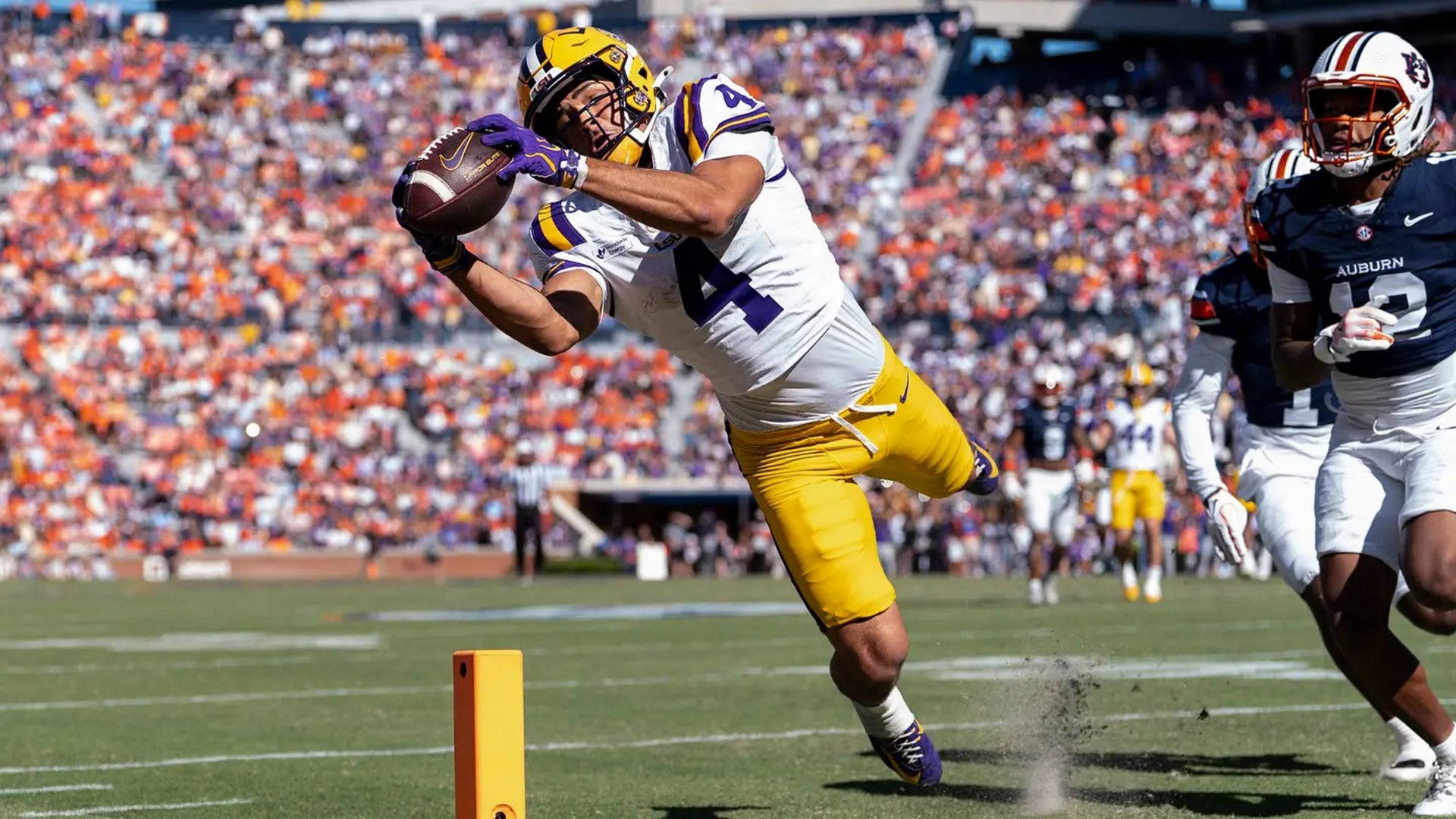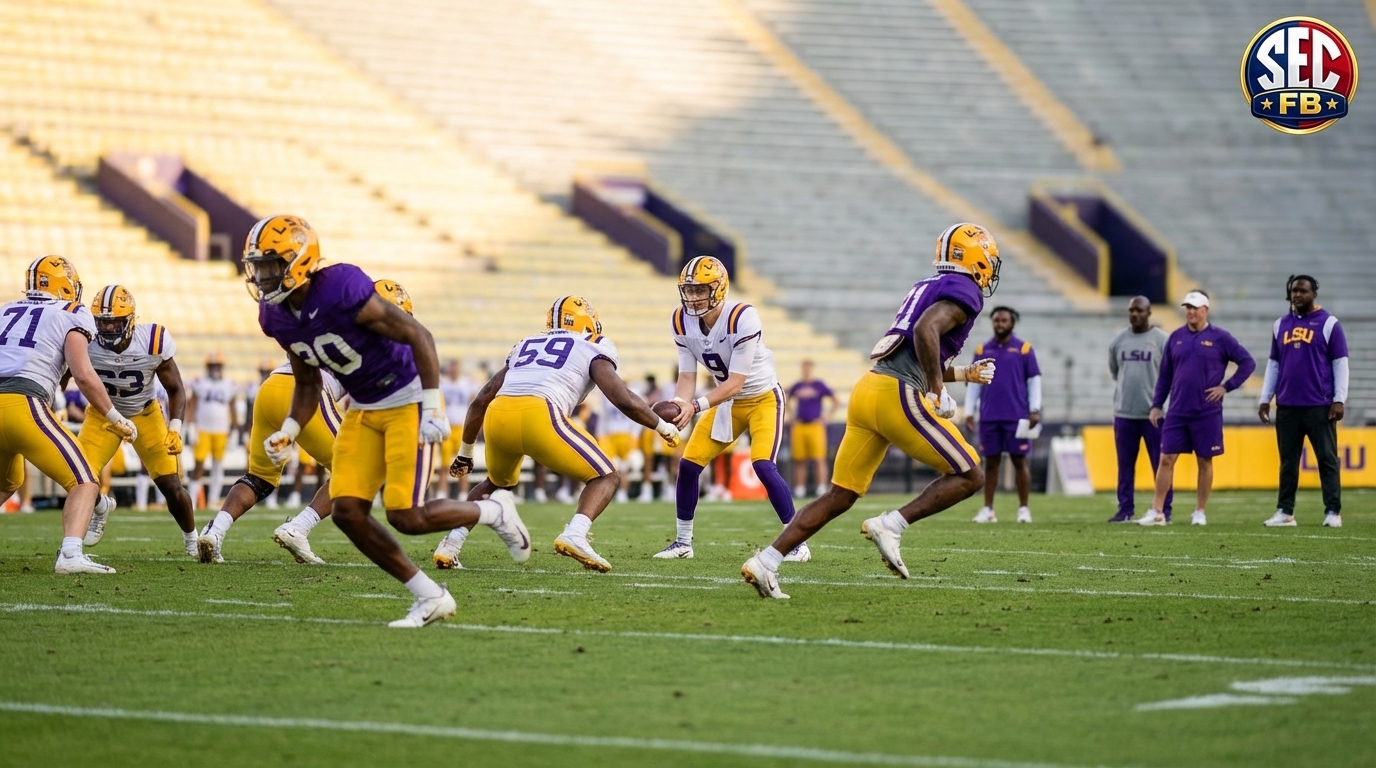
LSU Spring Camp Position Battles kick off on March 24, and optimism already fills Tiger Country. Fans and coaches will focus on quarterback competitions, wide receiver depth, and defensive edge races. Because LSU added 58 scholarship players from transfers and high school, depth looks different. However, early injury news matters, as Sam Leavitt will not practice fully this spring.
The quarterback room features Landen Clark, who passed for over 2300 yards as a freshman. Meanwhile, the receiver corps blends nine transfers, three recruits, and returning veteran Phillip Wright. On defense, new edge additions like Princewill Umanmielen and Jordan Ross promise more pass rush. Coaches will test offensive line depth and assess pass protection under live drills.
Therefore, spring camp will reveal who earns starting reps and who faces position shifts. As a result, early practices and scrimmages will shape the initial depth chart. Analytically, we will track reps, splash plays, and scheme fit for each contender. Optimistically, LSU’s talent infusion and experienced coaches could speed growth this offseason. Finally, this article previews the key position battles, injury updates, and roster trends to watch.
LSU Spring Camp Position Battles: Quarterback
The quarterback room offers the most eyeballs this spring. Because Landen Clark returned after a 2300-yard freshman season, he enters as the early leader. However, Husan Longstreet pushes with his strong arm and pro-style flashes. Sam Leavitt will not practice fully because of injury, and that opens reps for others. Coaches will evaluate pre-snap reads, downfield accuracy, and mobility. Expect daily rep rotations and situational drills. Watch for who commands the pocket under pressure.
- Landen Clark: poised, accurate on deep throws, and steady in reads.
- Husan Longstreet: six feet tall, strong arm, brings vertical juice.
- Sam Leavitt: limited availability, which creates an opportunity for backups.
LSU Spring Camp Position Battles: Wide Receiver and Pass Catchers
The receiver room blends nine transfers, three high school recruits, and returners. Jayce Brown brings reliable hands and route polish because he averaged 44 catches recently. Phillip Wright anchors the room with experience. However, Tre Brown and Jackson Harris supply length and big play ability. Coaches will test spacing, contested catches, and yards after catch.
- Jayce Brown: consistent target, quick in short-to-intermediate routes.
- Phillip Wright: veteran presence who helps rookies learn the ropes.
- Tre Brown and Jackson Harris: matchup problems because of size and speed.
Defensive Edge and Interior Line
LSU added Princewill Umanmielen and Jordan Ross to hunt quarterbacks. As a result, edge pressure should increase from last year’s eight sack total. Defensive coaches will measure burst, hand usage, and run-versus-pass discipline.
- Princewill Umanmielen: athletic, twitchy, built to rush off the edge.
- Jordan Ross: depth and technique workhorse.
Others to Watch
Offensive line depth remains a priority because protection will define passing success. Secondary battles and special teams competitions will also shape the depth chart. Therefore, spring camp will sort starters and reveal position changes. In short, these LSU Spring Camp Position Battles promise daily drama and clear storyline development.
Early Injury and Roster Developments
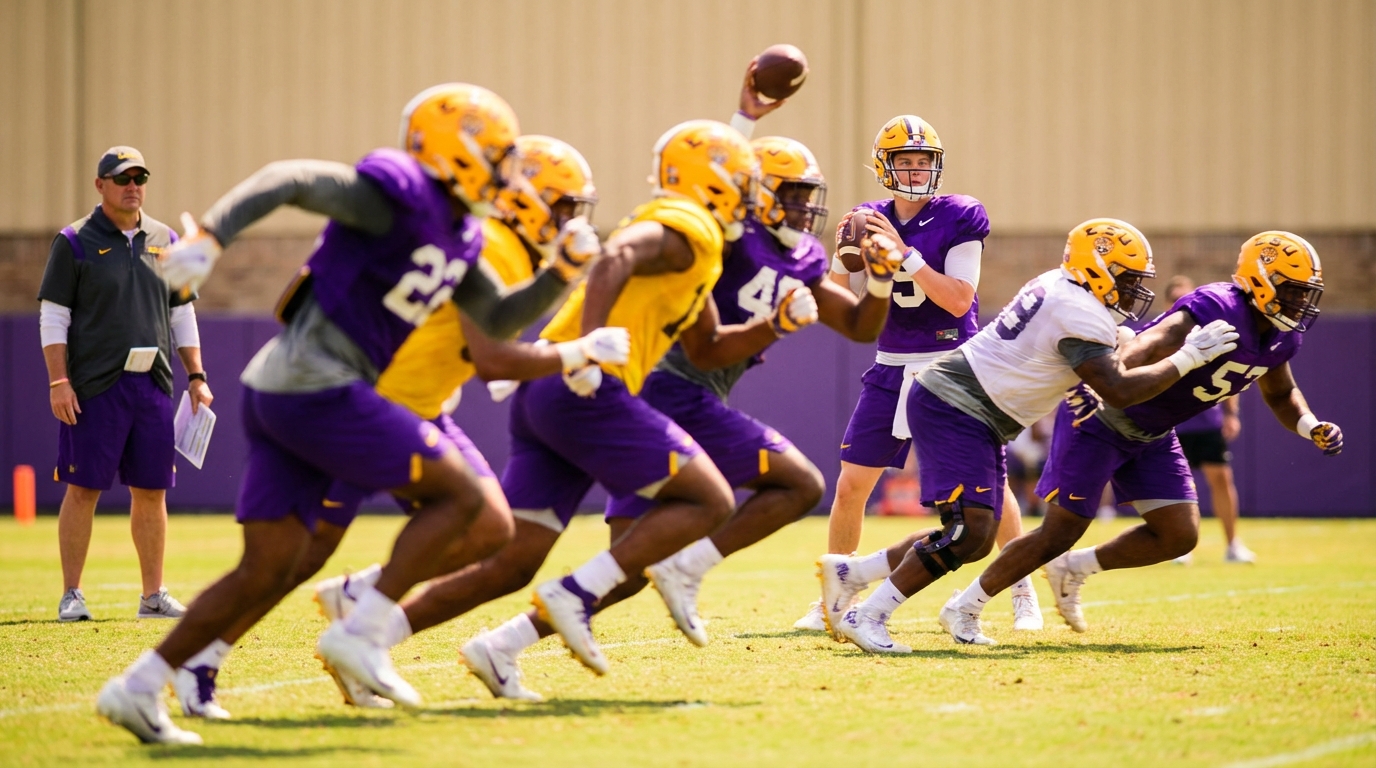
Spring camp opens amid notable injuries and heavy roster turnover. Because LSU added 58 scholarship players from transfers and high school, coaches must sort a crowded depth chart. However, injuries already shape reps.
- Sam Leavitt: will not participate fully this spring due to injury. That limits his snaps and opens reps for backups.
- Cooper Moore: expected to miss two to three weeks with tricep inflammation. As Jay Johnson noted, “My guess is he’ll probably miss at best two, probably three weeks, and then should be able to return to pitch.”
- Transfers and recruits: LSU took in dozens of offseason additions. The wide receiver room alone has nine transfers and three high school recruits.
- Quarterback room: Landen Clark remains the early leader, while Husan Longstreet and others pick up extra work because of Leavitt’s limited availability.
Short practices will emphasize conditioning, technique, and situational reps. Therefore, recovery timelines will dictate who sees early-game snaps. Coaches will also monitor how new arrivals adapt to the playbook. As a result, expect fluid depth charts during initial scrimmages and daily practice reports.
| Player Name | Position | Key Strengths | Notable Stats | Status |
|---|---|---|---|---|
| Landen Clark | Quarterback | Smart pre-snap reads; accurate deep passer; mobile | 2,300+ passing yards; 600 rushing yards (freshman) | Returning starter |
| Husan Longstreet | Quarterback | Strong arm; pro-style mechanics; deep ball threat | Noted as one of the strongest arms in the 2025 class | 2025 recruit |
| Sam Leavitt | Quarterback | Timing and dual-threat upside | Limited spring participation due to injury | Injured/limited |
| Jayce Brown | Wide Receiver | Reliable hands; crisp routes | Averaged 44 catches over recent seasons | Returning contributor |
| Phillip Wright | Wide Receiver | Veteran leadership; route consistency | Returning receiver | Returning veteran |
| Tre Brown | Wide Receiver | Size and contested-catch ability | 6’6″ and 270 pounds | Big-bodied target |
| Jackson Harris | Wide Receiver | Deep threat; explosive yards per catch | ~20 yards per catch average | Vertical playmaker |
| Princewill Umanmielen | Defensive Edge | Explosive burst; bend around the edge | Expected to boost pressure | New roster addition |
| Jordan Ross | Defensive Edge | Technique and high motor | Adds depth to the edge group | New roster addition |
LSU’s spring camp revealed early storylines and left fans optimistic about the season ahead. The LSU Spring Camp Position Battles highlighted clear contenders, several newcomers, and depth questions. Landen Clark’s return stabilized the quarterback room, while Husan Longstreet pushed in drills. However, Sam Leavitt’s limited participation and Cooper Moore’s two to three week absence affected reps. Coaches adapted quickly because they added 58 scholarship players from transfers and high school. Moreover, the receiver room now blends nine transfers, three recruits, and veteran Phillip Wright.
Defensively, Princewill Umanmielen and Jordan Ross should help increase edge pressure and disrupt opponents. Therefore, spring practices will shape starting roles and expose who fits scheme and tempo best. Expect fluid depth charts early, but steady improvement as young players learn the system. In short, LSU has talent, depth, and coaching to grow into a serious SEC contender. Stay tuned for daily practice updates, injury news, and positional clarity as camp progresses.
For more LSU coverage, visit SECFB.com and follow SECFB LLC on Twitter/X at @ZachGatsby.
Frequently Asked Questions (FAQs)
What are the biggest storylines in the LSU Spring Camp Position Battles?
Quarterback, wide receiver, and defensive edge lead the list. Offensive line depth and secondary matchups also matter. Because LSU added many transfers and recruits, competition should be deeper than last year. Coaches will watch reps, situational drills, and performance in scrimmages.
Who looks like the early favorite at quarterback?
Landen Clark enters as the early leader after a strong freshman season. However, Husan Longstreet will push with his strong arm. Sam Leavitt will have limited snaps because of injury. Therefore, coaches will rotate reps to see who handles pressure best.
How do early injuries change camp reps and roles?
Injuries shift opportunity and timeline. Sam Leavitt’s limited participation opens practice reps for other quarterbacks. Cooper Moore is expected to miss two to three weeks with tricep inflammation. As a result, backups and new transfers will have chances to win early playing time.
When will we get a clearer depth chart from spring camp?
Spring camp begins March 24, and early scrimmages will give initial clues. Coaches often keep depth fluid after first practices. However, by midcamp, starters usually emerge because coaches lock in reps and evaluate consistency.
What should fans watch during practices and scrimmages?
Focus on pocket presence, pre-snap reads, and decision making at quarterback. Also watch contested catches, route timing, and yards after catch at receiver. Defensively, track edge rush win rate and interior push. Finally, monitor offensive line communication because protection will shape the passing game.
Which players are sleepers to watch in the quarterback competition?
Keep an eye on Husan Longstreet and any third stringers who earn extended reps due to Sam Leavitt’s limited availability. Sleepers typically show quick processing, accuracy on intermediate routes, and clutch decision making in two minute and red zone drills. Watch practice reps, pick plays, and how coaches trust them in live scrimmages.
How will transfers impact the depth chart?
Transfers accelerate competition across skill groups, especially at wide receiver and defensive edge. Expect:
- Immediate starters among transfers if they master the playbook
- Position shuffling to create best matchup combinations
- More rotational depth which reduces injury risk
Coaches will weigh experience versus scheme fit, so a big transfer haul can both push veterans and create flexibility.
What should fans look for in early camp practices?
Focus on:
- Quarterback pocket presence and pre snap recognition
- Timing between QB and receivers on intermediate routes
- Contested catch ability and yards after catch
- Edge rush win rate and defensive line push
- Offensive line communication on blitz pickups
- Special teams fundamentals and injury updates