
Michael Hawkins, the former Oklahoma starter, is expected to be West Virginia’s starting quarterback and will take the Mountaineers’ opening snaps in Morgantown.
As reported by A to Z Sports, Pete Nakos of On3 says West Virginia plans to give Hawkins the starting nod, a decision that matters to fans and the conference.
Key Takeaways
- Pete Nakos of On3 has reported West Virginia is expected to name Oklahoma transfer Michael Hawkins its starting quarterback.
- Hawkins arrives with a reputation for a strong arm and running ability that can create explosive plays in the Big 12.
- Questions about consistency — notably ball placement and defensive reads — remain a core part of his evaluation.
- Hawkins will have his brother Malik Hawkins on the roster, a family connection that could influence chemistry.
How Michael Hawkins fits West Virginia offense
Hawkins brings a rare combination of arm strength and athleticism that projects into a Big 12 passing environment built for downfield shots and quarterback mobility.
At Oklahoma he flashed the ability to stretch the field with downfield throws and to generate chunk gains with his legs, traits that fit a West Virginia offense seeking big-play creation.
His limitations are also clear in the reporting: inconsistent ball placement and occasional struggles with pre-snap and post-snap reads affected his ability to secure the job at Oklahoma.
Those issues are fixable with repetition, structure, and coaching that simplifies progressions early in the year to accelerate decision-making under pressure.
Coaching decisions in Morgantown will need to leverage Hawkins’ intermediate-to-deep throwing ability while providing scripted reads that let his running be an added dimension rather than the offense’s default plan.
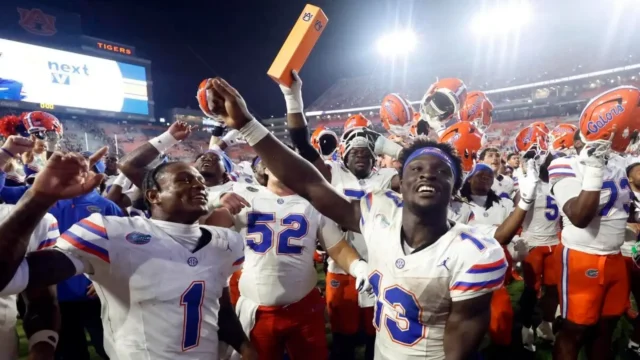
For fans who remember his extended starting stretch two years ago, including a high-profile outing at Auburn, this is a chance to see whether Hawkins can convert isolated flashes into season-long production.
Comparing Hawkins to recent West Virginia quarterbacks
| Player | Experience & traits | Strengths | Concerns |
|---|---|---|---|
| Michael Hawkins | Former Oklahoma starter with meaningful game reps and a short but notable college resume | Strong arm, ability to push the ball downfield, mobility to create outside the pocket | Inconsistent ball placement and decision-making on defensive reads |
| Recent West Virginia starters | Established within the Mountaineers’ scheme with continuity and familiarity | System knowledge, developed chemistry with returning receivers, steadiness | Generally less downfield arm strength or escape ability compared with Hawkins |
The table above offers a qualitative comparison that places Hawkins’ raw tools against the continuity recent Mountaineer starters provided.
What Hawkins brings is a higher ceiling for explosive plays, while prior starters offered steadiness and roster familiarity that can matter in close Big 12 games.
SEC implications for the 16-team SEC and CFP path
Hawkins’ potential to generate highlight plays increases recruiting visibility across Power Five footprints, which includes regions contested by SEC programs and could affect recruiting dynamics.
From a College Football Playoff perspective, a starter with Hawkins’ playmaking ability offers a route to signature wins that matter for CFP resumes, but turnover risk and errant ball placement would undercut that upside.
Initial reporting traced to the linked report above and an On3 tweet from Pete Nakos