What is NCAA eligibility and EA Sports cover fallout?
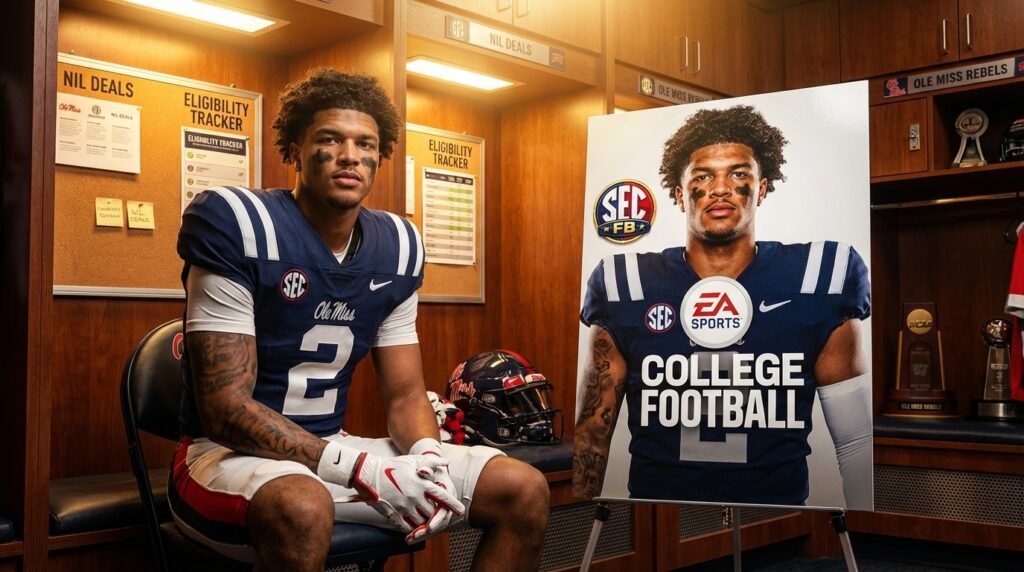
NCAA eligibility and EA Sports cover: The Trinidad Chambliss showdown
Trinidad Chambliss stands at the center of a high-stakes fight over NCAA eligibility and EA Sports cover rights. Last month a Mississippi judge granted him a sixth season of college eligibility, but the NCAA has asked the state’s supreme court to review that ruling. As a result, EA Sports told Chambliss it “just can’t stomach the risk” of him not suiting up this fall, and the company declined to move forward with a cover campaign.
Because appearing on the cover would include NIL compensation and explosive publicity, the decision has immediate financial consequences for Chambliss. He now seeks damages for lost NIL money and for harm to his brand and marketability. Moreover, the filing alleges EA Sports’ move unfairly echoed the NCAA’s opposition and created further commercial harm.
This article analyzes the NIL and eligibility dispute from legal and commercial angles. First we will explain the specific facts in the Chambliss filing. Then we will examine implications for publicity rights, video game licensing, and athlete marketability. Finally we will assess what the outcome could mean for future NIL deals and NCAA authority.
NCAA eligibility dispute and court actions
Trinidad Chambliss’ bid to play this season turns on a legal and regulatory tangle. In short, Chambliss sought a medical hardship waiver tied to a prior medical issue at Ferris State. Because the injury carried over, his lawyers argued he deserved a sixth season of eligibility. A judge in the Mississippi Chancery Court of Lafayette County agreed and granted that sixth season of eligibility last month.
However, the NCAA did not accept the ruling. The association argued the medical issue was not properly documented by Ferris State at the time. Therefore the NCAA filed a petition with the state supreme court to review the Chancery Court decision. As a result, Chambliss’ eligibility status sits in limbo while the petition is pending.
This legal limbo has immediate, practical effects on Chambliss’ ability to play. Because court review can overturn or delay the Chancery judgment, teams and partners face uncertainty about roster status. EA Sports cited that uncertainty when it texted Chambliss that it “just can’t stomach the risk” of him not suiting up. Consequently, the player’s potential cover appearance and associated NIL compensation vanished, at least for now.
Beyond the immediate loss of endorsement money, the dispute highlights broader issues in NCAA eligibility disputes. First, timing matters because appeals and reviews can stretch into the season. Second, documentation matters because schools must record medical events for waivers to stick. Finally, precedent matters because this case could influence how future medical waivers and sixth seasons are handled.
In short, the intersection of law and NCAA rules determines whether Chambliss can play. The outcome will shape not only his career but also how similar medical issue claims are treated in future NCAA eligibility disputes.
| Issue | Date or timing | Parties involved | Outcome or pending actions |
|---|---|---|---|
| Eligibility ruling (sixth season of eligibility) | Late February 2026 — Chancery Court decision | Trinidad Chambliss; Mississippi Chancery Court; NCAA; Ole Miss Rebels; Ferris State | Judge granted a sixth season. However the NCAA asked the state supreme court to review. Status pending. |
| Medical hardship waiver and medical issue | Waiver tied to prior medical issue at Ferris State; documentation questioned | Chambliss; Ferris State; NCAA compliance staff | NCAA opposes waiver due to missing school documentation. Therefore the waiver faces legal challenge. |
| EA Sports cover involvement | Early March photoshoots; finalist selection reported | EA Sports; Trinidad Chambliss; marketing partners | EA Sports texted it “just can’t stomach the risk” and pulled back. Cover paused. |
| NIL compensation and marketability | Would have included NIL pay and broad publicity | Chambliss; potential sponsors; EA Sports | Chambliss seeks damages for lost NIL money and harm to brand. |
| Timing and practical effects | Appeals could stretch into season | Ole Miss roster planners; agents; partners | Uncertainty affects roster status and endorsement deals, as a result. |
| Legal venue and next steps | Filing in Lafayette County Chancery Court; petition filed to state supreme court | Lafayette County Chancery Court; Mississippi Supreme Court; NCAA | Supreme court review pending. Outcome will determine eligibility and related commercial rights. |
EA Sports decision and impact on Chambliss’ marketability and brand
EA Sports’ text that it “just can’t stomach the risk” changed Chambliss’ commercial trajectory. Because EA withdrew its interest in a cover shot / on the cover, a major branding moment evaporated. Appearing on the cover would have created organic publicity for Trinidad, enhancing both his marketability and publicity rights. As a result, Chambliss lost immediate exposure that often converts into sponsorships.
The financial effects are concrete and visible. Chambliss now claims lost NIL money and seeks damages to brand and marketability. Moreover, the loss of a marquee profile reduces negotiating leverage with future partners. Consequently, offers tied to visibility and timing may shrink or disappear. Agents and marketers watch cover selections closely, because timing drives endorsement value.
There are reputational and long term risks as well. A withdrawn cover signals uncertainty to sponsors, and that uncertainty can depress long term market value. However, the legal dispute rather than the athlete caused the pause. Therefore Chambliss argues the harm stems from external actors, not performance or conduct.
For athletes, publicity rights often depend on predictable platforms. In short, losing a high profile licensing spot can create cascading commercial losses. If courts rule in Chambliss’ favor, he could recover some lost NIL money and reputational harm. Until then, his marketability remains on hold.
CONCLUSION
The Trinidad Chambliss case exposes how legal rulings and commercial partners collide. The Mississippi chancery judge granted a sixth season of eligibility, yet the NCAA seeks review. As a result, EA Sports declined a high profile cover opportunity. Therefore Chambliss lost immediate NIL compensation and publicity that would have boosted his marketability.
More broadly, this dispute illustrates fragile NIL rights when eligibility remains unsettled. Because documentation and timing matter, schools and athletes must plan documentation carefully. Moreover, third party actors may react to legal uncertainty, shifting market power away from athletes.
What to watch next are the state supreme court’s actions and any damages award. If courts uphold Chambliss’ eligibility, sponsors might return and the player could recover lost NIL money. However, if the NCAA prevails, the industry may see more cautious licensing decisions.
For ongoing coverage and deeper analysis, follow SECFB LLC at SECFB LLC and on Twitter/X at Zach Gatsby. SECFB will continue tracking legal developments and NIL trends.
What is the controversy?
Trinidad Chambliss is fighting over a court granted sixth season of NCAA eligibility while EA Sports declined a video game cover due to legal uncertainty, creating a clash between eligibility rules and commercial licensing.
Why was Chambliss granted a sixth season?
A Mississippi chancery judge approved a medical hardship waiver tied to an earlier injury at Ferris State, but the NCAA challenges the waiver citing incomplete school documentation.
Why did EA Sports pull the cover?
EA cited the risk that Chambliss might be ineligible after the NCAA sought state supreme court review, so the company paused the cover and related licensing plans.
How did that affect Chambliss’ NIL and brand?
Losing the cover eliminated immediate NIL compensation and reduced publicity that drives endorsements, sponsorships, and long term marketability.
What happens next and why does it matter?
The Mississippi supreme court’s decision will determine eligibility and influence future athlete licensing, NIL deals, and how schools document medical waivers.
Wrap up note
This dispute highlights core themes: NCAA eligibility, NIL compensation, and publicity rights; consequently, athletes, agents, and schools should track documentation, timing, and legal risk to protect endorsements and licensing value.