Power ranking: college football’s top 25 coaches in 2026?
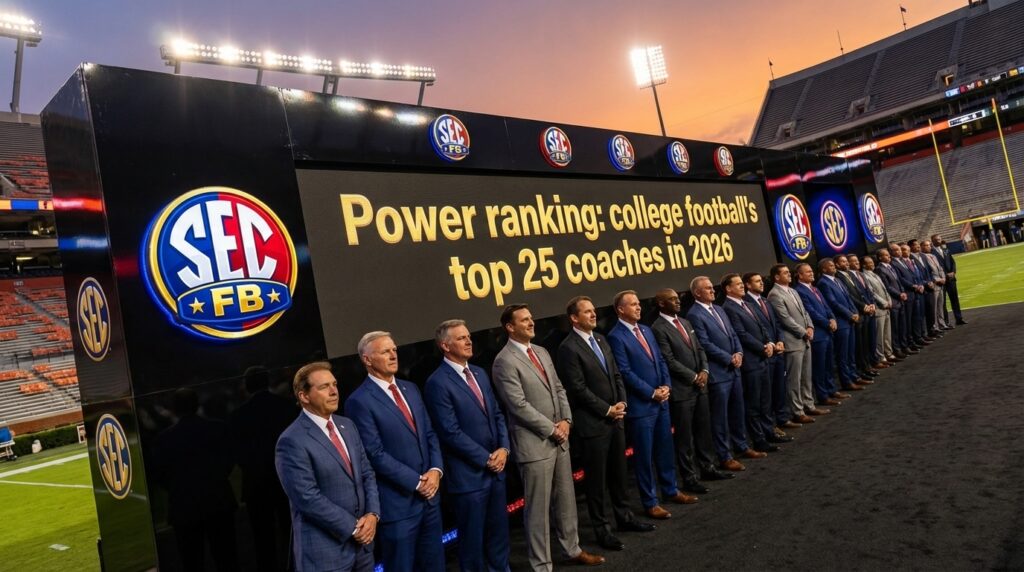
Power ranking: college football’s top 25 coaches in 2026 — Why the SEC should care
College football is in flux, and coaching matters more than ever. Power ranking: college football’s top 25 coaches in 2026 frames that shift for coaches and programs seeking an edge. These lists reward recent results, staff construction and portal savvy, not just past reputations. For SEC programs, therefore, the ranking is a playbook and a warning because it highlights which coaches convert transfer talent quickly, which staffs coach up in crunch time, and which leaders can sustain high recruiting velocity while navigating NIL complications; that matters to boosters, athletic directors, and rivals who measure success in conference titles and playoff berths.
Therefore we parse performance, turnover, strategic hires and recency bias to show why some SEC jobs remain elite while others face peril, and then rank the top 25 coaches with analytical context, insiders notes and a focus on how each coach’s choices will shape the 2026 season and beyond and playoff construction decisions.
Power ranking: college football’s top 25 coaches in 2026 — Transfer portal winners reshaping the SEC
Coaches who dominate the transfer portal now jump up these lists. Curt Cignetti’s rapid rebuild in Bloomington shows that clearly. His Year 1 and Year 2 success proved a portal and staff-first approach can produce a national champion. Likewise, Kalen DeBoer and Ryan Day have used transfers to plug gaps quickly. For the SEC, therefore, this trend matters because depth and instant impact decide division races. Moreover, recruitment velocity and portal management affect late-season stamina. As a result, athletic directors now prize staff continuity, scouting analytics and portal relationships. In short, portal acumen equals short-term wins and sustained playoff contention.
Power ranking: college football’s top 25 coaches in 2026 — NIL, staff construction and the coaching premium
Name image and likeness deals change how coaches build teams. Coaches like Kirby Smart keep elite rosters despite NIL turbulence. However, other programs win by selling immediate paths to exposure. Therefore staff hires that specialize in NIL and player services give coaches an edge. Dan Lanning, Marcus Freeman and Mike Elko all hired coordinators who double as recruiters. Meanwhile, recency bias rewards coaches who finished strong in 2025. Because of that, our ranking weights recent results more heavily. The rankings also factor program stability, scheduling and performance versus top 10 opponents. Ultimately, the coaches at the top combine recruiting, portal strategy and NIL navigation into a repeatable model.
| Coach | Overall Record | Conference Record | National Championships | Playoff Appearances | Transfer Portal Success |
|---|---|---|---|---|---|
| Curt Cignetti | 27-2 | 16-0 (Big Ten) | 1 | 2 | High |
| Kirby Smart | 37-3 | SEC | 2 | 5 | Moderate |
| Ryan Day | 82-12 | 55-5 (Big Ten) | 0 | 7 | Moderate |
| Kalen DeBoer | 3-2 vs Top-10 | SEC | 0 | 4 | High |
| Dan Lanning | 48-8 | 26-3 (Big Ten) | 0 | 2 | Moderate |
| Marcus Freeman | 43-12 | Independent | 0 | 3 | Moderate |
| Dabo Swinney | 40-14 | ACC | 0 | 6 | High |
| Mike Elko | 9-3 (Debut) | SEC | 0 | 1 | High |
| Kalani Sitake | Double-digit | Independent | 0 | 4 | Moderate |
| Sonny Lashlee | 9-4 | AAC | 0 | 1 | Low |
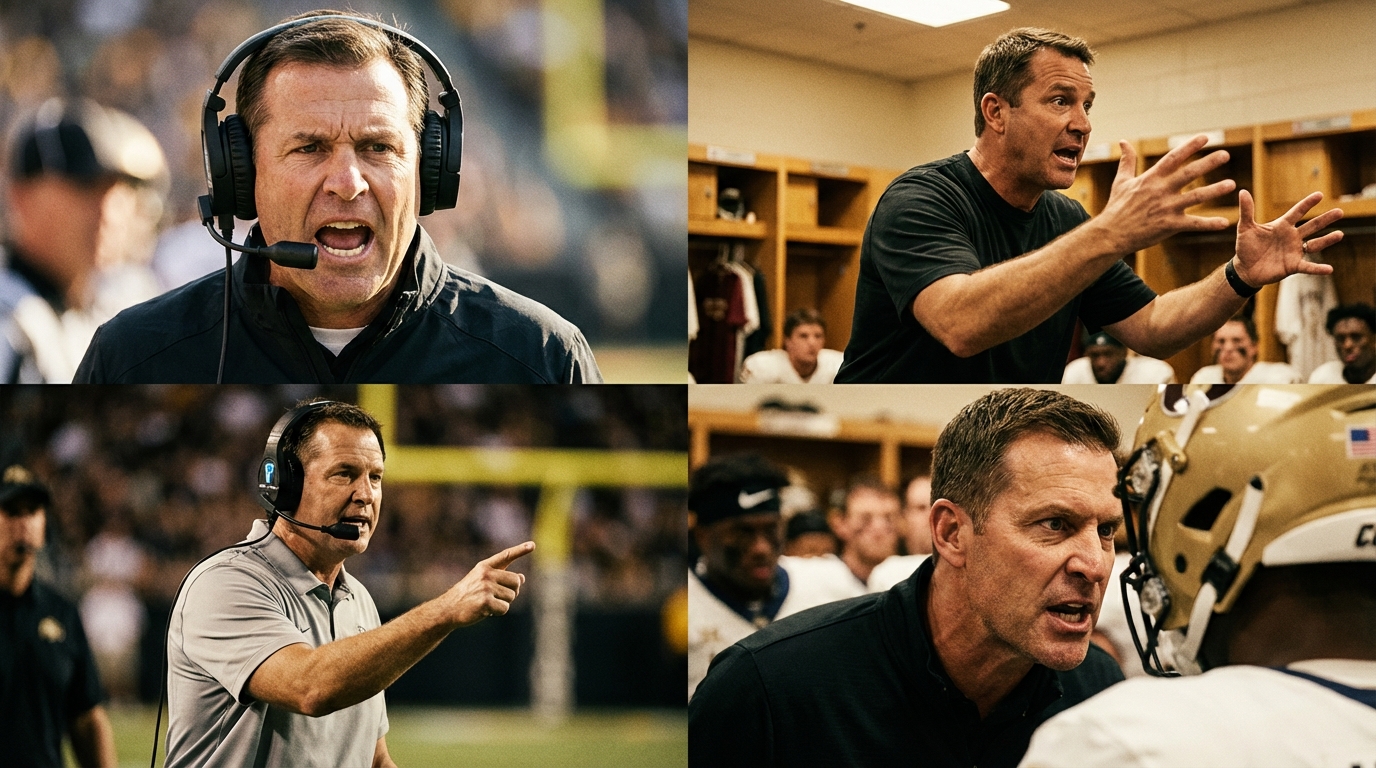
Coaching success now rewards team-building over old-school program-building. There’s more recency bias baked in now than ever before with me and these rankings, but some of that seems more justified because the dynamic of college football has shifted so much just in the past five years with name, image and likeness and the transfer portal — meaning there’s more of a premium on team-building than program-building, and staffing matters even more. Curt Cignetti’s rapid rise in Bloomington illustrates that shift. What he’s done in two years in Bloomington is, simply put, the most remarkable turnaround in the sport’s history. Therefore quick roster construction and immediate coaching impact carry extra weight in 2026.
The NIL and the transfer portal now shape week-to-week competitiveness. Coaches who master The NIL keep elite talent engaged, and coaches who manage the transfer portal plug holes fast. For example, Kirby Smart’s teams have not finished lower than No. 7 in the AP poll in nine years, and that stability still matters because consistent top finishes protect recruiting momentum. However, programs that lean on portal gains can surge quickly into Playoff conversations. As a result, staff hires now include player services directors, portal scouts and NIL strategists.
For SEC programs the calculus changed. Athletic directors must value immediate returns and long-term culture. Otherwise a school risks one bad year turning into missed championships. In short, the modern coaching premium buys processing speed, recruiting velocity and crisis-proof staffing. That will determine who climbs our Power ranking: college football’s top 25 coaches in 2026 and who falls behind.
Conclusion
These power rankings show why coaching now decides windowed success and Playoff chances. As a result, SEC programs face higher stakes in staff hires and roster construction. Recency bias matters, because The NIL and the transfer portal accelerate rises and falls. Therefore recent results carry outsized weight when projecting season outcomes.
Coaches who combine recruiting velocity, portal acumen and staff stability rise quickly. Kirby Smart remains a model of sustained excellence, while Curt Cignetti represents rapid turnaround. Meanwhile, coordinators who double as recruiters amplify a coach’s impact on games. Therefore athletic directors must balance immediate returns with long term culture.
In short the landscape favors team-building over old program-building models. Ultimately the coaching premium buys processing speed, recruiting velocity and crisis-proof staffing. This ranking maps who will realistically compete for conference titles and Playoff berths. Because of these trends, the SEC’s margins for error shrink every season. Follow SECFB LLC for ongoing analysis.
Website: SECFB.com
Twitter/X: @ZachGatsby
Frequently Asked Questions (FAQs)
What criteria decide the Power ranking?
We weigh recent results, Playoff appearances and conference records heavily. We also consider performance versus top 10 teams, AP poll consistency and national championships. Because The NIL and the transfer portal change roster construction, portal success and NIL strategy factor strongly. Finally, staffing, recruiting velocity and recency bias influence placement.
How does The NIL affect a coach’s ranking?
The NIL changes recruiting and retention dynamics. Coaches who manage NIL deals keep top talent and protect depth. For example, stability under Kirby Smart shows how NIL management helps sustain elite rosters. As a result, coaches with strong player services score higher.
How important is transfer portal success?
The portal provides quick fixes for roster gaps. Curt Cignetti’s rapid rebuild proves portal-driven turnarounds work. Therefore coaches who scout, recruit and integrate transfers gain a competitive edge. That edge often shifts Playoff and conference outcomes.
Why do these rankings matter for SEC programs?
The SEC faces thinner margins than before. Conference races hinge on depth, staff hires and late-season form. Because of that, recency bias and portal gains can swing division titles and Playoff bids.
How should athletic directors interpret coaching turnover and recency bias?
Balance immediate returns with long-term culture, because short fixes can erode stability. However, a coach who wins now and builds staff continuity offers the best chance at sustained success.
How should I interpret the rankings regarding criteria and weightings?
Treat the list as a transparent snapshot that balances measurable outputs with context. We use approximate weightings so placements remain consistent and explainable.
- Recent on field results and quality wins including Playoff appearances and performance versus top 10 teams 35%
- Transfer portal success and immediate player impact 25%
- Recruiting velocity and NIL management 15%
- Staff construction and coordinator recruiting value 15%
- Program stability, scheduling strength and historical consistency 10%
These factors add up to 100% and show why recency and portal acumen tilt the rankings. For readers searching college football coach rankings 2026 this criteria breakdown clarifies how coaches are scored and compared.