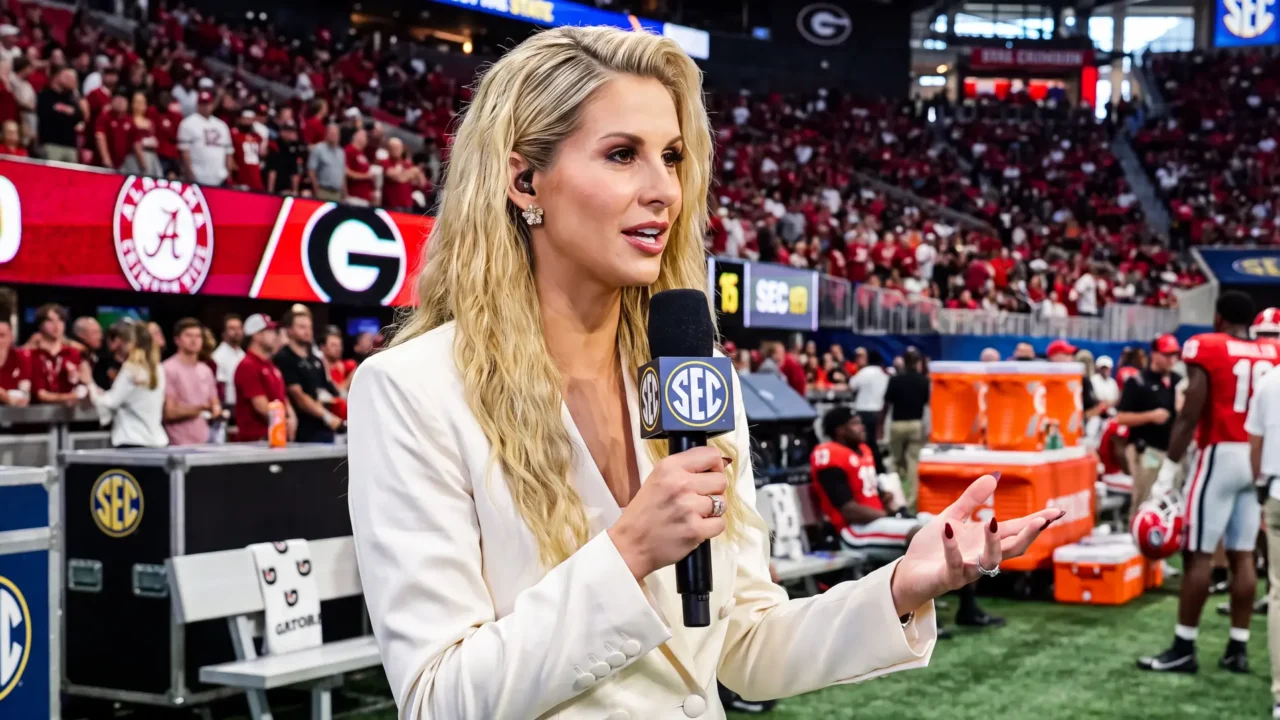
Laura Rutledge argued on the Pat McAfee Show that the SEC’s demanding regular-season format may be leaving teams worn down and affecting their College Football Playoff prospects.
Her remarks were summarized by Saturday Down South and focused on the league’s nine-game internal slate and its potential effects on depth and late-season performance.
Key Takeaways
- Rutledge said the SEC’s nine-game conference slate produces “nine games of craziness” and can leave teams gassed by season’s end.
- The conference did not produce a national champion in the cited three-season span while Michigan, Ohio State, and Indiana won titles during that period.
- Despite scheduling debate, five SEC teams earned berths in the most recent 12-team College Football Playoff while three Big Ten teams also qualified.
Rutledge on scheduling and team fatigue
Rutledge described the conference as producing “nine games of craziness” that can leave teams “gassed” by season’s end.
That framing reflects a common coaching concern that sustained, week-to-week conference play increases exposure to wear and tests depth.
David Wasson covered Rutledge’s remarks and the surrounding context for the reporting.
Operational levers within programs
Programs can manage rotation, redshirt decisions and injury mitigation as operational levers to blunt end-of-season fatigue.
Those decisions shape roster construction and recruiting emphasis without requiring conference-level change.
Recent champions and CFP bid comparison
| Category | Big Ten | SEC |
|---|---|---|
| National champions (three-season span) | Michigan (2023), Ohio State (2024), Indiana (2025) | No SEC champion during the same span |
| CFP bids in the most recent 12-team field | Indiana, Ohio State, Oregon (3 teams) | Georgia, Ole Miss, Texas A&M, Oklahoma, Alabama (5 teams) |
Implications for SEC roster construction and CFP evaluation
From a beat perspective, the schedule-density debate breaks down into talent depth, timing of attrition and matchup wear.
Coaches and staff may prioritize multi-year depth and midseason rotation to preserve late-season competitiveness.
SEC’s five-team representation in the most recent CFP field shows the conference still produces top-tier teams even as conversations about format and scheduling continue.