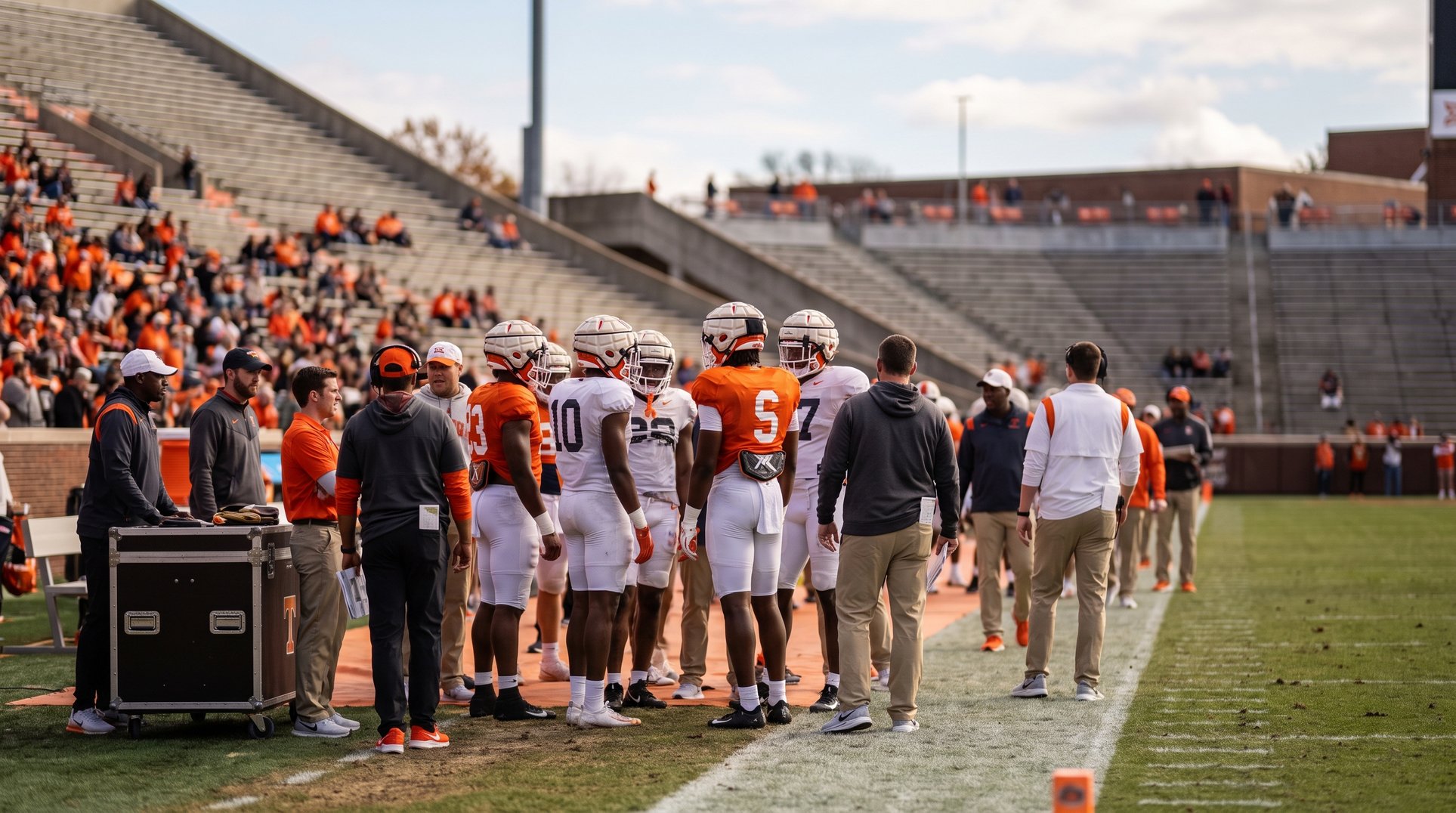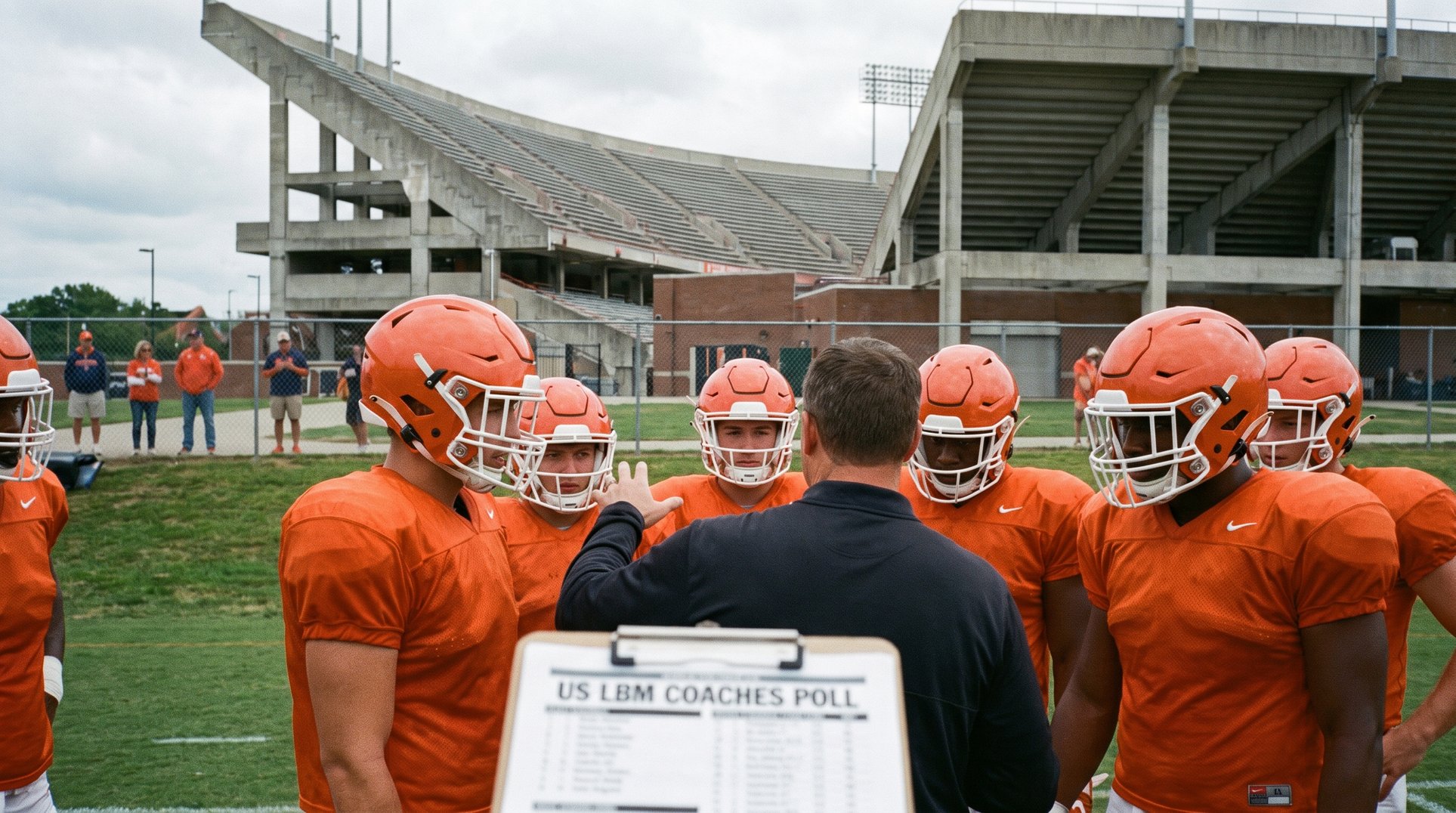

Tennessee football enters an optimistic offseason with real momentum after bold coaching hires and a dramatic weight room transformation. The Volunteers added high impact staff and modern methods to their strength program. For example, their new strength coach brings national attention and big name experience. Players responded quickly, adding muscle while lowering body fat. In fact, the spring gains changed conditioning conversations across the SEC.
Meanwhile, staffers also focused on technique, nutrition, and injury prevention. Recruiting and the transfer portal look brighter because of these tangible improvements. Projectors now peg Tennessee for a higher ceiling in early bowl predictions. As a result, expectations have risen across Rocky Top and among fans.
This piece will examine coaching hires, measurable weight room gains, and bowl outlooks. It will also explore matchup implications under the new nine game SEC slate. Finally, we unpack how player development and scheme tweaks may turn promise into wins. Expect optimism, but we will balance enthusiasm with realistic benchmarks.
Coaching hires and impact on Tennessee football
Tennessee made a high profile splash in the coaching ranks this offseason. The headline move was hiring Derek Owings as strength coach, a hire that included a record setting contract worth about 1.2 million per year. As a result, Tennessee now employs the highest paid strength coach in college football history. That investment signals a serious commitment to player development and long term durability.
Josh Heupel emphasized the cultural goals behind the hire. He said, “Physical and mental toughness is paramount in everything we do year round as a program.” He added, “No one understands this better at a championship level than Derek. He will elevate our strength and conditioning program with a relentless mindset and forge strong relationships with our players.” These comments frame Owings as more than a trainer. He is a culture builder who will reshape standards.
Owings brings modern training methods and a focus on injury prevention. Heupel noted, “He has a proven track record of utilizing modern training methods to maximize speed and strength, while specializing in injury prevention. He also understands what it takes to build an elite nutrition program to ensure our players are set up for on field success and durability.” Therefore, expect changes across programming, monitoring, and meal plans.
Key expected impacts
- Faster recovery and fewer soft tissue injuries because of improved prevention protocols
- Increased power and speed through sport specific strength cycles
- Better nutrition and body composition management for all position groups
- Stronger recruiting and transfer portal appeal thanks to upgraded facilities and staff
These coaching changes aim to raise Tennessee football on multiple fronts. The upgrade helps on field performance and boosts recruiting momentum, which ties to transfer portal moves like Trey Martin and offseason narratives around league rivals. For more on portal implications see Trey Martin article. Context on SEC competition appears in offseason pieces such as Alabama football offseason ranking and a look at neighboring programs like Kentucky at Kentucky gauntlet article.
Offseason weight-room gains and why they matter
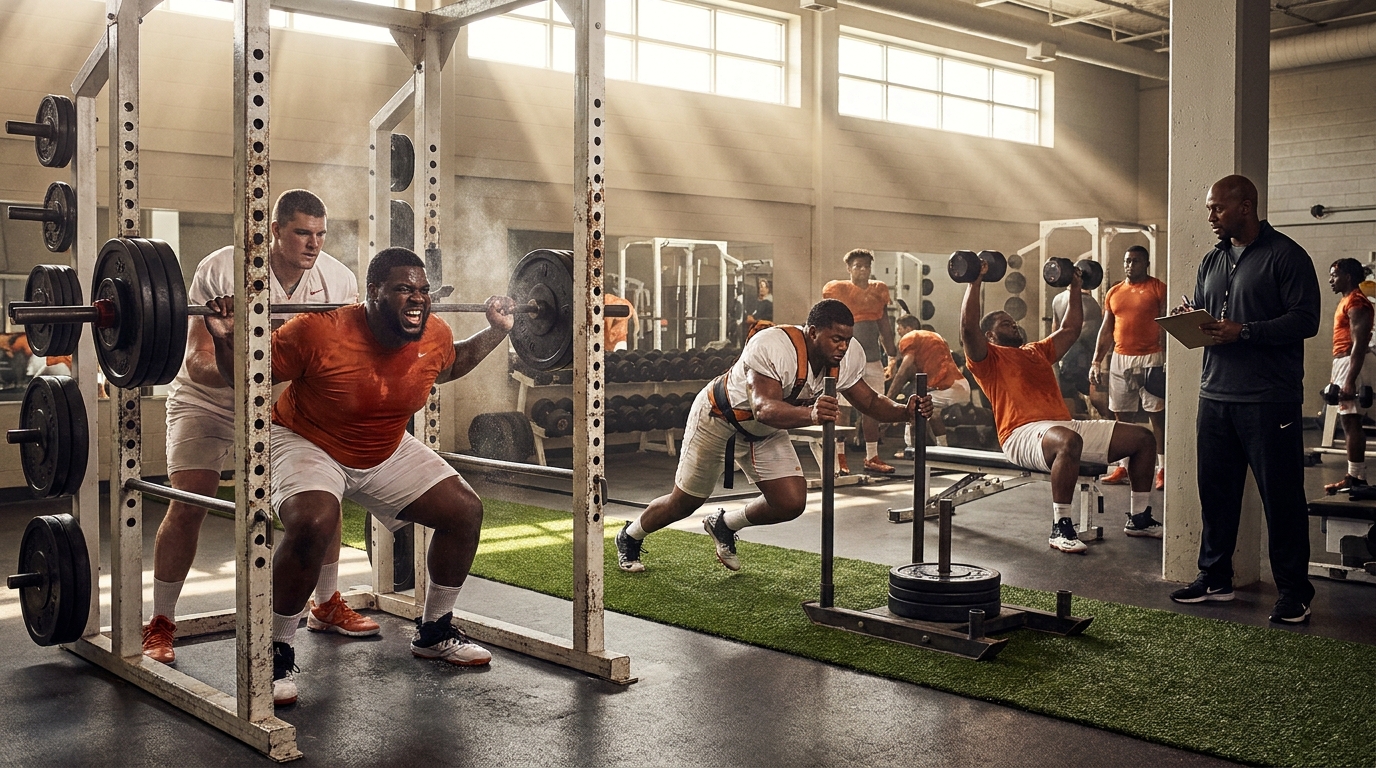
Tennessee recorded 867.3 pounds of added muscle and shed 218.1 pounds of fat from January to May. In addition, 33 players increased muscle mass by 11 pounds or more. These weight-room gains matter physically and strategically for the Volunteers. Because the numbers reflect measured body-composition shifts, they show real progress in conditioning and nutrition.
Physiological significance
- Increased muscle mass improves force production and short-burst power. This helps linemen sustain blocks and rushers finish runs.
- Leaner body composition raises movement efficiency, which can boost speed and agility across position groups.
- Added muscle supports joint stability, lowering the risk of soft tissue injuries when training load rises.
How weight-room gains translate to on-field performance
- Better blocking and pass protection: stronger linemen create wider running lanes and hold pockets longer.
- Faster second-level pursuit: linebackers and safeties carry momentum into tackles more often with added power.
- Improved finishing ability: skill players show stronger contact balance and break more tackles.
Durability and season-long impact
These gains matter beyond single games. With improved strength and recovery protocols, players can tolerate heavier practice loads. Therefore, Tennessee should expect fewer nagging injuries and better late-game conditioning. Moreover, a standardized nutrition plan and monitoring help maintain gains and limit fat rebound.
Practical considerations for coaches
- Convert raw strength into sport-specific power through sprint-resisted and plyometric work.
- Prioritize load management to avoid overload injuries as training intensity climbs.
- Integrate position-specific nutrition to preserve muscle while optimizing game weight.
Overall, the weight-room gains give Tennessee football a measurable edge. If staff convert muscle mass into football speed and durability, the Volunteers will show those benefits in the trenches and the box score.
| Era | Bowl game | Result | Notes | Early projection (2026) | Projected probability | Potential opponents |
|---|---|---|---|---|---|---|
| Under Josh Heupel | Orange Bowl | Win | One of two Heupel-era bowl victories | — | — | — |
| Under Josh Heupel | Citrus Bowl | Win | Heupel secured a major bowl win here | — | — | — |
| Under Josh Heupel | Music City Bowl | Loss | Tennessee is 0-2 in Music City Bowl games under Heupel | — | — | — |
| Summary (Heupel era) | All bowls | 2-3 record | Includes wins in Orange and Citrus; Music City Bowl losses; note vacated Indiana win in 2019 | — | — | — |
| 2026 early projection | Probable bowl tier | Projected bowl range: Group of 5 bowl to New Year’s Six if breakout season | With weight-room gains and coaching upgrades, Tennessee projects better depth and durability | Most likely: midlevel bowl such as Gator or Citrus; long shot to New Year’s Six | Any bowl: 80% ; Midlevel bowl: 60% ; New Year’s Six: 15% | Potential non conference: SMU, Virginia, Missouri ; SEC midtier: Auburn, Kentucky, Arkansas |
| 2027+ outlook | Elevated ceiling | With sustained development, higher New Year’s Six chances | Continued strength gains and staff continuity improve outlook | Midlevel bowl to New Year’s Six depending on schedule and portal | Any bowl: 85% ; Midlevel bowl: 55% ; New Year’s Six: 25% | SMU, Virginia, Missouri, plus top midpack SEC teams |
Conclusion
Tennessee football enters the season with renewed optimism. The program delivered bold coaching hires and measurable weight room gains. It also shows improved early bowl projections. Therefore the program looks better prepared physically and mentally for SEC battles.
The expanded nine game SEC schedule raises the bar and tests depth. However, new coaches at conference rivals also change the landscape and create fresh matchup questions. Still, Tennessee gains in strength and conditioning should help the Volunteers withstand a tougher slate.
Coaching continuity and enhanced nutrition programs matter because they sustain gains across a full season. As a result, Tennessee football projects a higher floor and an elevated ceiling in upcoming bowl races. Follow SECFB LLC for continued coverage at SECFB LLC and on Twitter at @ZachGatsby for updates and analysis. Stay tuned because Rocky Top may be on the rise again. We will watch recruiting, the transfer portal, and in season adjustments closely. Overall the outlook is optimistic but realistic.
Frequently Asked Questions (FAQs)
What coaching changes should Tennessee fans know about this offseason?
The biggest hire was Derek Owings as strength coach. He brings modern training and nutrition expertise. Josh Heupel called toughness paramount. Therefore the hire aims to reshape the strength and conditioning program. Fans should expect more targeted recovery, injury prevention, and sport specific strength cycles. Owings pay makes clear the program’s investment. As a result, recruiting could improve.
How big were the weight-room gains, and why do they matter?
From January to May the program added 867.3 pounds of muscle. It also lost 218.1 pounds of fat. Notably 33 players added 11 pounds or more of muscle mass. As a result, Tennessee football improved force production and movement efficiency. These changes support durability across a long season. Nutrition and monitoring drove these outcomes. Therefore staff can sustain gains year round.
Will added muscle mass improve on-field performance?
Yes. Stronger players produce more power at the point of attack. They also finish runs and shed tackles better. Moreover improved body composition helps speed and stamina. Coaches must convert raw gains into sport specific power and manage training load. Position coaches will help turn strength into football skills.
What do early bowl projections say for Tennessee football?
Early models project a midlevel bowl as the most likely outcome. However a breakout season could reach New Year’s Six. Probabilities depend on injuries, transfer portal moves, and conference performance. The expanded nine game SEC schedule will affect strength of schedule and bowl tie-ins. Also nonconference opponents such as SMU and Virginia will shape bowl paths.
How do new SEC coaching changes affect Tennessee’s outlook?
Tennessee faces four SEC teams with new head coaches. Teams include Auburn, Arkansas, Kentucky, and LSU. Therefore matchup preparation will require adaptability. Coaching turnover creates unpredictability but also extra opportunity. Still improved conditioning gives the Volunteers a better chance in close games. Follow team updates through spring, fall camp, and early season games.