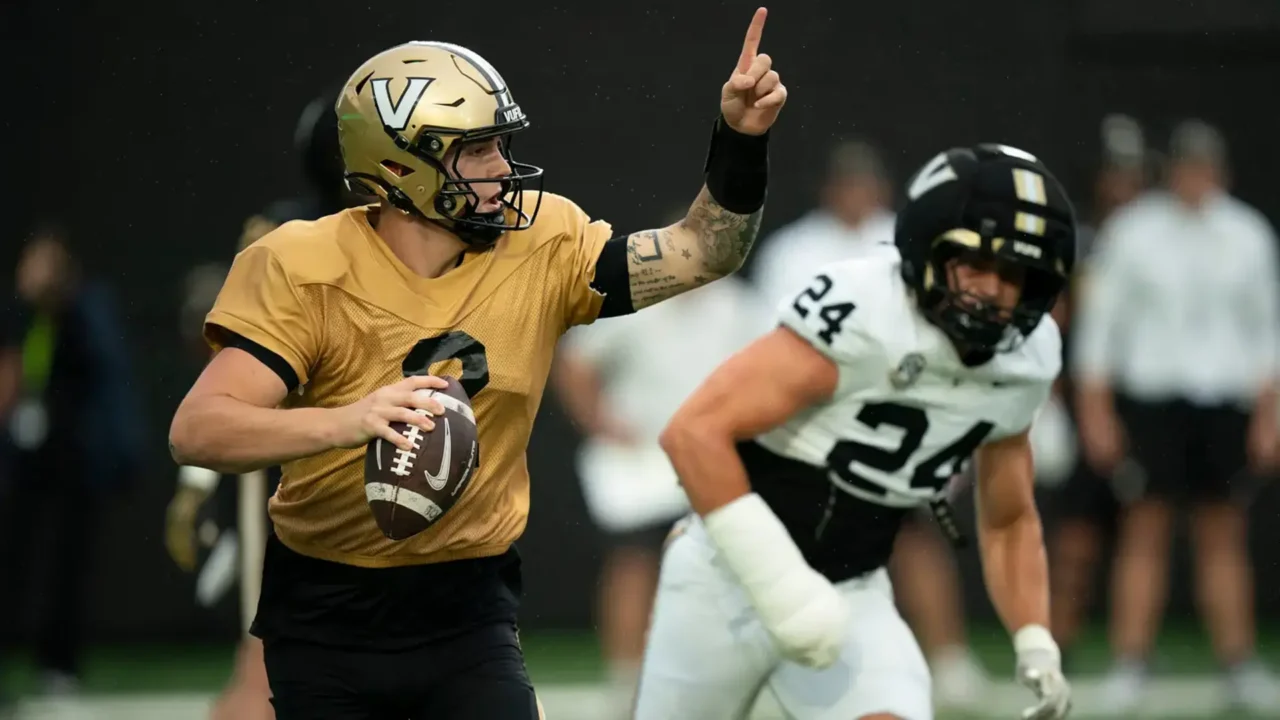
Jared Curtis arrives at Vanderbilt carrying a high-school resume that demands attention and raises legitimate excitement among fans of Vanderbilt football.
That enthusiasm should be tempered by the broader shift the program is undergoing, including the departure of Diego Pavia for the NFL and roster turnover, as reported by Vanderbilt Commodores.
Key Takeaways
- Diego Pavia led Vanderbilt to one of its best seasons in recent memory and has left the program to pursue an NFL path.
- Jared Curtis was a Max Preps All‑American who led Nashville Christian to a Tennessee state championship and posted 9,738 passing yards and 128 passing touchdowns in high school.
- Curtis flipped his commitment from Georgia to Vanderbilt and will arrive amid returning starter Blaze Berlowitz and the loss of veterans like Eli Stowers.
- Expect transition growing pains despite NIL investments and stadium work as staff balance immediate competitiveness with long-term quarterback development.
Why Jared Curtis complicates Vanderbilt offense
Curtis presents a different physical and schematic profile than Diego Pavia, which creates questions about play-calling, protection schemes, and how Vanderbilt deploys its receiving corps.
In high school Curtis produced both through the air and on the ground, finishing his prep career with 9,738 passing yards, 128 passing touchdowns, 25 interceptions and 48 rushing touchdowns, a dual-threat package that still projects differently than Pavia’s improvisational game.
Last season’s offense leaned on Pavia’s ability to extend plays and veteran contributors who fit that freer structure, so transitioning to a new quarterback identity will change situational calls and in-game reads.
Blaze Berlowitz returns as the initial starter and veteran presence behind Curtis, so the staff must juggle giving a high-profile freshman reps while honoring the experience of a senior signal-caller who has earned snaps.
Head coach Clark Lea’s public notes about managing the change signal a methodical approach to redesign rather than an attempt to force a like-for-like swap at quarterback.
What the roster and staff turnover means for short term results
Moving from a veteran-led locker room with an established identity to one centered on a freshman signal-caller is rarely friction-free.
The Commodores lose leadership and NFL-bound talent that influenced in-game decision-making and situational execution, and that absence can impact close contests early in the season.
Program upgrades such as new NIL resources and stadium improvements raise expectations, which adds pressure on a young quarterback to produce while the coaching staff protects his long-term development.
High school production and Vanderbilt context
| Category | Jared Curtis | Vanderbilt recent context |
|---|---|---|
| Background | Max Preps All‑American who led Nashville Christian to a Tennessee state championship | Diego Pavia led Vanderbilt to one of its best seasons in recent memory before leaving for the NFL |
| Production | 9,738 passing yards; 128 passing TDs; 25 INTs; 48 rushing TDs across high-school career | Last season’s offense featured veteran playmakers and an improvisational quarterback style |
| Roster status | True freshman arrival after flipping from Georgia | Blaze Berlowitz returns as the initial senior starter and Eli Stowers is NFL‑bound |
SEC implications for Vanderbilt quarterback change
The quarterback change affects recruiting messaging, NIL positioning, and how opponents approach Vanderbilt in conference play.
A profile like Curtis’ can accelerate recruiting momentum but forces staff to balance immediate win goals with the multi-year work of developing a franchise quarterback in the SEC.
Investments in NIL and FirstBank Stadium increase the program’s profile, but those advances also magnify the need for patience while a young quarterback learns an SEC playbook and leadership role.