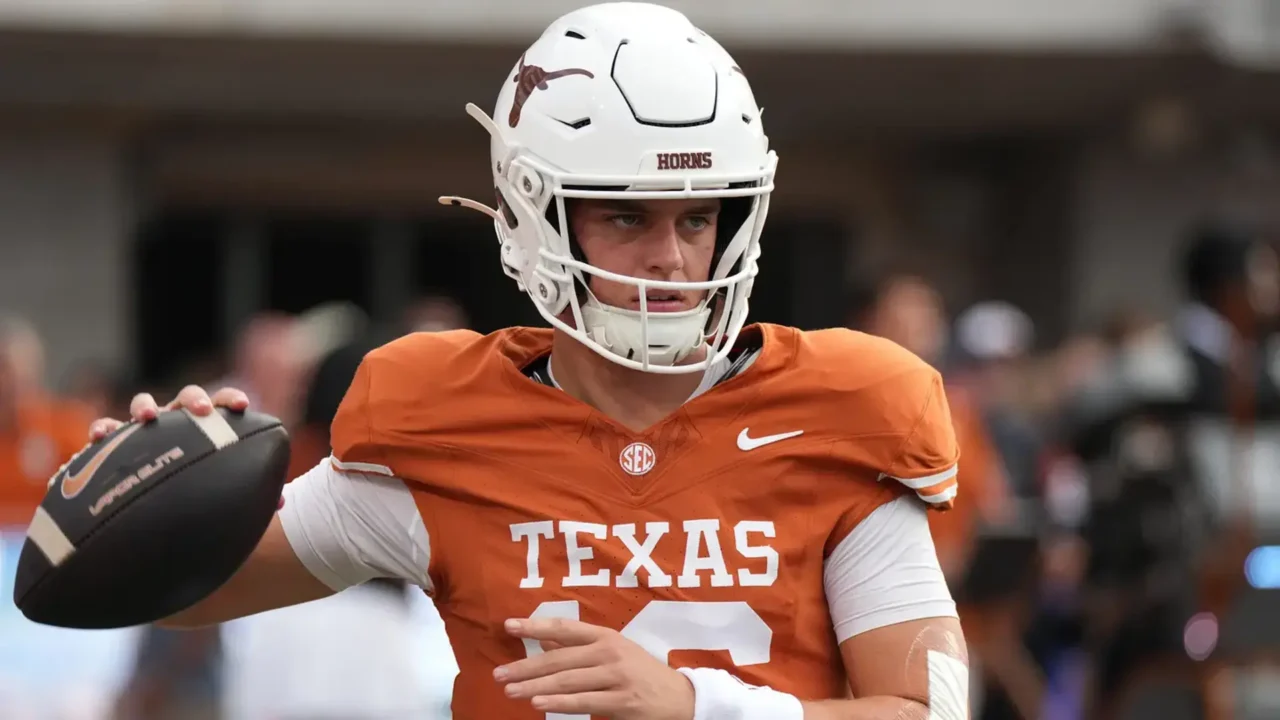
Texas vs. Tennessee at Neyland Stadium is a marquee nonconference test that will reveal how the Longhorns‘ front seven performs under sustained physical pressure. Arch Manning’s first road start elevates the stakes, since protection and tempo will shape the game’s script for both teams.
As written by Sports Illustrated, Tennessee comes in built to run and averages nearly 300 rushing yards per game, forcing Texas to prioritize gap control and disciplined tackling. Those factors make individual Longhorn performances at the point of attack central to the outcome.
The Neyland crowd and the Volunteers‘ downhill identity create a scenario where silent counts, quick-game answers, and on-field communication will tilt field position. Trevor Goosby’s blindside work and the front seven’s ability to absorb contact will determine whether Texas controls time of possession and third-down opportunities.
Key Takeaways
- Tennessee is averaging nearly 300 rushing yards per game, forcing Texas to prioritize gap control and interior play.
- Hero Kanu must hold the line at the point of attack to disrupt Tennessee’s downhill scheme.
- Rasheem Biles will be essential in containing dual-threat reads and serving as the primary second-level tackler.
- A loud Neyland crowd could force a silent count that magnifies Trevor Goosby’s importance in protecting Arch Manning’s blind side.
How Texas front seven can slow the run
Stopping Tennessee starts at the line of scrimmage and with consistent two-gapping and gap integrity. The Volunteers manufacture yards with power between the tackles, so eating blocks on early downs forces them to convert more third downs to sustain drives.
Hero Kanu’s assignment is to hold ground, occupy multiple blockers, and limit linemen from reaching the second level. When Kanu can occupy blocks consistently, linebackers have cleaner paths to run fits and can avoid being sealed off on counters and power looks.
Rasheem Biles projects as the primary second-level cleaner charged with tackling in space and finishing through contact. His read-and-react discipline on zone reads and counters will be decisive in preventing short gains from becoming explosive plays.
Linebacker alignment and pre-snap flow discipline will also matter because Tennessee favors schemes that hinge on misdirection and late-snap pulls. If Texas can maintain assignment integrity on counters and traps, the Volunteers will face fewer crease opportunities to convert chunk plays.
Texas pass protection and blindside assignment for Arch Manning
Arch Manning’s first road start places an extra premium on slide protections, communication, and quick-release solutions. Pressure that materializes from the edges will shorten Manning’s decision window and increase the chance of negative plays.
Trevor Goosby projects as the left-side anchor responsible for repelling edge rushers and setting a tone for the line. Goosby must navigate power and speed matchups while coordinating with RB and TE chips on stunt-heavy looks.
Jordan Norman and Tyree Weathersby have combined pressure production early in the season, which forces Texas to mix slide protection, tight-end help, and running back chip techniques. That combination reduces single-matchup advantages and gives Manning more time to execute intermediate reads.
Silent-count scenarios at Neyland intensify the need for pre-snap cues and tight protection windows on third downs. Tight ends and running backs will need to balance route releases with protection responsibilities to avoid giving rushers free lanes.
Tennessee run attack versus Texas defensive traits
| Metric | Verified fact and Texas context |
|---|---|
| Team rushing average | Tennessee is averaging nearly 300 rushing yards per game; Texas must force more plays to be decided in space rather than at the line |
| Daune Morris yards per carry | Morris is averaging 8.1 yards per carry; containment and tackling discipline will limit his production |
| Desean Bishop yards per carry | Bishop is averaging 6.7 yards per carry; gap integrity and pursuit angles will be tested on zone reads and counters |
| Opposing edge pressures | Jordan Norman and Tyree Weathersby combine for 14 pressures, 11 hurries and two sacks to start the season; Texas must account for their quick-twig rush traits with slide protections and chip help |
CFP and SEC implications for Texas
Beating an undefeated Tennessee at Neyland would reshape national perception of Texas and lift the Longhorns’ playoff profile. A road win over a heavy rushing team answers immediate questions about the front seven’s readiness for conference-style physicality.
From a roster-construction and recruiting standpoint, strong performances from the interior defensive line and from Trevor Goosby at left tackle validate building around a physical trench. Conversely, struggles in run defense or protection could accelerate conversations about depth and schematic adjustments entering conference play.
Local reports and this pregame breakdown are rooted in the original reporting and game-by-game facts coming out of Austin and Rocky Top. The matchup narrative and player roles described here reflect the verified details available ahead of kickoff.